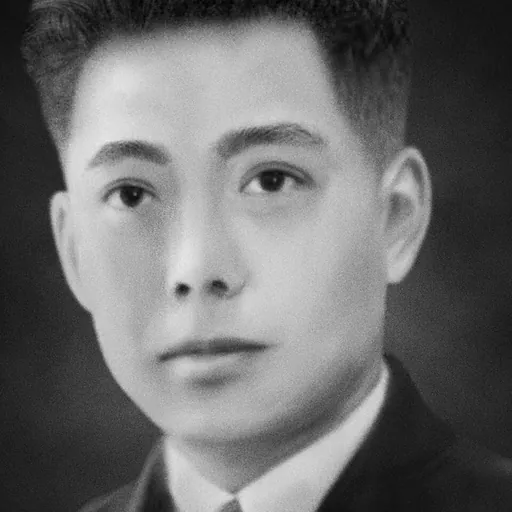
About Liu Shiying
Lived 1893 – 1973 (aged 79). Liu Shiying was a Chinese educator.
Liu Shiying (; 26 October 1893 – 15 July 1973), also known as Feixiong, was a Chinese architect and educator. Liu Shiying had five major contributions to the history of Chinese architecture:
He was the founder of modern architectural education in China. He founded one of the first design firms run by Chinese architects in China. He was in charge of urban planning for Suzhou, laying the foundation for modern city development in Suzhou. He founded the Department of Architecture in Hunan University. Liu designed the early modern architectural complex in Hunan University, which became a nationally protected cultural relic. He introduced early modern architectural style into China, which was particularly rare in China at that time.
Early life Liu Shiying was born in Suzhou City, Jiangsu Province on October 26, 1893. He lost his father in his childhood. In 1907 he was admitted to the Jiangnan Army Academy. During the Revolution of 1911, he served as the battalion commander of the Northern Expedition, and led troops in the Battle of Nanjing.
After the failure of the second revolution, he fled to Japan with his brother and changed his name to Feixiong. In 1914 he was admitted to the Department of Architecture of the Tokyo Higher Technical School (now Tokyo Institute of Technology). He served as the director and professor of the department, and also invited Liu Dunzhen and Zhu Shigui to join. From then on, modern architectural education in China would gradually grow and thrive.
In 1928 Liu was appointed as the director of Suzhou Municipal Engineering. He formulated three horizontal, three vertical, and six main roads, as well as peripheral circulation lines. He had the streets of the old city broadened and had the river systems in the city repaired. All his work laid the foundation for the construction of the modern city of Suzhou. In 1930 Liu was hired by the Civil Engineering Department of Daxia University and Shanghai Zhonghua Vocational Education Association. While he was teaching, he also designed Zhonghua Hall at Shanghai Zhonghua Vocational School, Xincun Village at Daxia University and the Wang Boqun House in Shanghai.
In 1934 Liu joined the faculty of Hunan University and served as the director of the Department of Civil Engineering. In 1952 he was appointed to establish the Central and Southern Civil Engineering College and served as its dean a year later. In 1958 he was appointed as dean of Hunan Institute of Technology and vice president of Hunan University. He wrote several books, such as Western Architectural History, Five-column Specifications, Architectural Construction, and Architectural Drawing Specifications. From the 1920s to 1950s Liu Shiying designed 42 buildings, such as Changsha Light Company, Changsha Hospital, and the Grand Auditorium, Library, and Engineering Hall at Hunan University. Eight of his design works have become nationally protected cultural relics.
Design concept Liu Shiying advocated that architecture should be viewed as reflecting culture. Even though at the time many Chinese architects who got educated in Western countries had the same opinions, he was the first one to state it. He pointed out the backwardness of the style, layout and function in Chinese traditional architecture, and thus further advocated that civilization must be first improved. Ten years after his talk, a New Life Movement arose in China. His design style was mainly Modernism, which was rare in China at that time. He was against luxuriant decoration and promoted a fresh and concise style. He advocated the combination of artistry and practicality.
List of design works
From the 1920s to 1950s Liu Shiying completed 42 design works:
Shanghai Tongxi Textile Mill: Shanghai, 1921 Elementary School: Shanghai, 1921 Movie Theater: Shanghai, 1921 Employee Housing: Shanghai, 1921 Hangzhou Wulin Paper Mill: Hangzhou, 1922 Nanjing Dagao Club: Nanjing, 1922–1930 Lecture Hall in Nanjing Advanced Industrial School: Nanjing, 1922–1930 Lecture Hall in Suzhou Advanced Industrial School: Suzhou, 1922–1930 Fan Buchen House: Suzhou, 1922–1930 Bank of China in Wuhu: Wuhu, 1922–1930 Urban planning of Suzhou: Suzhou, 1926 Chinese Academy of Arts in Shanghai (now Shanghai Literature and Art Publishing Company): Shanghai, 1930 Employee Housing in Shanghai Daxia College (now East China Normal University): Shanghai, 1930–1934 Zhonghua Hall in Shanghai Vocational School: Shanghai, 1932–1934 Wang Boqun House (now Shanghai Changning Children's Palace): Shanghai, 1932–1934 Changsha Light Company: Changsha, 1934 Exhibition Hall of Four Provinces (destroyed): Changsha, 1934 Changsha Commercial Press: Changsha, 1934–1937 Bank of Shanghai in Changsha (destroyed): Changsha, 1934–1937 Li Wenyu Gold Store: Changsha, 1934 School Buildings in Hunan University for temporary use in the war: Hunan, 1937–1945 Xiushan Bank of Transportation: Sichuan, 1938 Treasury Building in Zhongjiao Bank of Agriculture: Hunan, 1939 Changsha Hospital (destroyed): Changsha, 1947 Cai Fusheng House: Changsha, 1947 Science Hall in Hunan University: Changsha, 1946 1st Student Housing in Hunan University: Changsha, 1946 2nd Student Housing in Hunan University: Changsha, 1946 3rd Student Housing in Hunan University: Changsha, 1946 4th Student Housing in Hunan University: Changsha, 1947 7th Student Housing in Hunan University: Changsha, 1947 Jingyizhai Employee Housing in Hunan University: Changsha, 1947 Jixianchun Employee Housing in Hunan University: Changsha, 1947 Shenglizhai Employee Housing in Hunan University: Changsha, 1948 Zhishancun Employee Housing in Hunan University: Changsha, 1948 Engineering Hall in Hunan University: Changsha, 1947–1951 Hunan University Library: Changsha, 1950 Grand Auditorium in Hunan University: Changsha, 1951 Rebuilt Autumn-Admiring Pavilion: Changsha, 1951 Planning of Huazhong University of Science and Technology: Wuhan, 1952 Grand Auditorium in Wuhan Government: Wuhan, 1953-1954
Don’t just read it —
keep it.
Full-length biographies made to live with: read them, listen on the way to work, watch them tonight.
- E-book
- Audio
- Video
Instant download · yours to keep · every purchase keeps this site free
Important facts
Related people
Same field, nearest in time



Contemporaries
People whose lives overlapped Liu Shiying's





Frequently asked questions
Who was Liu Shiying?
Chinese architect and educator (1893-1973)
When was Liu Shiying born?
Liu Shiying was born on 26 October 1893 in Suzhou.
When did Liu Shiying die?
Liu Shiying died on 15 July 1973 in Changsha, Hunan.
What was Liu Shiying's occupation?
Liu Shiying was an educator.
What nationality was Liu Shiying?
Liu Shiying was Chinese.
Sources & further reading
· DBpedia: Liu Shiying (architect)
Cite this page
APA: Biography.guide. (2026). Liu Shiying. https://biography.guide/liu-shiying/
MLA: "Liu Shiying." Biography.guide, https://biography.guide/liu-shiying/.
Chicago: "Liu Shiying." Biography.guide. https://biography.guide/liu-shiying/.
Data last updated: 2026-09-21 · Spot an error? Report a correction.
Portrait: Wikimedia Commons · author & licence
Page generated 2026-09-27 04:59 UTC