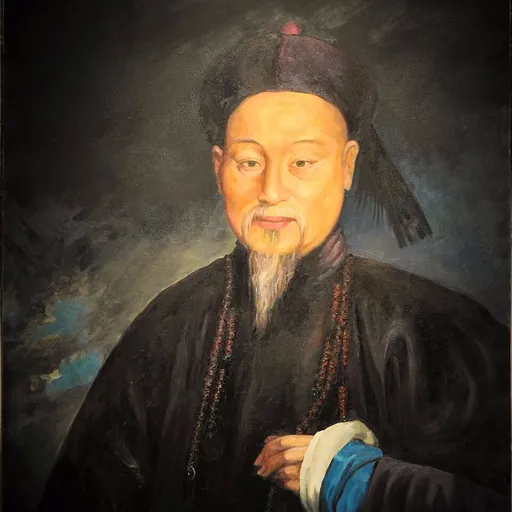
About Lin Tse-hsu
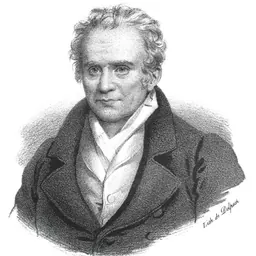
Lived 1785 – 1850 (aged 65). Lin Tse-hsu was a Chinese politician and calligrapher.
Campaign to suppress opium
Before his famed crackdown on opium, Lin Zexu initially proposed domestic opium cultivation to counter financial losses from imports, while his primary focus was reforming the expensive grain transport system to Beijing. Western observers often mischaracterized his anti-opium campaign as a clash of civilizations; however, it was largely driven by internal Chinese imperial politics and the disruptive actions of British merchants. Lin, a meticulous bureaucrat with a passion for freight management, sought a swift success in Canton to secure a coveted governorship. His approach, though seemingly xenophobic to his British adversaries, stemmed from a desire for bureaucratic efficiency rather than inherent anti-foreign sentiment. Summoned by a distraught Emperor Daoguang, as always, Lin offered certainty with his decisive solutions, proposing immediate confiscation of smoking apparatus and a radical policy of a year's suspended death sentence for opium users to compel reform through fear and public surveillance. He even touted dubious "cures" for opium addiction. Crucially, Lin and many officials overlooked the potential international ramifications of their prohibition efforts, particularly the reaction of foreign traders in Canton. This oversight, coupled with an underestimation of British military power, led to a conflict Lin seemingly had not fully anticipated, despite later claims of foresight. The Opium War, and its profound consequences, appears to have been ignited by a fit of bureaucratic urgency and a misjudgment of external forces.
He traveled to Canton, lasting two months from Beijing, with a remarkably small entourage, consisting of just an outrider, six guards, and three kitchen staff who remained constantly with him, preventing any opportunities for them to exploit local innkeepers along the route. This minimalist approach reflected his unwavering commitment to virtue. Soon after his arrival in Guangdong in the middle of 1839, Lin wrote a memorial to the "Ruler of England" in the form of an open letter published in Canton, urging England to end the opium trade. He argued that China was providing Britain with valuable commodities such as tea, porcelain, spices and silk, with Britain sending only "poison" in return. He accused the foreigner traders of coveting profit and lacking morality. His memorial expressed a desire that the ruler would act "in accordance with decent feeling" and support his efforts. Since he believed that opium was banned in the United Kingdom, he thought it was wrong for Queen Victoria to support it in China. He wrote:
The letter elicited no response (sources suggest that it was lost in transit), but it was later reprinted in the London Times as a direct appeal to the British public.
An edict from the Daoguang Emperor followed on 18March, emphasising the serious penalties for opium smuggling that would now apply.
In March 1839, Lin started to take measures that would eliminate the opium trade. He was a formidable bureaucrat known for his competence and high moral standards, with an imperial commission from the Daoguang Emperor to halt the illegal importation of opium by the British. He made changes within a matter of months. He arrested more than 1,700 Chinese opium dealers and confiscated over 70,000 opium pipes. He initially attempted to get foreign companies to forfeit their opium stores in exchange for tea, but this ultimately failed. Lin resorted to using force in the western merchants' enclave. A month and a half later, the merchants gave up nearly 1.2 million kg (2.6 million pounds) of opium. Beginning 3 June 1839, 500 workers laboured for 23 days to destroy it, mixing the opium with lime and salt and throwing it into the sea outside of Humen Town. Lin composed an elegy apologising to the gods of the sea for polluting their realm.
Lin and the Daoguang Emperor, comments historian Jonathan Spence, "seemed to have believed that the citizens of Canton and the foreign traders there had simple, childlike natures that would respond to firm guidance and statements of moral principles set out in simple, clear terms." Neither Lin nor the emperor appreciated the depth or changed nature of the problem. They did not see the change in international trade structures, the commitment of the British government to protecting the interests of private traders, and the peril to British traders who would surrender their opium.
Open hostilities between China and Britain started in 1839 in what later would be called the "First Opium War". The immediate effect was that both sides, by the words of Charles Elliot and Lin, banned all trade. Before this, Lin had pressured the Portuguese government of Macau, so the British found themselves without refuge, except for the bare and rocky harbours of Hong Kong. Soon, however, the Chinese forces faced a British naval fleet, which included the East India Company's steam warship Nemesis and improved weapons, and were soon routed.
Exile in Xinjiang Lin made significant preparations for war against the possible British invasion. The British sailed north to attack Jiangsu and Zhejiang. The governors of these two provinces failed to heed a warning from Lin, however, and were unprepared when the British easily landed and occupied Dinghai.
This unpreparedness was partly due to the Qing dynasty's ongoing issues with corruption and inefficiency within the local governments. These problems hindered their ability to respond effectively to Lin's warnings.
Lin became a scapegoat for these losses due to court politics. As punishment, he was exiled to the remote Ili region in Xinjiang. His position was then given to Qishan in September 1840.
While in Xinjiang, Lin was the first Chinese scholar to record several aspects of Muslim culture there. In 1850, he noted in a poem that the Muslims in Ili did not worship idols but bowed and prayed to tombs decorated with poles that had the tails of cows and horses attached to them. This was the widespread shamanic practice of erecting a tugh, but this was its first recorded appearance in Chinese writings. He also recorded several Kazakh oral tales, such as one concerning a green goat spirit of the lake whose appearance is a harbinger of hail or rain.
Lin’s documentation of these practices contributed to a broader understanding of ethnic minorities in China, showcasing the diversity of cultural practices within the empire at the time. In 1843 while in Xinjiang, Lin also met Buyantai, the Governor at the time, alongside Yishan, who had also been dismissed from his position during the First Opium War. Buyantai and Lin formed a close friendship until the former's death.
The Qing government ultimately rehabilitated Lin. In 1845, he was appointed Governor-General of Shaan-Gan (Shaanxi-Gansu). In 1847, he became governor-General of Yun-Gui (Yunnan-Guizhou). While these posts were considered less prestigious, Lin continued to advocate for reform in opium policy and addressed issues of local governance and corruption. His efforts remained influential, albeit limited, in shaping Qing policy. These posts were less prestigious than his previous position in Canton; thus his career never fully recovered from the failures there.
Death and legacy
Lin died in 1850 while on the way to Guangxi Province, where the Qing government was sending him to help put down the Taiping Rebellion. Though he was originally blamed for causing the First Opium War, Lin's reputation was rehabilitated in the last years of the Qing dynasty, as efforts were made once more to eradicate opium production and trade. He became a symbol of the fight against opium and other drug trades, with his image displayed in parades, and his writings quoted approvingly by anti-opium and anti-drugs reformers.
Despite the antagonism between the Chinese and the British at the time, the English sinologist Herbert Giles praised and admired Lin: "He was a fine scholar, a just and merciful official and a true patriot."
Lin's former home, situated in Fuzhou's historic Sanfang-Qixiang 三方七巷 ("Three Lanes and Seven Alleys") district, is open to the public. Inside, his work as a government official, including the opium trade and other work where he improved agricultural methods, championed water conservation (including his work to save Fuzhou's West Lake from becoming a rice field) and his campaign against corruption are well documented.
In China, Lin is popularly viewed as a national hero and culture hero against drug abuse. June 3—the day when Lin confiscated the chests of opium—is unofficially celebrated as Opium Suppression Movement Day in Taiwan, whereas June 26 is recognized as the International Day against Drug Abuse and Illicit Trafficking in honour of Lin's work. Monuments to Lin have been constructed in Chinese communities around the world. A statue of Lin stands in Chatham Square in Chinatown, New York City, United States. The base of the statue is inscribed with "Pioneer in the war against drugs" in English and Chinese. A wax statue of Lin also appeared in Madame Tussauds wax museum in London.
Lin is a character in Amitav Ghosh's Ibis trilogy, premiering in the second novel, River of Smoke. The work of historical fiction is set in the lead up to the Opium Wars while also offering a contemporary critique of globalisation.
He was also depicted in film, such as in the 1997 movie The Opium War.
His grandson Commodore Lin Taizeng was an officer in the Beiyang Fleet and commanded one of China's two modern battleships purchased from Germany in the 1880s, Zhenyuan, during the First Sino-Japanese War (1894–1895). He committed suicide with an opium overdose after the ship ran aground and had to be abandoned.
Lin descendants are living in Fuzhou, Fujian and surroundings, Jieyang (Puning), Meizhou, Guangdong and surroundings, various places in China, Denmark, and United States.
Lin is remembered for a couplet he wrote while serving as an imperial envoy in Guangdong:
In particular, the first half of the couplet was chosen as the motto for Chinese Wikipedia.
Don’t just read it —
keep it.
Full-length biographies made to live with: read them, listen on the way to work, watch them tonight.
- E-book
- Audio
- Video
Instant download · yours to keep · every purchase keeps this site free
Important facts
more
Shaomu, Lin ZexuPeople in Lin Tse-hsu's life
Named in this biography and alive at the same time




Related people
Same field, nearest in time


Contemporaries
People whose lives overlapped Lin Tse-hsu's

Frequently asked questions
Who was Lin Tse-hsu?
Chinese scholar and politician (1785-1850)
When was Lin Tse-hsu born?
Lin Tse-hsu was born on 30 August 1785 in Houguan.
When did Lin Tse-hsu die?
Lin Tse-hsu died on 22 November 1850 in Puning.
What was Lin Tse-hsu's occupation?
Lin Tse-hsu was a politician and calligrapher.
What nationality was Lin Tse-hsu?
Lin Tse-hsu was Chinese.
Sources & further reading
Cite this page
APA: Biography.guide. (2026). Lin Tse-hsu. https://biography.guide/lin-tse-hsu/
MLA: "Lin Tse-hsu." Biography.guide, https://biography.guide/lin-tse-hsu/.
Chicago: "Lin Tse-hsu." Biography.guide. https://biography.guide/lin-tse-hsu/.
Data last updated: 2026-09-23 · Spot an error? Report a correction.
Portrait: Wikimedia Commons · author & licence
Page generated 2026-09-27 05:07 UTC