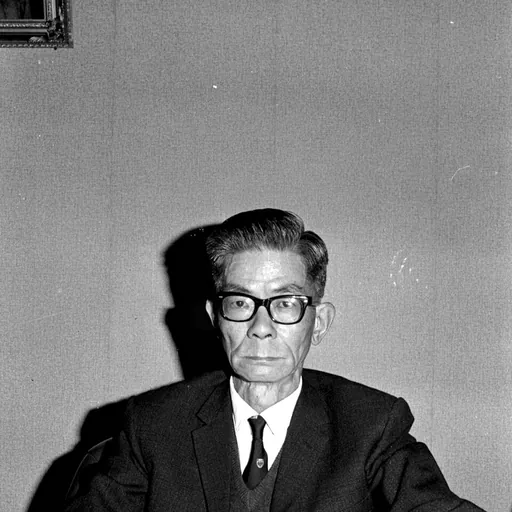
About Lien Chen-tung
Lived 1904 – 1986 (aged 82). Lien Chen-tung was a Japanese, Chinese and Taiwanese politician.
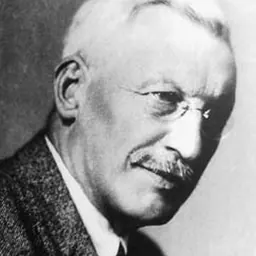
Lien Chen-tung (; 23 April 1904 – 1 December 1986) was a Taiwanese statesman and politician who was the tenth Republic of China Minister of the Interior. Lien was also the first official county magistrate of Taipei County, a representative of the National Assembly, a member of the Executive Yuan, and a national policy advisor to the Office of the President. His son Lien Chan was the seventh Vice President of the Republic of China and a former chairman of the Kuomintang.
Biography Pre-war Lien Chen-tung was born in the West Central District of Tainan City, Taiwan. He was the only son of Taiwanese historian Lien Heng.
He graduated from the Economics Department of Keio University in Japan in 1929 and joined the Showa New Newspaper after returning to Taiwan.
In July 1933, his father Lien Heng brought his family to stay in Shanghai.
In 1934, Lien Chen-tung and Chao Lan-k'un (趙蘭坤) got married in Beijing. She was born into a well-known family in Shenyang and was a graduate of Beijing Yanjing University.
On 28 June 1936, his father Lien Heng died of liver cancer in Shanghai at age 58, while Lien was 32 years old. On 27 August, his wife Chao gave birth to Lien Chan in Xi'an.
The National Government intended to appoint him to be the first mayor after the reorganization of Xi’an in Xijing. The assignment was on hold after the Second Sino-Japanese War broke out. During the war, Lien Chen-tung served as the head of the Chongqing National Government Institute of International Studies and a member of the Xijing Preparatory Committee.
According to recollections shared by his son Lien Chan in 2014, Lien Chen-tung developed a close personal and professional friendship with General Hu Zongnan during the early 1930s. In 1931, while Hu was stationed in Xi’an, he established the Fourth Wartime Cadre Training Regiment (戰時工作幹部訓練第四團), an institution intended to train political cadres as a countermeasure to the Chinese Communist Party’s Anti-Japanese Military and Political University in Yan’an. Lien was invited by Hu to serve as one of the regiment’s political instructors. During this period, the two met frequently, and a lasting friendship developed between their families.
After the Nationalist government’s retreat to Taiwan in 1949, the Hu and Lien families maintained regular social contact, often visiting one another and renewing their prewar association.
Post-war After Second World War the National Government of the Republic of China took back the rule of Taiwan and the Penghu Islands from the Empire of Japan. In November 1945, Taiwanese Chief Executive Chen Yi appointed Lien as the first chairman of the Taipei State Reception Management Committee. His duty was to formally take over the military affairs of Taipei.
In February 1946, Lien's wife Chao Lan-k'un brought his 8-year-old son Lien Chan back to Taiwan to reunite with his father.
Towards the end of February 1946, Lien relocated to the Taiwan Provincial Chief Executive's Office. He was in charge of organizing the Provincial Consultative Council. That May, the council Inaugurated, and Lien was subsequently appointed the Secretary-General of the Taiwan Provincial Consultative Council.
In 1953, Lien served as the fifth group director of the Kuomintang Central Party Department and was appointed as a member of the Taiwan Provincial Government and the director of construction. One year later, he was transferred to the Ministry of Civil Affairs of the Taiwan Provincial Government, where he actively promoted local self-government. He also served as the secretary-general of the Taiwan Provincial Government. In 1955, the government held the first census of Taiwan Province, and Lien was also the deputy director of the Census Department.
On 25 March 1960, Lien was appointed as the Deputy Secretary-General of the Kuomintang and as a result, resigned as a member of the Taiwan Provincial Government and Minister of Civil Affairs. In May, due to the reformation of the Executive Yuan, he served as the new Minister of the Interior of the Executive Yuan.
In 1961, Lien's son Lien Chan obtained a master's degree in international public law and diplomacy from the University of Chicago with the paper “Taiwan's Land Reform”. In 1965, Lien Chan was under the guidance of Tsou Tang, and obtained a doctorate in political science from the University of Chicago with the title of "Chinese Communism versus Pragmatism: The Criticism of Hu Shih's Philosophy". On 5 September, Lien Chan married Fang Yu, at the Pound Church, University of Chicago.
In 1963, Lien Chen-tung was elected as the Standing Committee member of the Central Committee during the 9th National Congress of the Kuomintang. In 1966, he was designated as the director of the Census Department of the Executive Yuan. He then resigned as the Minister of the Interior and served as a member of the Executive Council. In 1967, Lien Chen-tung was appointed as a member of the National Security Council and the convener for the National Construction and Design Committee. In 1969, during the 10th National Congress of the Kuomintang, Lien Chen-tung was assigned as a member of the Central Review Committee. In 1976, he was appointed as the national policy advisor of the Office of the President. In 1980, he was reappointed as the senior advisor to the office of the president.
Legacy
In 1986, Lien Chen-tung died at the National Taiwan University Hospital at the age of 82. He was laid to rest at the Yangmingshan First Cemetery.
From his return to Taiwan in 1945 until his death in 1986, Lien has served as the first Taipei County mayor, minister of the interior, standing committee member of the Central Committee of the Chinese Kuomintang, member of the Executive Yuan, national policy advisor to the office of the president, and senior advisor to the office of the president. 總統令 Presidential Decree No. 548 On 23 December 1986, President Chiang Ching-kuo issued Presidential Decree No. 548 to commemorate Lien Chen-tung. The contents are as follows:
Presidential Decree No. 548
Don’t just read it —
keep it.
Full-length biographies made to live with: read them, listen on the way to work, watch them tonight.
- E-book
- Audio
- Video
Instant download · yours to keep · every purchase keeps this site free
Important facts
Family & relationships
People in Lien Chen-tung's life
Named in this biography and alive at the same time


Related people
Same field, nearest in time





Contemporaries
People whose lives overlapped Lien Chen-tung's


Frequently asked questions
Who was Lien Chen-tung?
Taiwanese politician
When was Lien Chen-tung born?
Lien Chen-tung was born on 23 April 1904 in Tainan Prefecture.
When did Lien Chen-tung die?
Lien Chen-tung died on 1 December 1986 in Taipei.
What was Lien Chen-tung's occupation?
Lien Chen-tung was a politician.
What nationality was Lien Chen-tung?
Lien Chen-tung was Japanese, Chinese and Taiwanese.
Sources & further reading
Cite this page
APA: Biography.guide. (2026). Lien Chen-tung. https://biography.guide/lien-chen-tung/
MLA: "Lien Chen-tung." Biography.guide, https://biography.guide/lien-chen-tung/.
Chicago: "Lien Chen-tung." Biography.guide. https://biography.guide/lien-chen-tung/.
Data last updated: 2026-09-23 · Spot an error? Report a correction.
Portrait: Wikimedia Commons · author & licence
Page generated 2026-09-27 05:07 UTC