
About Tsou Tang
Lived 1918 – 1999 (aged 80). Tsou Tang was a Chinese and American sinologist, political scientist and historian.
Tsou Tang (; 18 December 1918 – 7 August 1999) was a Chinese-born American political scientist best known for his book America's Failure in China and studies of contemporary Chinese politics. He was a professor at the University of Chicago from 1959 until his retirement in 1988, and held the university's Homer J. Livingston Professorship in Political Science.
Career Tsou Tang was born in Guangdong on 18 December 1918. His father was the academic . Tsou worked for the Central Bank of China a year after graduation from Southwest Associated University. In 1941, Tsou began graduate study at the University of Chicago, earning his doctorate in 1951. Tsou joined the University of Chicago faculty in 1959. He was named the Homer J. Livingston Professor in Political Science, and retired in 1988. He later lectured at the Illinois Institute of Technology and the University of Utah.
Scholarly contribution In the 1950s, Tsou was approached by political scientist Hans Morgenthau, chair of the University of Chicago’s Center for the Study of American Foreign and Military Policy, to explore the Sino-American relationship using both English- and Chinese-language materials. Tsou’s 1963 book, America’s Failure in China, 1941-50, drew upon his research at the Center. Its success would establish his reputation as a China scholar, and Tsou would go on to become a leader in the field of 'China Studies.'
The first of Tsou's six books, America's Failure in China, won attention from news media and his contemporaries. In it, Tsou described the question of, "who lost China?" as mistaken: "No one can lose something which he has never possessed." Tsou asserted that the main reason for the ubiquitous American "failure in China" was the combination of high expectations and low commitment. Throughout the war, Tsou explained, the American government only provided diplomatic support to the Nationalists, rather than military support. Tsou also accused Chiang Kai-shek of being both unable and unwilling to "undertake long overdue reforms", the absence of which drove many Chinese to support the Communists. During the war in China, Tsou found, most Americans completely misunderstood Chinese communism, and none of them had suggested giving direct military support to the Nationalists. Henry R. Lieberman wrote for The New York Times Book Review, "This is a balanced, scholarly and sobering work that helps set the record clear on United States relations with China from the time of Pearl Harbor to General MacArthur's ill-fated advance to the Yalu in Korea." Dali Yang summarized Tsou's beliefs thus: "His position in America’s Failure in China: 1941-1950 was that the Nationalist government lost to the communists in the Chinese Civil War because the Nationalist government was corrupt and riven by infighting."
His final writings, a collection of essays, were posthumously published in the journal Modern China in 2000.
Throughout his career, Tsou emphasized the importance of objectivity, both in sinology and in general. He also held that intellectual and academic exchange between China and the West was the only way for both parties to come to a greater understanding of one another. However, some scholars such as University of Wisconsin's Professor Qing Liu questioned the motives of this reputation, arguing that it was not merely professional courtesy, but a self-defensive reaction to the developing racial and political dilemmas of early Cold War America.
Selected publications Tang Tsou, "A Study of the Development of the Scientific Approach in Political Studies in the United States : With Particular Emphasis on the Methodological Aspects of the Works of Charles E. Merriam and Harold D. Lasswell," (Ph.D. Thesis, Political Science University of Chicago 1951).
Don’t just read it —
keep it.
Full-length biographies made to live with: read them, listen on the way to work, watch them tonight.
- E-book
- Audio
- Video
Instant download · yours to keep · every purchase keeps this site free
Important facts
People in Tsou Tang's life
Named in this biography and alive at the same time
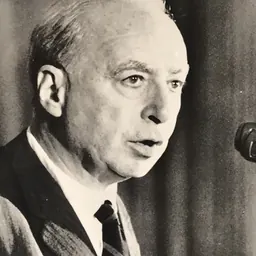
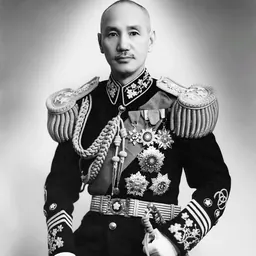

Related people
Same field, nearest in time

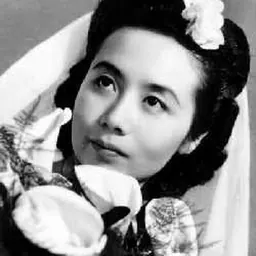


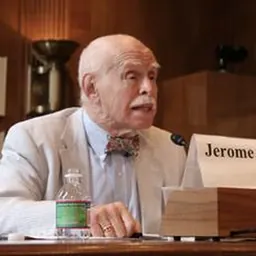

Contemporaries
People whose lives overlapped Tsou Tang's



Frequently asked questions
Who was Tsou Tang?
Chinese-American political scientist (1918–1999)
When was Tsou Tang born?
Tsou Tang was born on 10 December 1918 in Guangdong.
When did Tsou Tang die?
Tsou Tang died on 7 August 1999 in UChicago Medicine.
What was Tsou Tang's occupation?
Tsou Tang was a sinologist, political scientist and historian.
What nationality was Tsou Tang?
Tsou Tang was Chinese and American.
Sources & further reading
Cite this page
APA: Biography.guide. (2026). Tsou Tang. https://biography.guide/tsou-tang/
MLA: "Tsou Tang." Biography.guide, https://biography.guide/tsou-tang/.
Chicago: "Tsou Tang." Biography.guide. https://biography.guide/tsou-tang/.
Data last updated: 2026-09-20 · Spot an error? Report a correction.
Page generated 2026-09-27 05:17 UTC