
About Liam Cosgrave
Lived 1920 – 2017 (aged 97). Liam Cosgrave was an Irish politician, diplomat and civil servant.
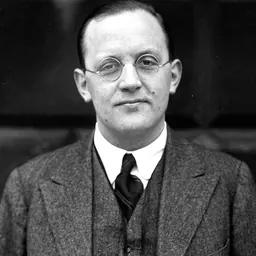
Liam Cosgrave (13 April 1920 – 4 October 2017) was an Irish Fine Gael politician who served as Taoiseach from 1973 to 1977, Leader of Fine Gael from 1965 to 1977, Leader of the Opposition from 1965 to 1973, Minister for External Affairs from 1954 to 1957, and Parliamentary Secretary to the Minister for Industry and Commerce and Government Chief Whip from 1948 to 1951. He served as a Teachta Dála (TD) from 1943 to 1981.
Cosgrave was born in Castleknock, Dublin, during the War of Independence, the first of two children of W. T. Cosgrave, who would become the first President of the Executive Council in the newly formed Irish Free State, and his wife Louisa (née Flanagan). After qualifying as a barrister he began a political career. He was elected to Dáil Éireann at the 1943 general election and sat in opposition alongside his father. In the first inter-party government in 1948, Cosgrave was appointed as Parliamentary Secretary to the Taoiseach John A. Costello. He became a cabinet member in 1954 when he was appointed Minister for External Affairs. The highlight of his three-year tenure was Ireland's successful entry into the United Nations. In 1965, Cosgrave was the unanimous choice of his colleagues to succeed James Dillon as leader of Fine Gael. He lost the 1969 general election to the incumbent Taoiseach Jack Lynch, but won the 1973 general election and became Taoiseach in a Fine Gael-Labour Party government.
Cosgrave died on 4 October 2017, at the age of 97. He remains to date the longest-lived Taoiseach, and was also the last Taoiseach born before the partition of Ireland.
Early life Cosgrave's boyhood was shaped by the upheavals of the new Irish state. His father served as President of the Executive Council for much of his childhood, and the family bore the marks of the Civil War: in January 1923 their home at Beechpark, in Templeogue, was burned by anti-Treaty forces, and although Cosgrave was only two years old and away from home at the time, he later said he could remember the ruins. a devoutly Catholic school, then later at Castleknock College, Dublin, and later at King's Inns. Before entering politics, he enlisted as a private in the Defence Forces in 1940 and was later commissioned as a second lieutenant in the reserve, serving until 1943. sitting in the 11th Dáil alongside his father W. T. Cosgrave, one of the founders of the Irish Free State in the 1920s. The two shared the opposition benches until W. T. Cosgrave retired at the snap election of 1944. He served in these positions until the dissolution of the Dáil on 7 May 1951.
Minister After the 1954 general election, a Second Inter-Party government was formed on 2 June 1954, led again by John A. Costello. Cosgrave, then only 34 but with eleven years of Dáil experience, was appointed to the position of Minister for External Affairs. This stance counted against him later that year, when the dual leadership of Fine Gael, held by Mulcahy and Costello, stood down in October 1959. Costello, who wished to continue his practice as a senior counsel as well as being a leader, had asked Cosgrave to be his "managing director" in the Dáil while he was absent on legal work, which Cosgrave declined to do. James Dillon and Cosgrave contested the resulting leadership election, with Dillon decisively elected. making a decisive intervention in the party's internal debate over the proposals when he told the 1964 Ard Fheis that it was "a well-known political maxim that a party to secure and retain public support should be slightly to the left of centre." Although the drafting of the document was carried out largely by Declan Costello, Cosgrave chaired the committee that produced its final text, and his backing, coming from a figure closely associated with the party's traditional values, proved critical to its acceptance. Though criticised for taking a "partitionist" or unionist stance in his speech, "When information was given to them suggesting that the British authorities had intelligence naming the bombers, this was not followed up". However, the Inquiry had insufficient evidence the investigation was stopped as a result of political interference. The coalition attempted to prosecute The Irish Press for its coverage of the maltreatment of republican prisoners by the Garda "Heavy Gang", allegations the government officially denied, with the paper winning the case. The episode reinforced Cosgrave's reputation for uncompromising conviction, but it also weakened the government's standing on women's issues, coming as it did alongside a government request to the EEC for a derogation on the introduction of equal pay, a prerequisite of Ireland's EEC membership. and believed Cosgrave was not conscientious enough in keeping him informed of political developments, the two men's contrasting personalities doing little to ease the relationship.
Tensions rose further in October 1975 over the canonisation of Oliver Plunkett in Rome, to which both men had been invited. Amid disagreement over the rank of those who should form the official delegation and sensitivities relating to Northern Ireland, the government did not approve Ó Dálaigh's request to attend, and Cosgrave went in his place, fuelling speculation that the President was being sidelined on an occasion that mattered greatly to the devoutly Catholic Taoiseach.
The government had introduced the Emergency Powers Bill following the assassination in July of Christopher Ewart-Biggs by the IRA; it had passed the Dáil on 21 September. After consultation with the Council of State, Ó Dálaigh exercised his power to refer the Bill to the Supreme Court two days later to test its constitutionality, bringing him into more direct conflict with the government. Although the Court ruled that the Bill was constitutional, and Ó Dálaigh signed the Bill into law on 16 October, an IRA action on the same day in Mountmellick resulted in the death of a member of the Garda, Michael Clerkin. Cosgrave's government, already infuriated, blamed Ó Dálaigh's delaying enactment of the bill for Clerkin's murder. with sketches sometimes showing him working by candlelight, a Dickensian image underscoring the austerity of the era; Cosgrave himself was depicted as rigid and stern, feeding existing public perceptions of him. In 1974, sickness insurance, unemployment insurance, and occupational injuries coverage were extended to all employees, while earnings-related components were added to the basic flat-rate sickness benefit, the basic flat-rate short-term occupational injury benefit, and the basic flat-rate unemployment benefit. That same year, pension insurance was extended to all employees, and a means-tested allowance for the wives of prisoners was introduced. In addition, welfare benefits were increased by 125% during the course of Cosgrave's premiership.
Final years as Taoiseach Cosgrave delivered his final address as Fine Gael leader at the party's Ard Fheis in May, on the eve of the 1977 general election. He linked the government's security measures to those taken by his father's administrations in the 1920s, declaring, "Not for the first time has this party stood between the people of this country and anarchy", before making a strong attack on "blow-ins" who could "blow out or blow up". of the Irish Independent newspaper, who had been vociferously opposed to Cosgrave's policies, particularly regarding the President and the wealth tax, an interpretation later favoured over the alternative reading that it targeted Kader Asmal, founder of the Irish Anti Apartheid Movement and the Irish Council for Civil Liberties. it attracted wider criticism and backfired politically.
James Tully, the Labour Minister for Local Government, had redrawn the constituency boundaries (the "Tullymander") and had expected that the new boundaries would favour the two government parties. Dublin, apart from Dún Laoghaire, was divided into some 13 three-seat constituencies where Fine Gael and Labour were to take one seat each, reducing Fianna Fáil to a minority rump in the capital.
Despite the economic difficulties and mounting criticism, a general perception persisted, fostered by the press, that the National Coalition would be re-elected; a top-secret cabinet memorandum, however, warned that it would be self-deluding to believe success was guaranteed, citing inflation, farmer incomes and unemployment levels as key challenges. He also appeared in public for the Centenary of the Easter Rising in 2016, watching on from a car as the military parade marched through Dublin. On 8 May 2016, in a joint appearance with the grandsons of Éamonn Ceannt and Cathal Brugha, he unveiled a plaque commemorating the 1916 Rising at St. James's Hospital, the former site of the South Dublin Union.
Horses were a lifelong passion, inherited from his family. Cosgrave took part in hunts, was a regular racegoer and served as a steward at Leopardstown racecourse, making time for these pursuits even while Taoiseach; through his Minister for Finance, Richie Ryan, he sanctioned funding that allowed the Irish Equitation School to purchase Rockbarton, who went on to become a celebrated showjumping horse. He lived in Knocklyon.
Family Cosgrave married Vera Osborne in April 1952; she came from a Kildare family noted for horse breeding and racing, and their shared interest in horses remained a feature of their married life, with the couple frequently attending race meetings together. He had been at Tallaght Hospital for several months prior to his death there. Leaving instruction that "there's to be no speeches and no nonsense", his family honoured his wish to forgo the state funeral to which he was entitled.
His funeral mass was held on 7 October 2017 at the Church of the Annunciation in Rathfarnham, Reflecting the centrality of faith throughout his life, he made provision in his will for masses to be said for his soul.
Don’t just read it —
keep it.
Full-length biographies made to live with: read them, listen on the way to work, watch them tonight.
- E-book
- Audio
- Video
Instant download · yours to keep · every purchase keeps this site free
Important facts
Family & relationships
People in Liam Cosgrave's life
Named in this biography and alive at the same time





Related people
Same field, nearest in time



Contemporaries
People whose lives overlapped Liam Cosgrave's





Frequently asked questions
Who was Liam Cosgrave?
Irish politician (1920-2017)
When was Liam Cosgrave born?
Liam Cosgrave was born on 13 April 1920 in Castleknock.
When did Liam Cosgrave die?
Liam Cosgrave died on 4 October 2017 in Dublin.
What was Liam Cosgrave's occupation?
Liam Cosgrave was a politician, diplomat and civil servant.
What nationality was Liam Cosgrave?
Liam Cosgrave was Irish.
Sources & further reading
Cite this page
APA: Biography.guide. (2026). Liam Cosgrave. https://biography.guide/liam-cosgrave/
MLA: "Liam Cosgrave." Biography.guide, https://biography.guide/liam-cosgrave/.
Chicago: "Liam Cosgrave." Biography.guide. https://biography.guide/liam-cosgrave/.
Data last updated: 2026-09-20 · Spot an error? Report a correction.
Page generated 2026-09-27 05:28 UTC