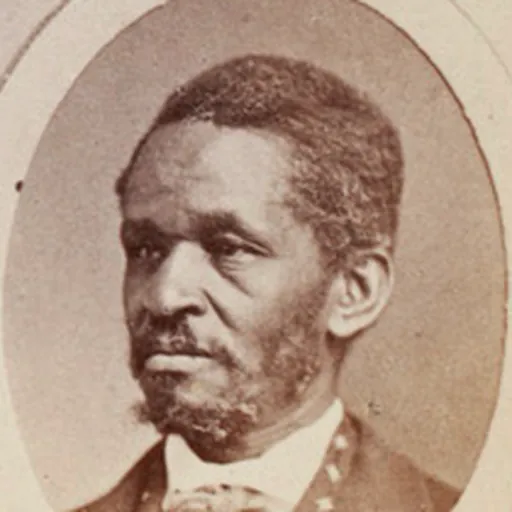
Lewis Hayden
American abolitionist, lecturer, businessman and politician
About Lewis Hayden
Lived 1811 – 1889 (aged 77). Lewis Hayden was an American politician and abolitionist.
Lewis Hayden (December 2, 1811 – April 7, 1889) escaped slavery in Kentucky with his family and reached Canada. He established a school for African Americans before moving to Boston, Massachusetts. There he became an abolitionist, lecturer, businessman, and politician. Before the American Civil War, he and his wife Harriet Hayden aided numerous fugitive slaves on the Underground Railroad, often sheltering them at their house.
Hayden was elected in 1873 as a Republican representative from Boston to the Massachusetts state legislature. He helped found numerous black lodges of Freemasons. Located on the north side of Beacon Hill, the Lewis and Harriet Hayden House has been designated a National Historic Site on the Black Heritage Trail in Boston.
Biography
Early life Lewis Hayden was born into slavery in Lexington, Kentucky, in 1811, as one of a family of 25. |group="nb" His mother was of mixed race, including African, European, and Native American ancestry; slavery of Native Americans had been prohibited since the 18th century. If his mother had been able to show direct maternal Native American ancestry, she would have had grounds for a freedom suit for herself and her children. According to the principle of partus sequitur ventrem adopted by the slave states in the 17th century, the children's status in the colonies followed that of the mother. Children of white women and Native American women were thus born free. Lewis's father was a slave "sold off early". #tag:ref|Hayden's mother had rejected an offer "of a base nature" from a man from a Masonic Lodge. He had her arrested and she began to have "crazy turns" after she had been tortured and flogged. After she made several suicide attempts, 7 or 8-year-old Hayden and his siblings were able to see their mother. He became afraid when she said, "I'll fix you so that they'll never get you." She was tied up and taken away. When he was 14, the American Revolutionary War soldier Marquis de Lafayette tipped his hat to Hayden while visiting Kentucky. This helped inspire Hayden to believe he was worthy of respect and to hate slavery. Unveiled in June 2025, a bronze statue entitled Towards Freedom by artist Basil Watson honors the Haydens. An inscription quotes author bell hooks “True resistance begins with people confronting pain…and wanting to do something to change it.” In the mid-1830s, #tag:ref|Henry Clay claimed he had not bought, nor sold, Lewis Hayden's wife and child. He had confused Lewis Hayden with another man Lewis at first, then stated he never knew Lewis Hayden. But Hayden provided detailed information about houses where his wife was assigned after Clay bought her and details of her sale. He started to save his share of earnings for future freedom.
Escape and freedom In the fall of 1844, Hayden met Calvin Fairbank, a Methodist minister who was studying at Oberlin College and had become involved in the Underground Railroad. He asked Hayden, "Why do you want your freedom?" Hayden responded, "Because I am a man."
Fairbank and Delia Webster, a teacher from Vermont who was working in Kentucky, acquired a carriage and traveled with the Haydens to aid their escape. The Haydens covered their faces with flour to appear white and escape detection; at times of danger, they would hide their son Joseph under the seat. They traveled from Lexington to Ripley, Ohio, on a cold, rainy night. Helped by other abolitionists, such as John Rankin, the Haydens continued north along the Underground Railroad, eventually reaching Canada.
When Fairbank and Webster returned to Lexington, they were arrested. The driver was picked up and whipped 50 times until he confessed to the events of the escape. Webster served several months of a two-year prison sentence for helping the Haydens and was pardoned. Fairbank was sentenced to 15 years, five years for each slave he helped to freedom. After four years he was pardoned when Hayden, in effect, ransomed him. Hayden's previous owner agreed to a pardon for Fairbank if paid $650. Hayden by then was living in Boston and quickly raised the money from 160 people to pay this amount.
From Canada, the Haydens moved in 1845 to Detroit in the free state of Michigan. As a gateway to Canada, it was a major center of fugitive slaves. While there Hayden founded a school for black children, as well as the brick church of the Colored Methodist Society (now Bethel Church).
Hayden worked with abolitionist Erasmus Darwin Hudson and John M. Brown. In February 1848, Hayden responded to a letter from the society informing him of "his agency being stopped." He had already spent about two months' income to establish his family and himself for the lecture tour; he did not have the fare for his return home. He wrote to the society: "You all know it is me jest three years from slavery ... if I am not Wendell Phillips now, it ought not to appear what shall be. I shall do all I can to make myself a man."
In his history of that period, writer Stephen Kantrowitz wrote of Hayden:
Hayden was appointed to a patronage position as a messenger in the Secretary of State's office.
In 1873, Hayden was elected to one term as a representative from Boston to the lower house of the Massachusetts General Court. He supported the movement to erect a statue in honor of Crispus Attucks, a black and Native American man who was the first person killed in the Boston Massacre, at the beginning of the American Revolution. According to The Boston Herald, Hayden was in frail health during the "unveiling of the monument" ceremony and was unable to attend it in 1888, and the event was attended by many of Hayden's friends that gave him victory cheers at the event.
In the early 1880s, Hayden helped bring Julius Caesar Chappelle into Republican politics. Chappelle was a popular Republican legislator from 1883 to 1886 of Ward 9, which included the Beacon Hill area of Boston, MA. According to the Boston Daily Globe obituary of Julius C. Chappelle who died in 1904, when Chappelle lived in the "West End, he attracted the attention of the late Lewis Hayden, who brought him (Julius Caesar Chappelle) into the republican ranks of old ward 9, as a registrar for the colored voters in that ward." Chappelle was very successful in registering voters, which helped earn him his later place in the state legislature. Chappelle was also an alternate to the Republican National Convention that nominated James G. Blaine, and Chappelle was the only African-American on the Republican Senate Committee. During the Crispus Attucks monument unveiling in 1888, when Hayden could not attend due to frail health, Chappelle was president of the senate and along with others at the event gave homage to Hayden. . He criticized the organization for its racial discrimination, and helped found numerous black Freemason chapters. Hayden advanced to Grand Master of the Prince Hall Freemasonry. After the American Civil War, he published several works commenting on these issues and encouraging participation by blacks: Caste among Masons (1866), Negro Masonry (1871), and co-author of Masonry Among Colored Men in Massachusetts. Following the war and emancipation, Hayden traveled throughout the South working to found and support newly established African-American Masonic lodges. In this period, there was a rapid growth in new, independent African-American fraternal and religious organizations in the South.
Civil War Hayden was a recruiter for the 54th Massachusetts Regiment of the United States Colored Troops. Every seat of the 1200 in the Charles Street AME Church was taken for his funeral, and Lucy Stone was among those who gave a eulogy. Harriet died in 1894 and left $5,000, (~$ in ) the entirety of their estate, to the Harvard University for scholarships for African American medical students. It was believed to have been the first, and perhaps only, endowment to a university by a former slave.
Legacy The following was printed in The Liberator in 1855, and he had more to accomplish:
In June, 2025 in Lexington, KY the Haydens were honored with the unveiling of a bronze statue entitled Towards Freedom by artist Basil Watson. The monument also honors the Underground Railroad that aided in their escape in 1844. The statue of the couple, holding clasped hands up in both joy and determination, stands on the corner of North Limestone and Fourth Street is a monument to the Haydens and the many other enslaved people traveled north on Limestone to cross the Ohio River into the non slave holding states. The Lexington Freedom Train is a grassroots organization that combines neighborhood residents with historians including Yvonne Giles who researched the Haydens’ life. Public and private donations financed the project.
Lewis and Harriet Hayden House
In 1849 or 1850, the Haydens moved into the house at 66 Phillips (then Southac) Street, in Boston's Beacon Hill neighborhood. In 1853, the house was purchased by their colleague Francis Jackson of the anti-slavery Vigilance Committee. The African American Museum hypothesized that may have been done "to assure that Hayden would not be harassed in his Underground Railroad activities."
The Haydens routinely cared for fugitive slaves at their home, which served as a boarding house. Records from the Boston Vigilance Committee, of which Lewis was a member, indicate that scores of people received aid and safe shelter at the Hayden home between 1850 and 1860. In 1865, Harriet Hayden bought the house from Francis Jackson's estate.
The Lewis and Harriet Hayden House has been designated a National Historic Site; it is one of the sites on the Black Heritage Trail maintained by the National Park Service. Still used as a private residence, the house is not open to visitors.
Don’t just read it —
keep it.
Full-length biographies made to live with: read them, listen on the way to work, watch them tonight.
- E-book
- Audio
- Video
Instant download · yours to keep · every purchase keeps this site free
Important facts
Family & relationships
People in Lewis Hayden's life
Named in this biography and alive at the same time



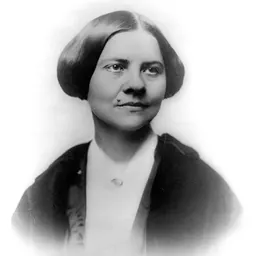

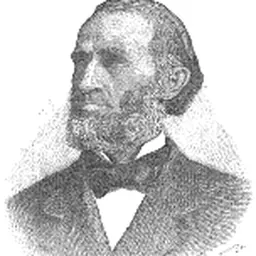
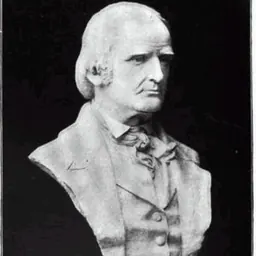
Related people
Same field, nearest in time


Contemporaries
People whose lives overlapped Lewis Hayden's




Frequently asked questions
Who was Lewis Hayden?
American abolitionist, lecturer, businessman and politician (1811-1889)
When was Lewis Hayden born?
Lewis Hayden was born on 2 December 1811 in Kentucky.
When did Lewis Hayden die?
Lewis Hayden died on 7 April 1889.
What was Lewis Hayden's occupation?
Lewis Hayden was a politician and abolitionist.
What nationality was Lewis Hayden?
Lewis Hayden was American.
Sources & further reading
Cite this page
APA: Biography.guide. (2026). Lewis Hayden. https://biography.guide/lewis-hayden/
MLA: "Lewis Hayden." Biography.guide, https://biography.guide/lewis-hayden/.
Chicago: "Lewis Hayden." Biography.guide. https://biography.guide/lewis-hayden/.
Data last updated: 2026-09-21 · Spot an error? Report a correction.
Portrait: Wikimedia Commons · author & licence
Page generated 2026-09-27 04:58 UTC