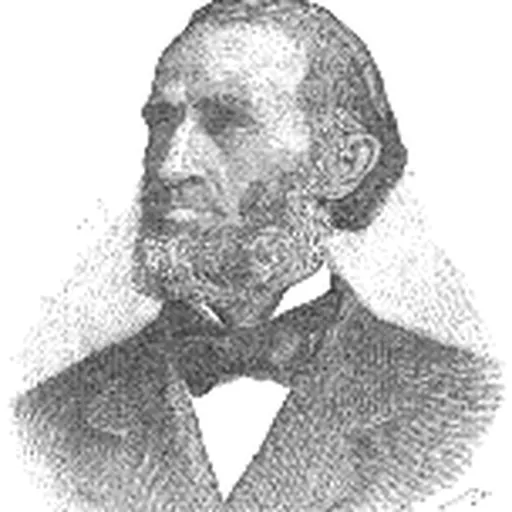
Calvin Fairbank
American activist
About Calvin Fairbank
Lived 1816 – 1898 (aged 81). Calvin Fairbank was a christian minister, abolitionist and abolitionism in the United States.
Calvin Fairbank (November 3, 1816 – October 12, 1898) was an American abolitionist and Methodist minister from New York state who was twice convicted in Kentucky of aiding the escape of slaves, and served a total of 19 years in the Kentucky State Penitentiary in Frankfort. Fairbank is believed to have aided the escape of 47 slaves.
Pardoned in 1849 after four years of his first sentence, Fairbank returned to his Underground Railroad work. He was arrested in 1851 with the aid of the governor of Indiana, who was enforcing the Fugitive Slave Law of 1850. Fairbank was convicted again in Kentucky and served the full sentence of 15 years.
Early life Calvin Fairbank was born in 1816 in Pike, in what is now Wyoming County, New York, to Chester Fairbank and his wife; he grew up in an intensely religious family environment. It was also the period of the Second Great Awakening, and western New York was a center of evangelical activity. Listening to the stories told by two escaped slaves whom he met at a Methodist quarterly meeting, the young Fairbank became strongly anti-slavery.
He began his career freeing slaves in 1837 when, piloting a lumber raft down the Ohio River, he ferried a slave across the river to free territory. Soon he was delivering escaped slaves to the Quaker abolitionist Levi Coffin for transportation on the Underground Railroad to northern US cities or to Canada.
Aliases Calvin Fairbank used aliases: Samuel P. King, Samuel S. King, John Doe, Richard Roe/Rowe and John Rowe.
Methodist Episcopal Church The Methodist Episcopal Church licensed Fairbank to preach in 1840 and ordained him as a minister in 1842. Hoping to improve his education, he enrolled in 1844 in the "preparatory division" of Oberlin Collegiate Institute in Ohio, now Oberlin College. It was interracial and a center of anti-slavery sentiment. At Oberlin, Fairbank met future AME bishop, John M. Brown and the pair worked together in underground railroad activities.
Abolitionist
Gilson Berry Responding to an appeal to rescue the wife and children of an escaped slave named Gilson Berry, Fairbank went to Lexington, Kentucky, where he made contact with Delia Webster, a teacher from Vermont who was working there and had become active as an abolitionist. She was to help with the rescue, but Berry's wife failed to meet Fairbank as planned.
By chance, he met Lewis Hayden and his family, who were planning an escape. He asked Hayden, "Why do you want your freedom?" Hayden responded, "Because I am a man."
The Haydens Fairbank and Webster transported Hayden, his wife Harriet and Harriet's son Joseph by carriage to freedom in Ripley, Ohio. (See John Rankin (abolitionist).) The fugitive couple put flour on their faces to appear white and, in times of danger, would hide their son under the wagon seat. As Fairbank and Webster returned to Kentucky, they were identified and arrested for assisting the runaway slaves.
Webster was tried in December 1844 and sentenced to two years in the Kentucky state penitentiary, but she was pardoned by the governor after serving less than two months of her sentence. Fairbank was tried in 1845 and sentenced to a 15-year term, five years for each of the slaves he helped free.
He was pardoned in 1849 in an effort begun by his father. Effectively Lewis Hayden ransomed Fairbank, as he raised the $650 demanded by his former master to approve the pardon. Hayden had quickly collected the money within a few weeks from 160 people in Boston, where he and his family had settled.
Tamar In 1851, Fairbank helped a slave named Tamar escape from Kentucky to Indiana. On November 9 of that year, with the connivance of the sheriff of Clark County, Indiana and Indiana Governor Joseph A. Wright, marshals from Kentucky abducted Fairbank and took him back to their state for trial. In 1852, he was sentenced to 15 years in the state penitentiary. While imprisoned, he was singled out for exceptionally harsh treatment; he was frequently flogged and overworked.
Imprisonment effects Over his combined imprisonment of more than 17 years, Fairbank was reported to have received 35,000 lashes in prison floggings. In an April 5, 1850 article, The Liberator summarized a letter from Fairbank to William Lloyd Garrison: "He expresses gratitude to the people of Boston, indicates an intention to write a book about his experiences, and indicates that letters to him can be sent in care of Lewis Hayden."
Finally, in 1864, three years into the American Civil War, Fairbank was pardoned by Acting Governor Richard T. Jacob, who had long advocated the activist's release. When Thomas Bramlette returned to office, he had Jacob arrested and expelled from the state for his attacks on Lincoln during the presidential campaign and support for George B. McClellan.
Marriage and family
Once free, Fairbank married Mandana Tileston, to whom he had been engaged for thirteen years, since his brief period of freedom in 1851. Known as "Dana," she moved from Williamsburg, Massachusetts, to Oxford, Ohio, in order to visit Fairbank in prison as often as possible and to press the case for his pardon with the Governor of Kentucky. Their only child, Calvin Cornelius Fairbank, was born in 1868.
The conditions of Fairbank's life in prison broke his health. Although he held jobs with missionary and benevolent societies, he was not able to support his family. At one point, he and his wife tried to earn a living operating a bakery in the utopian community of Florence, Massachusetts. After Mandana Fairbank died of tuberculosis in 1876, Calvin gave their son to the care of her sister and brother-in-law. Fairbank remarried in 1879, but little is known of his second wife, Adeline Winegar, except that she was the daughter of Henry and Jane Winegar and like Calvin, a native of Pike. In the 1870 census she had been listed as a domestic servant. She died of cancer on February 12, 1901, in Angelica, and was buried next to Calvin in the local cemetery.
Memoirs Fairbank wrote his memoir, publishing it in 1890 under the title, Rev. Calvin Fairbank During Slavery Times: How He "Fought the Good Fight" to Prepare "the Way." This effort earned him little money. He died in near-poverty in Angelica, New York. He was buried there in the Until the Day Dawn Cemetery. He is credited with helping free 47 slaves.
Legacy In the 21st century, James Pritchard, a retired state archivist for Kentucky who published articles about the Underground Railroad, and several other persons worked to petition Kentucky Governor Steve Beshear to pardon Fairbank and others convicted of helping slaves escape.
On October 22, 2022, Rev. Calvin Fairbank was inducted into the National Abolitionist Hall of Fame and Museum in Peterboro, New York.
Don’t just read it —
keep it.
Full-length biographies made to live with: read them, listen on the way to work, watch them tonight.
- E-book
- Audio
- Video
Instant download · yours to keep · every purchase keeps this site free
Important facts
People in Calvin Fairbank's life
Named in this biography and alive at the same time


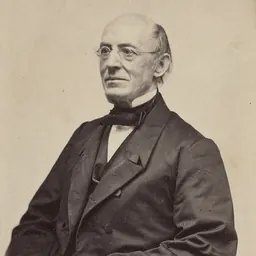


Related people
Same field, nearest in time
Contemporaries
People whose lives overlapped Calvin Fairbank's



Frequently asked questions
Who was Calvin Fairbank?
American activist
When was Calvin Fairbank born?
Calvin Fairbank was born on 3 November 1816 in Pike.
When did Calvin Fairbank die?
Calvin Fairbank died on 12 October 1898 in Angelica.
What was Calvin Fairbank's occupation?
Calvin Fairbank was a christian minister, abolitionist and abolitionism in the United States.
Sources & further reading
Cite this page
APA: Biography.guide. (2026). Calvin Fairbank. https://biography.guide/calvin-fairbank/
MLA: "Calvin Fairbank." Biography.guide, https://biography.guide/calvin-fairbank/.
Chicago: "Calvin Fairbank." Biography.guide. https://biography.guide/calvin-fairbank/.
Data last updated: 2026-09-24 · Spot an error? Report a correction.
Portrait: Wikimedia Commons · author & licence
Page generated 2026-09-27 05:08 UTC