
About Lev Knipper
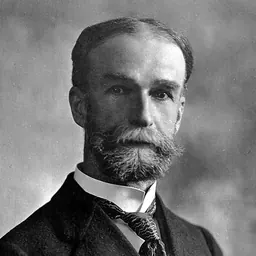
Lived 1898 – 1974 (aged 75). Lev Knipper was a Russian composer, spy and intelligence officer.
Lev Konstantinovich Knipper (; – 30 July 1974) was a Soviet and Russian composer and OGPU/NKVD agent.
Life and career
Lev Knipper was born in Tiflis to railway engineer Konstantin Leonardovich Knipper and Elena-Luiza Yulyevna Rid. Shortly after his birth, the family relocated to Tsarskoye Selo, then to Yekaterinoslav in 1910, and then Saint Petersburg in 1913. He was greatly influenced by his father's sister, the actress Olga Knipper (wife of the playwright Anton Chekhov), who encouraged his musical interests. He learned to play clarinet, double bass, various brass instruments, and taught himself to play piano.
Knipper enlisted in the White Army in 1916. Following the Russian Civil War of 1917, he became stranded in Turkey, though was eventually able to reunite with his aunt Olga, who was touring abroad. Upon his return to the RSFSR in 1922, he was repeatedly interviewed and ultimately recruited by the OGPU foreign department. At their behest, Knipper travelled to Germany in 1922–23, where he made the acquaintance of composers Alois Hába, Philipp Jarnach, and Paul Hindemith. Hindemith's music in particular had a strong influence on Knipper's own compositional language.
Through the connections of his aunt, Knipper made the acquaintance of Elena Gnesina, who hired him as building administrator at the Gnessin Music School in Moscow. Though Knipper was too old to be officially admitted as a student, he was nonetheless able to study with Reinhold Glière and Nikolai Zhilyayev. The opera is also noted for its defiance of typical operatic conventions.
Seemingly in response to criticism of his modernist early works, Knipper resigned his post as technical secretary to the ACM and abruptly shifted his style towards one more in line with the principles of socialist realism. In 1930–1931, he travelled to Central Asia to study the region's folk music. He was particularly drawn to Tajik music, which directly influenced eight of his works. Dmitry Kabalevsky pointed out the shortcomings of Knipper's approach to combining mass-songs and the surrounding symphonic material. In his Sixth Symphony, Op. 47 (1936), Knipper apparently veered too close to his earlier style and was publicly rebuked for it; his Seventh Symphony "Military" (1938) returned to an ideologically safer style.
Knipper was prolific. He wrote 5 operas (including one on The Little Prince), 20 symphonies, ballets, pieces for piano and other film musics.
The primary publishers of Knipper's works are Muzyka, and Le Chant du Monde. Most of his published compositions are currently out of print, and the majority of his output has yet to be published.
List of works Symphonies Symphony No. 1 in 4 parts, Op. 13 (1926) – dedicated to Olga Knipper Symphony No. 2, Op. 30 (1929) Symphony No. 3 "Far East," Op. 32 (1932) – poetry by Viktor Gusev Sinfonietta, Op. 33 (1932) Symphony No. 4 "Poem for the Komsomol Fighters" (1934, rev. 1966) – poetry by Viktor Gusev Symphony No. 5 (1935) Symphony No. 6, Op. 47 (1936) Symphony No. 7 "Military" in 3 parts (1938) Symphony No. 8 in 3 movements (1941) Symphony No. 9 in 4 movements (1944–45) Symphony No. 10 in 4 movements (1946) – dedicated to Nikolai Myaskovsky Symphony No. 11 in 4 movements (1949) Symphony No. 12 in 3 parts (1950) Symphony No. 13 in 4 parts (1951–52) – dedicated to Nikolai Myaskovsky Sinfonietta in 4 movements (1952) Symphony in 4 movements (1954) Symphony No. 14 for string orchestra in 4 parts (1961–62) Symphony No. 15 (1962) Symphony No. 16 (1962–69) Symphony No. 17 in 3 movements (1969–70) Symphony No. 18 (1970–71) Sinfonietta for string orchestra in 4 movements (1971–72) Symphony No. 20 in 3 parts (1972) Symphony No. 21 "Dances" in 5 parts (1972)
Concertante Violin Souvenir: Six pieces for violin and symphony orchestra, Op. 31 (1932) Three Variations on a Theme for violin and symphony orchestra, Op. 31a (1932) Concerto No. 1 (1942–44) – dedicated to Olga Knipper Sonatina for violin and string orchestra (1948) Concertino for violin and string orchestra (1962) Little Concerto in Classical Style (1964–65) – dedicated to Arkady Futer Concerto No. 3 (1969–70) – dedicated to Leonid Kogan Viola Concerto (1962) Cello Concerto-Monologue for cello, seven brass instruments and timpani (1962) – dedicated to Mstislav Rostropovich Concerto-Poem for cello and chamber orchestra (1971) – dedicated to Natalia Shakhovskaya Woodwinds Clarinet Concerto (1967) – dedicated to Rafael Bagdasarian Concerto-Suite for oboe, string quartet and percussion (1968) – dedicated to Konstantin Paustovsky Concerto for bassoon and string orchestra (1969–70) – dedicated to Valery Popov Brass Four Improvisations & Finale for horn and string orchestra (1971) Double concertos for violin, cello and orchestra (1945) for violin, cello and wind septet (1967) - dedicated to Tatiana Alekseevna Gaidamovich for trumpet and bassoon (1968) String quartet Radif: suite in Iranian style for string quartet and string orchestra (1944) Concerto for string quartet and orchestra (1963) Symphonic Concerto for string quartet and symphony orchestra (1964–65)
Chamber music Reflections: Six sketches for flute and clarinet, Op. 11 (1925) To my Son: Four miniatures, Op. 27 (1931) – dedicated to Four Pieces for violin and piano (1943) String quartets No. 1 (1943) – dedicated to the Bolshoi Quartet Six Miniatures on Kirghiz Themes (1956) No. 2 (1962) No. 3 (1972–73) – dedicated to N. M. Skuzovatova Concert Scherzo for violin and piano (1962) Pieces for flute and harp (1963) Piano trios No. 1 (1968–71) – dedicated to Tatiana Alekseevna Gaidamovich No. 2 (1971–73) – dedicated to Tatiana Alekseevna Gaidamovich Concert Etude for flute and trumpet (1971) Scherzo for flute, trumpet and piano (1971)
Film music The Private Life of Pyotr Vinogradov (1934) The Red Cavalry (1935) The Soviet Coast (documentary, 1951) Immortal Pages (documentary, 1965)
Honors and awards Order of the Badge of Honour Stalin Prize – 1946 and 1949 People's Artist of the RSFSR – 1974
Don’t just read it —
keep it.
Full-length biographies made to live with: read them, listen on the way to work, watch them tonight.
- E-book
- Audio
- Video
Instant download · yours to keep · every purchase keeps this site free
Important facts
People in Lev Knipper's life
Named in this biography and alive at the same time
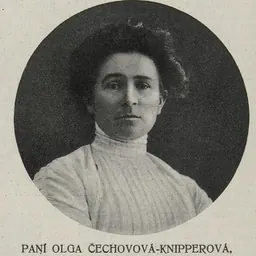
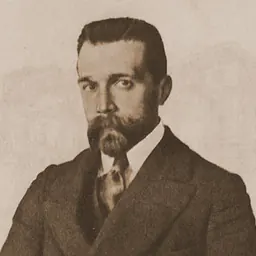


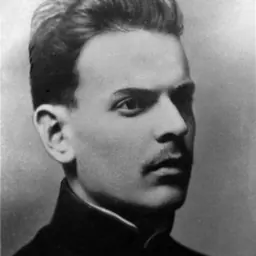
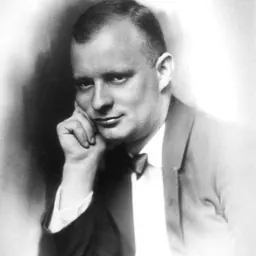

Related people
Same field, nearest in time

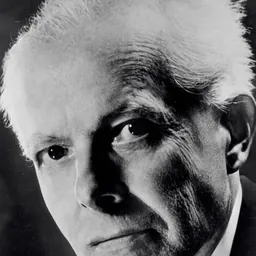



Contemporaries
People whose lives overlapped Lev Knipper's

Frequently asked questions
Who was Lev Knipper?
Russian composer and secret police agent (1898–1974)
When was Lev Knipper born?
Lev Knipper was born on 3 December 1898 in Tbilisi.
When did Lev Knipper die?
Lev Knipper died on 30 July 1974 in Moscow.
What was Lev Knipper's occupation?
Lev Knipper was a composer, spy and intelligence officer.
What nationality was Lev Knipper?
Lev Knipper was Russian.
Sources & further reading
Cite this page
APA: Biography.guide. (2026). Lev Knipper. https://biography.guide/lev-knipper/
MLA: "Lev Knipper." Biography.guide, https://biography.guide/lev-knipper/.
Chicago: "Lev Knipper." Biography.guide. https://biography.guide/lev-knipper/.
Data last updated: 2026-09-22 · Spot an error? Report a correction.
Page generated 2026-09-27 05:16 UTC