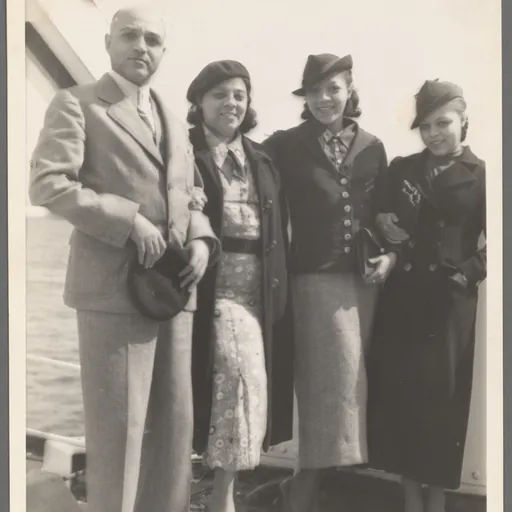
About Lester Walton
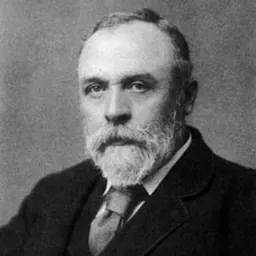
Lived 1882 – 1965 (aged 83). Lester Walton was an American diplomat, journalist and critic.
Lester Aglar Walton (April 20, 1882 – October 16, 1965) The New York Times called him an "authority on Negro affairs." Historian Susan Curtis describes him as a man who "advised U.S. presidents and industrialists ... [and] was instrumental in desegregating housing" in New York City.
A Broadway songwriter who wrote lyrics for Bert Williams and George Walker, Walton also produced his own theater productions, managed Harlem's Lafayette Theatre, including the Lafayette Players, and frequently collaborated on lyrics with the "legendary Ernest Hogan, a.k.a. the Unbleached American, an early black minstrel and vaudeville comedian who (by some historians’ reckoning) was the first African-American performer to play before a white audience on Broadway." “Black Bohemia” with Will Marion Cook and the protest song "Jim Crow Has Got to Go," popular during the early days of civil rights marches, are among Walton's better known compositions.
A seminal figure in early film criticism, Walton is considered to be among the earliest to understand the direct and indirect educational power of onscreen imagery. In his extensive writing on the medium, he produced numerous persuasive, wide-ranging and foundational arguments for condemning the objectification of Black Americans, and for understanding the resonance of the medium. He went on to become an advocate of another kind when President Franklin Delano Roosevelt appointed him U.S. Ambassador to Liberia in 1935.
By 1908, Walton was working for the nationally distributed New York Age, the most important mainstream Black newspaper of the era. Warning readers to expect more of the same: "if we do not start now to put an end to this insult," he foretold the gruesome imagery of The Birth of a Nation, which he later classified as political art. Noting that German operas had been reclassified "German propaganda," during the First World War, he argued that films like D.W. Griffith's 1915 Birth of a Nation were "Un-American propaganda." In 1913, with the assistance from the Associated Press, Walton launched a movement for the universal spelling of the word Negro to begin with the capital "N". In a letter to The New York Times called "Appeal for the Negro: Lester A. Walton Asks the Dignity of an "N" for his Race," he argued against a lowercase "n" for Negro because its dictionary definition was "An African black." But, he argued:There are millions of us who are not Africans, neither are we black; there are millions of us who are black but are not Africans... Why not refer to the term "Negro" as a race of people and not regarding the color of one's skin? Then the term would embrace blacks, mulattoes and those of mixed parentage: for there are millions who are of various shades of brown; there are millions who are mulattoes and near mulattoes, and there are thousands who are white as any Caucasian. To classify these people as black would be as improper as to classify whites as blacks. In 1942, in an article called "Balanced Budget and Voodoo," the New Yorker interviewed him. Although they described him as "interesting in his own right ... [and noted he was] one of the few Negroes ever to serve in the diplomatic corps," they spent much of the article mocking Liberia's lack of "modernization." Then populated by "repatriated American Negroes and their descendants," it was dependent on the U.S. for help with defense, produced few products outside rubber, and was best known for several native tribes that practiced "voodoo and human sacrifice." In its defense, Walton pointed out that it was "one of the few countries in the world that operate on a balanced budget." Despite the challenges, Walton "concluded significant treaties between the United States and Liberia, including the terms under which the American government established a United States Army base. Walton also negotiated with the Liberian government for the construction of a port in Monrovia and concluded commerce, navigation and aviation treaties." "hortly before he died," according to historian Susan Curtis, "an NBC executive sent him a telegram to thank him for everything he did." and Ollie May (Camphor) Walton in St. Louis in 1882, Walton graduated from the then segregated Sumner High School in St. Louis. After graduation, his father provided him with a white tutor to help him pass an entrance exam in business school. Once matriculated, he joined the Alpha Phi Alpha fraternity, the first inter-collegiate Greek letter organization established for African Americans. On June 29, 1912, Walton married Gladys Moore, daughter of Fred A. Moore, publisher of the ''New York Age.
Don’t just read it —
keep it.
Full-length biographies made to live with: read them, listen on the way to work, watch them tonight.
- E-book
- Audio
- Video
Instant download · yours to keep · every purchase keeps this site free
Important facts
People in Lester Walton's life
Named in this biography and alive at the same time


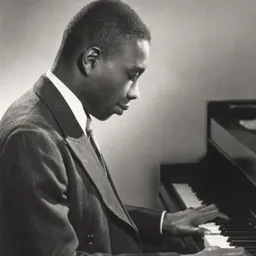




Related people
Same field, nearest in time

Contemporaries
People whose lives overlapped Lester Walton's




Frequently asked questions
Who was Lester Walton?
American diplomat (1882–1965)
When was Lester Walton born?
Lester Walton was born on 20 April 1882 in St. Louis.
When did Lester Walton die?
Lester Walton died on 16 October 1965.
What was Lester Walton's occupation?
Lester Walton was a diplomat, journalist and critic.
What nationality was Lester Walton?
Lester Walton was American.
Sources & further reading
Cite this page
APA: Biography.guide. (2026). Lester Walton. https://biography.guide/lester-walton/
MLA: "Lester Walton." Biography.guide, https://biography.guide/lester-walton/.
Chicago: "Lester Walton." Biography.guide. https://biography.guide/lester-walton/.
Data last updated: 2026-09-23 · Spot an error? Report a correction.
Portrait: Wikimedia Commons · author & licence
Page generated 2026-09-27 05:05 UTC