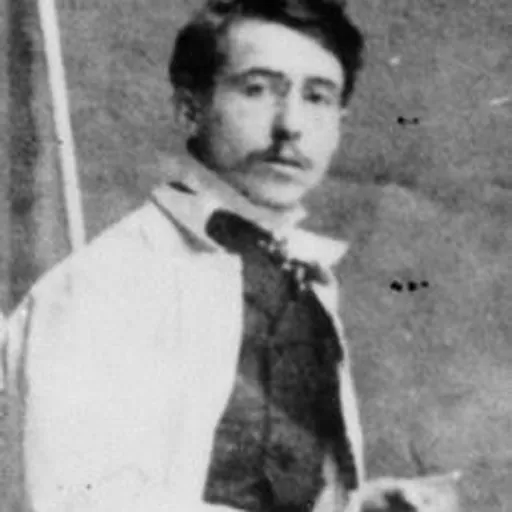
About Leopold Fleischhacker
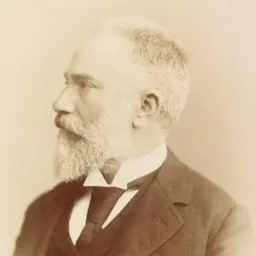
Lived 1882 – 1946 (aged 64). Leopold Fleischhacker was a German sculptor, medalist and artist.
Leopold Fleischhacker (13 May 1882, Felsberg - 11 September 1946, Uccle) was a German sculptor and medallist of Jewish ancestry.
Life and work From 1897 to 1902, he attended the Kunstgewerbeschule Düsseldorf where he studied with Clemens Buscher. In his spare time, he took lessons at stucco workshops and qualified as a journeyman plasterer. Then, from 1903 to 1905, he attended the Prussian Academy of Arts, where his primary instructors were Ernst Herter and Peter Breuer. In 1905, he was awarded a scholarship by the Michael Beer Foundation that enabled him to spend eight months in Rome at the Villa Strohl-Fern.
In 1906, he returned to Düsseldorf; serving as an assistant in the studios of August Bauer––. After 1909, he was a regular participant in the exhibitions of the artists' association in Barmen. In 1912, he opened his first studio in a room at the home of a decorative painter named August Blumenberg, where the sculptor, also had a studio. In 1919, he had a showing at the first exhibition of a new artists' association called Young Rhineland and moved into his own, private studio.
He presented entries in competitions for several war memorials, including Elberfeld (1921) and Düren (1928). For the southern wall of the in Düsseldorf, he designed a memorial in honor of its fallen community members. In 1926, he created reliefs for the "Hygiene of the Jews“ pavilion at the "GeSoLei", a trade fair. They were later displayed at the headquarters of the Jewish Community Center, but were destroyed in 1938.
Until 1931, he was a member of Malkasten, a progressive artists' association. In 1933, as a Jew, he was denied membership in the by the Reich Chamber of Culture, effectively banning him from his profession. From that point on, he was only able to work for Jewish customers and created mostly funerary art.
In 1938, during the pogrom known as "Kristallnacht", his studio in the Flingern District was destroyed. His wife, Lotte, fled to live with friends in Cologne. Eventually, they both managed to emigrate to Belgium and settled in Uccle, where he worked for a ceramics factory. In 1945, he was able to reopen a studio, in Brussels, but died the following year.
Don’t just read it —
keep it.
Full-length biographies made to live with: read them, listen on the way to work, watch them tonight.
- E-book
- Audio
- Video
Instant download · yours to keep · every purchase keeps this site free
Important facts
People in Leopold Fleischhacker's life
Named in this biography and alive at the same time



Related people
Same field, nearest in time


Contemporaries
People whose lives overlapped Leopold Fleischhacker's


Frequently asked questions
Who was Leopold Fleischhacker?
German sculptor (1882–1946)
When was Leopold Fleischhacker born?
Leopold Fleischhacker was born on 13 May 1882 in Felsberg.
When did Leopold Fleischhacker die?
Leopold Fleischhacker died on 11 September 1946 in Uccle.
What was Leopold Fleischhacker's occupation?
Leopold Fleischhacker was a sculptor, medalist and artist.
What nationality was Leopold Fleischhacker?
Leopold Fleischhacker was German.
Sources & further reading
· Wikipedia: Leopold Fleischhacker
· DBpedia: Leopold Fleischhacker
Cite this page
APA: Biography.guide. (2026). Leopold Fleischhacker. https://biography.guide/leopold-fleischhacker/
MLA: "Leopold Fleischhacker." Biography.guide, https://biography.guide/leopold-fleischhacker/.
Chicago: "Leopold Fleischhacker." Biography.guide. https://biography.guide/leopold-fleischhacker/.
Data last updated: 2026-09-20 · Spot an error? Report a correction.
Portrait: Wikimedia Commons · author & licence
Page generated 2026-09-27 04:58 UTC