
Leopold Damrosch
German American conductor and composer
About Leopold Damrosch
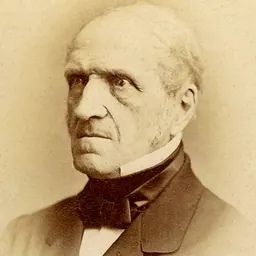
Lived 1832 – 1885 (aged 52). Leopold Damrosch was a German composer, conductor, music educator, violinist, theatre manager and musicographer.
Leopold Damrosch (October 22, 1832 – February 15, 1885) was a German American orchestral conductor, composer, violinist, and teacher. He was the patriarch of the Damrosch family, which includes Frank Damrosch and Walter Damrosch.
Biography Damrosch was born in Posen (Poznań), Kingdom of Prussia, the son of Heinrich Damrosch. His father was Jewish and his mother was Lutheran. Leopold Damrosch was baptized a Lutheran when marrying his wife, former opera singer Helene von Heimburg.
Damrosch began his musical education at the age of nine, learning the violin against the wishes of his parents, who wanted him to become a doctor. Capitulating to the wishes of his parents he entered the University of Berlin and completed his PhD in medicine but during his spare time he studied violin under Ries, and thoroughbass with Dehn and Bohmer. After he completed his degree Damrosch decided to dedicate his life and energy to music. He gained fame as a violinist and began to play to large audiences in many major German cities including Berlin and Hamburg. He went to Weimar, and was received by Franz Liszt, who appointed him solo-violinist in the Ducal orchestra.
It has been said mistakenly that Liszt dedicated his Symphonic poem Tasso: lamento e trionfo) to Damrosch. However, Liszt did dedicate the similarly named Le Triomphe funèbre du Tasse, the third part of Trois odes funèbres, to Damrosch who conducted the first performance in New York on March 24, 1877.
Damrosch first appeared as a conductor during the season of 1859 where he conducted the Philharmonic concerts in Breslau. He continued to conduct the Philharmonic for three years due to the success of this season. In 1862 Damrosch founded a symphonic society in Breslau with an orchestra of eighty performers, modelled after the Gewandhaus concerts of Leipzig. He participated in many concerts over this period and in 1873 he founded the Oratorio Society of New York. The first concert of this society was later that year and consisted of a programme of works by Johann Sebastian Bach, George Frideric Handel, Giovanni Pierluigi da Palestrina and others.
In 1877 Damrosch, in connection with a number of persons interested in the cultivation of orchestral music, established the Symphony society. This society became closely identified with the Oratorio Society and several joint performances were organized. The co-operation of these societies reached its climax in the great "musical festival" which was held in the armory of the 7th regiment in New York, from 3 till 7 May 1881. The chorus numbered 1,200, the main body being the Oratorio Society, which was augmented by various choral societies from neighboring towns. An additional chorus of 1,000 young ladies from the Normal College and 250 boys from the Church choirs took part in the afternoon concerts. The orchestra was composed of 250 pieces, and Dr. Damrosch selected a large number of artists for soloists. Among the choral works performed were Handel's Dettingen Te Deum and Messiah; Rubinstein's Tower of Babel (first time); Berlioz's Grande Messe des Mortes (first time); and Beethoven's Ninth Symphony. The audience numbered from 8,000 to 10,000 at each concert, and the enthusiasm for the projector of this enterprise resulted in an ovation on the last night. The degree of Doctor of Music was conferred upon him by Columbia in 1880. Trost, Op. 8, no. 6 (Joseph Christian Freiherrn von Zedlitz) Violin Concerto in D minor (pub. by Bote & Bock, 1878). One of at least two violin concertos by the composer; the other, also in D minor, dates from 1874. Von dem Rosenbusch, o Mutter, Op. 11, no. 2 Wandl' ich in dem Wald des Abends, Op. 16, no. 3 Wenn ich auf dem Lager liege, Op. 10, no. 5 Wenn ich ihn nur habe, Op. 7, no. 2 Wieder möcht' ich dir begegnen, Op. 8, no. 9 Zuléikha, Op. 6, no. 2 Zuversicht, Op. 5, no. 3 ((Ignaz) Julius Lasker)
Don’t just read it —
keep it.
Full-length biographies made to live with: read them, listen on the way to work, watch them tonight.
- E-book
- Audio
- Video
Instant download · yours to keep · every purchase keeps this site free
Important facts
People in Leopold Damrosch's life
Named in this biography and alive at the same time
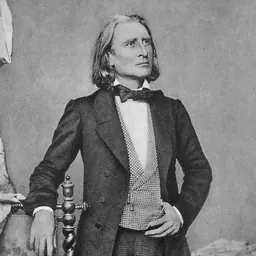
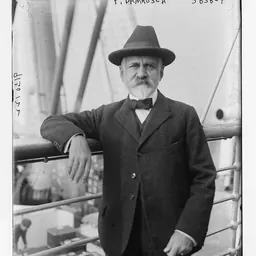
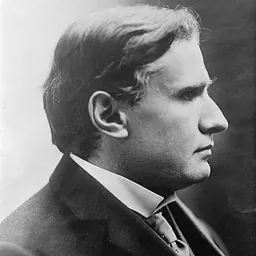

Related people
Same field, nearest in time

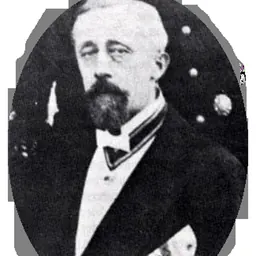
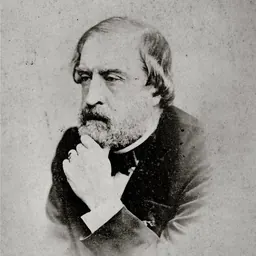

Contemporaries
People whose lives overlapped Leopold Damrosch's

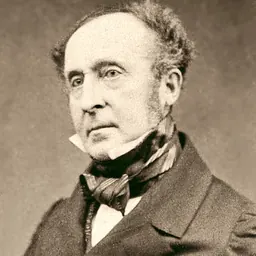
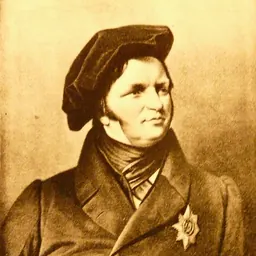

Frequently asked questions
Who was Leopold Damrosch?
German American conductor and composer (1832-1885)
When was Leopold Damrosch born?
Leopold Damrosch was born on 22 October 1832 in Poznań.
When did Leopold Damrosch die?
Leopold Damrosch died on 15 February 1885 in New York City.
What was Leopold Damrosch's occupation?
Leopold Damrosch was a composer, conductor, music educator, violinist, theatre manager and musicographer.
What nationality was Leopold Damrosch?
Leopold Damrosch was German.
Sources & further reading
Cite this page
APA: Biography.guide. (2026). Leopold Damrosch. https://biography.guide/leopold-damrosch/
MLA: "Leopold Damrosch." Biography.guide, https://biography.guide/leopold-damrosch/.
Chicago: "Leopold Damrosch." Biography.guide. https://biography.guide/leopold-damrosch/.
Data last updated: 2026-09-20 · Spot an error? Report a correction.
Page generated 2026-09-27 05:33 UTC