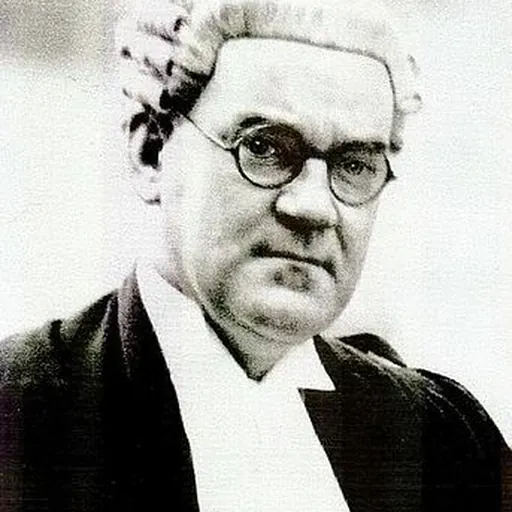
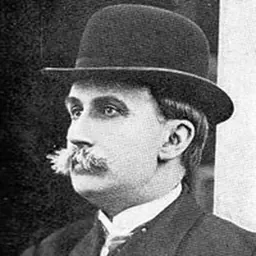
Leonard Edward Bishop Stretton
Judge and Royal Commissioner in the State of Victoria, Australia
About Leonard Edward Bishop Stretton
Lived 1893 – 1967 (aged 73–74).
Leonard Edward Bishop (Len) Stretton (1893–1967) was a notable Judge and Royal Commissioner in the State of Victoria, Australia.
Early life Stretton was born on 10 October 1893 in the Melbourne suburb of Brunswick as one of five children to William John Stretton, and his wife Emma Lydia, née Pye. From an early age Leonard was brought up at the then-rural Campbellfield, north of the city, but the family returned to the suburbs when his father won the Tattersall's Sweepstake in 1902. He was, by his own admission "born only a lifetime after the settlement of Melbourne" and felt at home with working-class people.
He attempted several times to volunteer for military service during World War One but was prevented for medical reasons.
From 1938 he was involved in the formation of the Workers Compensation Board of Victoria including a role as Chairman.
The Victorian Premier, Sir Albert Arthur Dunstan appointed Judge Stretton on 25 January 1939 to chair a Royal Commission and hearings began within weeks of the fires into the relationship of people to the forest. More than 200 witnesses gave evidence on 34 sitting days, beginning on 31 January and ending on 17 April, and over 2600 pages of transcript were recorded. Hearings were not only conducted in Melbourne but also where fires had impacted townships like Healesville, Powelltown, Kinglake, Marysville, Colac, Forrest, Lorne as well as far-flung communities such as Omeo. Stretton's questioning was thorough but his final report concluded that "The truth was hard to find” and "Much of the evidence was coloured by self-interest. Much of it was quite false. Little of it was wholly truthful."
Farmers, graziers and bush workers blamed the Forests Commission Victoria as well as the Melbourne and Metropolitan Board of Works (MMBW) for an overly zealous fire-suppression policy. The Commission, in turn, blamed landholders for recklessly setting fires at dangerous times.
After hearing all the evidence at the 1939 Royal Commission, Judge Stretton concluded that, in a sense, everyone and no one was to blame. As one witness put it: "The whole Australian race has a weakness for burning." Judge Stretton highlighted a popular culture of indifference, often carelessness.
Nearly two million hectares of the State burned on Black Friday 1939. Source: State Library of Victoria. The Royal Commission conducted by Judge Stretton has been described as one of the most significant inquiries in the history of Victorian public administration.
His scathing 35-page report was presented to the Victorian Parliament on the 16 May 1939 which led to sweeping changes including stringent regulation of burning and fire safety measures for sawmills, grazing licensees and the general public, the compulsory construction of dugouts at forest sawmills, increasing the forest roads network and firebreaks, construction of forest dams, fire towers and RAAF aerial patrols linked by the Forests Commissions radio network VL3AA to ground observers.
The Chairman of the Forests Commission, A.V Galbraith, who Stretton described as “a man of moral integrity” moved quickly and appointed Alf Lawrence as new the Chief Fire Officer, who immediately set about the huge task of rebuilding a highly organised and motivated fire fighting force and implementing many of Strettons recommendations.
The first major initiative from Judge Stretton's recommendations was changes to the Forests Act where the Forests Commission took complete responsibility of fire suppression and prevention on all public land including State forests, unoccupied Crown Lands, MMBW catchments and National Parks plus a buffer extending one mile beyond their boundaries onto private land. The change was huge and the Forests Commissions responsibilities grew in one leap from 2.4 million to 6.5 million hectares.
Stretton also examined the inevitability of fire in the Australian bush and heard evidence from foresters, graziers, sawmillers and academics whether it was best to let fires burn because they were a part of a natural protective cycle or to combat them to defend people and the forests. Importantly, his balanced deliberations officially sanctioned and encouraged fuel reduction burning. are used as a prescribed text for the Victorian VCE. Prior to the creation of the CFA, the Forests Commission had, to some extent been supporting individual volunteer brigades which had formed across rural Victoria in the preceding decades.
The human and property losses combined with both Stretton’s 1939 and 1944 inquiries shaped and cemented Victoria’s deep-seated approaches towards bushfire. The Forests Commission and CFA adopted clear policies to detect and suppress all bushfires and became very focused and skilled at doing it. Stretton’s inquiry was at the urging of the Forests Commission which had been expressing strong public concerns, from as early as 1932, about the impacts on upper water catchments of grazing and burning by lease-holder cattlemen.
Stretton identified the inseparable trinity of Forest, Soil and Water, where each one is dependent on the other. Destroy the soil and you destroy the forest and the water. His typically concise 30-page report controversially found that grazing: The Forests Commission, which had considerable experience in soil stabilisation works, was a strong advocate of the move.
Maisie Fawcett worked closely with Judge Stretton and became the Soil Conservation Board representative, and sole woman, on the Bogong High Plains Advisory Committee, which from 1946 determined the permissible number of cattle and the length of their stay each summer. Under these new policies the number of cattle in the mountains above 4500 feet steadily dropped from 9000 in 1950 to about 3000 in 1970. In 1955 grazing ceased altogether at Mt Bogong, followed in 1958 by Mt Loch, Mt Hotham and Mt Feathertop.
He retired in August 1964 and died in East Melbourne on 16 May 1967, aged 73. His nephew, Alan Stretton led the cleanup in Darwin after Cyclone Tracy.
Don’t just read it —
keep it.
Full-length biographies made to live with: read them, listen on the way to work, watch them tonight.
- E-book
- Audio
- Video
Instant download · yours to keep · every purchase keeps this site free
Important facts
People in Leonard Edward Bishop Stretton's life
Named in this biography and alive at the same time






Contemporaries
People whose lives overlapped Leonard Edward Bishop Stretton's


Frequently asked questions
Who was Leonard Edward Bishop Stretton?
Judge and Royal Commissioner in the State of Victoria, Australia
When was Leonard Edward Bishop Stretton born?
Leonard Edward Bishop Stretton was born on 10 October 1893.
When did Leonard Edward Bishop Stretton die?
Leonard Edward Bishop Stretton died in 1967.
Sources & further reading
· Wikipedia: Leonard Edward Bishop Stretton
· DBpedia: Leonard Edward Bishop Stretton
Cite this page
APA: Biography.guide. (2026). Leonard Edward Bishop Stretton. https://biography.guide/leonard-edward-bishop-stretton/
MLA: "Leonard Edward Bishop Stretton." Biography.guide, https://biography.guide/leonard-edward-bishop-stretton/.
Chicago: "Leonard Edward Bishop Stretton." Biography.guide. https://biography.guide/leonard-edward-bishop-stretton/.
Data last updated: 2026-09-23 · Spot an error? Report a correction.
Portrait: Wikimedia Commons · author & licence
Page generated 2026-09-27 05:07 UTC