
About Leonard Baskin
Lived 1922 – 2000 (aged 77). Leonard Baskin was an American sculptor, illustrator, graphic artist, xylographer, printer and writer.
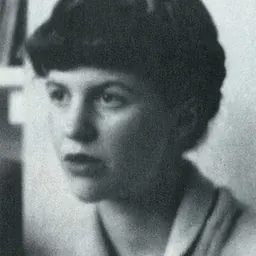
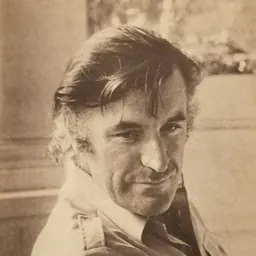
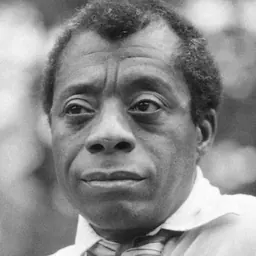
Leonard Baskin (August 15, 1922 – June 3, 2000) was an American sculptor, draughtsman, and graphic artist, as well as founder of the Gehenna Press (1942–2000). One of America's first fine arts presses, it went on to become "one of the most important and comprehensive art presses of the world", often featuring the work of poets, such as Sylvia Plath, Ted Hughes, Anthony Hecht, and James Baldwin side by side with Baskin's bold, stark, energetic and often dramatic black-and-white prints. Called a "Sculptor of Stark Memorials" by the New York Times, Baskin is also known for his wood, limestone, bronze, and large-scale woodblock prints, which ranged from naturalistic to fanciful, and were frequently grotesque, featuring bloated figures or humans merging with animals. "His monumental bronze sculpture, The Funeral Cortege, graces the Franklin Delano Roosevelt Memorial in Washington, D.C."
Early life and education Baskin was born in New Brunswick, NJ. When Baskin was seven, the family relocated to the Jewish Orthodox section of Williamsburg in Brooklyn, New York. Baskin studied at the New York University School of Architecture and Applied Arts from 1939 to 1941. In 1941, he won a scholarship to Yale where he studied for two years, and founded the Gehenna Press. on the heels of being one of 11 artists featured in the opening exhibition at the Terrain Gallery. He would go on to participate in another 40 exhibitions. He was also a member of the Society of American Graphic Artists. After spending several years in the 1970s in England, Baskin returned to the U.S. in 1984, and subsequently taught at Hampshire College in Amherst, Massachusetts. Baskin and Hughes collaborated on several further works, including A Primer of Birds, published by Gehenna Press in 1981. Sylvia Plath dedicated "Sculptor" to Leonard Baskin in her work, The Colossus and Other Poems (1960). In 1994, he received one of his most important commissions for a 30-foot bas relief for the Franklin Delano Roosevelt Memorial and a bronze statue of a seated figure, also erected in 1994, for the Holocaust Memorial in Ann Arbor, Michigan.
Artistic style and themes
A committed figurative artist and the son and brother of rabbis, Baskin's work often focused on mortality, Judaism, the Holocaust, and other angst-ridden themes. Repeating a Baskin quote first published in Time magazine, the New York Times ' Roberta Smith cites it to explain Baskin's allegiance to figurative work and respect for tradition, which was at odds with the abstract expressionist movement that dominated modern art for many decades of his life, and which he firmly rejected:Our human frame, our gutted mansion, our enveloping sack of beef and ash is yet a glory. Glorious in defining our universal sodality and in defining our utter uniqueness. The human figure is the image of all men and of one man. It contains all and can express all. The Philadelphia Museum of Art has a collection of over 800 of his works.
Baskin was the recipient of six honorary doctorates and a member of various national and royal academies in Belgium, Italy, and the U.S. The National Foundation of Jewish Culture in the U.S. presented him with its Jewish Cultural Achievement Award in Visual Arts in 2000. Other honors and commendations include the: Alonzo C. Mather Prize, Art Institute of Chicago American Academy of Arts and Sciences, Fellow Gold Medal of The American Academy of Arts and Letters Gold Medal of the National Academy of Design Guggenheim Fellowship in Creative Printings Louis Comfort Tiffany Foundation Fellowship for Sculpture National Academy of Design, elected an Associate in 1985; became full member in 1994 Ohara Museum Prize Prix de Rome, Honorable Mention for Sculpture Special Medal of Merit of the American Institute of Graphic Arts Widener Medal from the Pennsylvania Academy of the Fine Arts
Personal life Baskin was first cousin to American modern dancer and choreographer Sophie Maslow. His first wife, Esther Baskin, a nature writer, the author of Creatures of Darkness and The Poppy and Other Deadly Plants, and mother to son Tobias, died in 1973 at age 47. Baskin died at age 77 on June 3, 2000, in Northampton, where he resided. He was survived by his second wife Lisa Unger Baskin and their two children Hosea and Lucretia.
Don’t just read it —
keep it.
Full-length biographies made to live with: read them, listen on the way to work, watch them tonight.
- E-book
- Audio
- Video
Instant download · yours to keep · every purchase keeps this site free
Important facts
People in Leonard Baskin's life
Named in this biography and alive at the same time




Related people
Same field, nearest in time


Contemporaries
People whose lives overlapped Leonard Baskin's

Frequently asked questions
Who was Leonard Baskin?
American artist (1922–2000)
When was Leonard Baskin born?
Leonard Baskin was born on 15 August 1922 in New Brunswick.
When did Leonard Baskin die?
Leonard Baskin died on 3 June 2000 in Northampton.
What was Leonard Baskin's occupation?
Leonard Baskin was a sculptor, illustrator, graphic artist, xylographer, printer and writer.
What nationality was Leonard Baskin?
Leonard Baskin was American.
Sources & further reading
Cite this page
APA: Biography.guide. (2026). Leonard Baskin. https://biography.guide/leonard-baskin/
MLA: "Leonard Baskin." Biography.guide, https://biography.guide/leonard-baskin/.
Chicago: "Leonard Baskin." Biography.guide. https://biography.guide/leonard-baskin/.
Data last updated: 2026-09-20 · Spot an error? Report a correction.
Page generated 2026-09-27 05:25 UTC