
Louis Comfort Tiffany
American stained glass and jewelry designer
About Louis Comfort Tiffany
Lived 1848 – 1933 (aged 84). Louis Comfort Tiffany was an American painter, photographer, designer, interior designer, glass artist and jewelry designer, known for Favrile and Tiffany lamp.
Louis Comfort Tiffany (February 18, 1848 – January 17, 1933) was an American artist and designer who worked in the decorative arts and is best known for his work in art glass, especially stained glass and Favrile glass. He is associated with the art nouveau and aesthetic art movements. He was affiliated with a prestigious collaborative of designers known as the Associated Artists, which included Lockwood de Forest, Candace Wheeler, and Samuel Colman. Tiffany designed stained glass windows and lamps, glass mosaics, blown glass such as vases, ceramics, jewelry, enamels, and metalwork. Glass work by Tiffany Studios is known as Tiffany glass. He was the first design director at Tiffany & Co., the family company founded by his father Charles Lewis Tiffany.
Tiffany's first artistic training was as a painter, studying under George Inness in Eagleswood, New Jersey, and Samuel Colman in Irvington, New York. He also studied at the National Academy of Design in New York City in 1866 and 1867 and with salon painter Leon-Adolphe-Auguste Belly in 1868 and 1869. Belly's landscape paintings had a great influence on Tiffany.
Although Tiffany started out as a painter, he became interested in glassmaking from about 1875 and worked at several glasshouses in Brooklyn until 1878. Fellow artists and glassmakers Oliver Kimberly and Frank Duffner, founders of the Duffner and Kimberly Company and John La Farge were Tiffany's chief competitors in this new American style of stained glass. Tiffany, Duffner and Kimberly, along with La Farge, had learned their craft at the same glasshouses in Brooklyn in the late 1870s.
L. C. Tiffany and Associated American Artists
In 1879 he joined with Candace Wheeler, Samuel Colman, and Lockwood de Forest to form Louis Comfort Tiffany and Associated American Artists. The business lasted only four years. The group made designs for wallpaper, furniture, and textiles. In 1881, Tiffany did the interior design of the Mark Twain House in Hartford, Connecticut, which still remains.
The new firm's most notable work came in 1882 when U.S. president Chester Alan Arthur refused to move into the White House until it had been redecorated. Arthur commissioned Tiffany, who began to make a name for himself in New York City society for the firm's interior design work, to redo the state rooms, which Arthur found charmless. Tiffany worked on the East Room, the Blue Room, the Red Room, the State Dining Room, and the Entrance Hall, refurnishing, repainting in decorative patterns, installing newly designed mantelpieces, changing to wallpaper with dense patterns, and adding Tiffany glass to gaslight fixtures and windows and adding an opalescent floor-to-ceiling glass screen in the Entrance Hall. The Tiffany screen and other Victorian additions were all removed in the Roosevelt renovations of 1902, which restored the White House interiors to Federal style in keeping with its architecture.
Tiffany Studios After Tiffany had formed a partnership with Colman, Lockwood DeForest, and Candace Wheeler, and after having incorporated the interior decorating firm of L.C. Tiffany & Associated Artists, a desire to concentrate on art in glass led Tiffany to choose to establish his own glassmaking firm. The first Tiffany Glass Company was incorporated on December 1, 1885. It became the Tiffany Glass & Decorating Company in 1892, and the Tiffany Studios in 1900. He had used commercial glass houses for 19 years to supply his Manhattan showroom and clients, but wanted to be fully in charge of production and design security. Tiffany was keenly aware of the area's potential and for his furnaces to succeed, he needed to hire the town's pool of experienced immigrant workers, who were then mostly Italian, German, and Irish." With Tiffany later opening his own glass factory in Corona, New York, he was determined to provide designs that improved the quality of contemporary glass. The factory was the old Tiffany Studios in Corona, Queens, at the southwest corner of 43rd Avenue and 97th place, where it was used to cast art sculptures of bronze designs for sculptors, and bronze architectural elements such as floor registers, door jambs, window casings, lamps, and sconces, most notably for Tiffany. In 1893, his company also introduced the term Favrile in conjunction with his first production of blown glass at his new glass factory. Some early examples of his lamps were exhibited in the 1893 World's Fair in Chicago.
At the beginning of his career, Tiffany used cheap jelly jars and bottles because they had the mineral impurities that finer glass lacked. When he was unable to convince fine glassmakers to leave the impurities in, he began making his own glass. Tiffany used opalescent glass in a variety of colors and textures to create a unique style of stained glass. Tiffany acquired Stanford Bray's patent for the "copper foil" technique, which, by edging each piece of cut glass in copper foil and soldering the whole together to create his windows and lamps, made possible a level of detail previously unknown. This can be contrasted with the method of painting in enamels or glass paint on colorless glass, and then setting the glass pieces in lead channels, which had been the dominant method of creating stained glass for hundreds of years in Europe.
Tiffany trademarked Favrile (from the old French word for handmade) on November 13, 1894. He later used this word to apply to all of his glass, enamel and pottery. "Tiffany's favrile glass vases were based on Venetian glassmaking techniques mixed with ancient Egyptian and Near Eastern inspirations." Tiffany delved into glass-making with interest in Venetian glass-maker Antonio Salviati. Tiffany would study techniques from Salviati-trained glassmaker, Andrea Boldini. In 1902, Tiffany had been influenced by a Cypriote line of jewelry that his father, Charles Lewis Tiffany, had introduced earlier at the Turin World's Fair. He coined this particular line of favrile glass the Cypriote line.
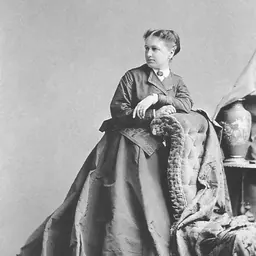
In 1889, at the Paris Exposition, Tiffany was said to have been "overwhelmed" by the glass work of Émile Gallé, French Art Nouveau artisan. "Nash hired many more skilled English artisans. Tiffany's vision, Nash's management, and Charles Lewis Tiffany's financing resulted in a thriving operation. Stourbridge Glass Company was absorbed by Tiffany into the Tiffany Furnaces in 1902. , as part of Louis C. Tiffany Furnaces, Inc.; and, as in the case of the metal shop under Arthur Nash's other son, Leslie Nash, the production turned to more commercial table and other wares." Clara Driscoll was one of the many accomplished artists employed by Tiffany. Driscoll was born in Tallmadge, Ohio. Driscoll was educated at the Western Reserve School of Design for Women, and in 1888 moved to New York City to study at the Metropolitan Museum of Art School. led by Driscoll, played a big role in designing many of the floral patterns on the famous Tiffany lamp and other creations.
From the late 1880s until about 1909, Driscoll supervised many of Tiffany's most celebrated leaded windows and mosaics. and head of the Ecclesiastical Department in 1899. He was among the most prominent and prolific designers: e.g., The Righteous Shall Receive a Crown of Glory (1901); Angel of the Resurrection (1904); The Prayer of the Christian Soldier (1919). He worked in his studio at Briarcliff Manor, New York, as well as in the Tiffany Studios factory at Corona, Queens. After 30 years and more than 500 windows designed and executed, he left Tiffany Studios in 1923 and moved to Los Angeles to work for Judson Studios.
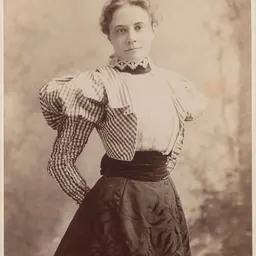
Julia Halsey Munson This necklace exemplifies Tiffany & Co.'s jewelry production around the turn of the 20th century. Necklace circa 1904. Julia Munson was born in Hoboken, New Jersey, in 1875. Munson was trained at the Artist-Artisan Institute of New York. Munson's drawings, preserved in Tiffany & Co. archives, exhibit abstract attention to nature's beauty, namely plants and flowers inspired by Tiffany's glassworks.
In 1903, Julia Munson became the head of Tiffany & Co.'s jewelry department. She played an important role in developing the enameling techniques used in Tiffany's jewelry, although her significant contributions remained largely unrecognized at the time, as none of the pieces she worked on were signed.
Agnes Northrop
Agnes Northrop (1857 – 1953) started as a "Tiffany Girl" and became a designer. In 2024 the Metropolitan Museum of Art acquired her stained glass triptych entitled Garden Landscape.
Finality Tiffany's glass fell out of favor in the 1910s, and by the 1920s a foundry had been installed for a separate bronze company. Tiffany's leadership and talent, as well as his father's money and old firm, allowed Tiffany to relaunch Tiffany Studios as a marketing strategy for his business to thrive. In 1924 the firm underwent a name change, and was renamed the A. Douglas Nash Company. John Polachek, founder of the General Bronze Corporation —who had worked at the Tiffany Studios earlier— purchased the Roman Bronze Works (the old Tiffany Studios). General Bronze then became the largest bronze fabricator in New York City formed through the merger of his own companies and Tiffany's Corona factory. 1911 saw the installation of an enormous glass curtain fabricated for the Palacio de Bellas Artes in Mexico City. It is considered by some to be a masterpiece. Tiffany used all his skills in the design of his own house, the 84-room Laurelton Hall, in the village of Laurel Hollow, on Long Island, New York, completed in 1905. Later this estate was donated to his foundation for art students along with 60 acres (243,000 m2) of land, sold in 1949, and destroyed by a fire in 1957. Aside from his fame for glass and jewelry design, Tiffany also designed what we know today as the New York Yankees logo, originally used in 1877 as part of the NYPD's Medal of Valor.
Personal life
Tiffany married Mary Woodbridge Goddard on May 15, 1872, in Norwich, Connecticut, and had four children:
Mary Woodbridge Tiffany (1873–1963) who married Graham Lusk; Charles Louis Tiffany I (1874–1874); Charles Louis Tiffany II (1878–1947) who married Katrina Brandes Ely; Hilda Goddard Tiffany (1879–1908), the youngest.
After the death of his wife, he married Louise Wakeman Knox (1851–1904) on November 9, 1886. They had four children:
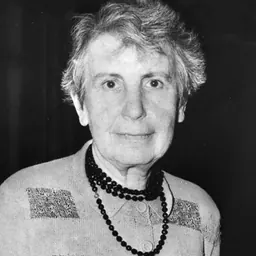
Louise Comfort Tiffany (1887–1974), who married Rodman Drake DeKay Gilder; Julia DeForest Tiffany (1887–1973), who married Gurdon S. Parker then married Francis Minot Weld; Annie Olivia Tiffany (1888–1892); and Dorothy Trimble Tiffany (1891–1979), who, as Dorothy Burlingham, later became a noted psychoanalyst and lifelong friend and partner of Anna Freud.
Laurelton Hall
Spring panel from the Four Seasons leaded-glass window, from Laurelton HallTiffany had designed and built Laurelton Hall, but it has long since been demolished. It was situated in the village of Laurel Hollow in the town of Oyster Bay on Long Island, New York. It was built as an 84-room mansion on 600 acres of land, designed in classic Art Nouveau style. "Laurelton was ever-evolving," according to Alice Frelinghuysen. The house, as well as the gardens, both manifested and embodied Tiffany's artistic expression. "He filled museum-style cases with hundreds of the best examples of his own glass vases. pottery, enamelware, juxtaposed with Roman and Syrian glass, Egyptian jewelry, and Near Eastern ceramics and tiles."
Awards and honors 1893: 44 medals, World Columbian Exposition (Chicago) 1900: gold medal, Chevalier of the Legion of Honour (France) 1900: grand prix, Paris Exposition 1901: grand prix, St. Petersburg Exposition 1901: gold medal, Buffalo Exposition 1901: gold medal, Dresden Exposition 1902: gold medal and special diploma, Turin Exposition 1904: gold medal, Louisiana Purchase Exposition in St. Louis 1907: gold medal, Jamestown Exposition 1909: grand prize, Seattle Exposition 1915: gold medal, Panama Exposition 1926: gold medal, Philadelphia Sesquicentennial Exposition Source: a former art student in 1930 at Laurelton Hall, and his wife Jeannette Genius McKean rescued the chapel, which now occupies an entire wing of the Morse Museum which they founded. Many glass panels from Laurelton Hall are also there; for many years some were on display in local restaurants and businesses in Central Florida. Some were replaced by full-scale color transparencies after the museum opened.
In November 2006, a major exhibit about Laurelton Hall, Louis Comfort Tiffany and Laurelton Hall: An Artist's Country Estate, opened at the Metropolitan Museum of Art in New York City. In 2007, an exhibit at the New-York Historical Society featured new information about the women who worked for Tiffany and their contribution to designs credited to Tiffany; the Society holds and exhibits a major collection of Tiffany's work. Since 1995, the Queens Museum of Art has featured a permanent collection of Tiffany objects, which continues Tiffany's presence in Corona, Queens where the company's studios were once located. Reid Memorial Presbyterian Church in Richmond, Indiana, has a collection of 62 Tiffany windows which are still their original placements, but the church is deteriorating and in jeopardy.
In 1906, Tiffany created stained glass windows for the Stanford White-designed Madison Square Presbyterian Church located on Madison Avenue in Manhattan, New York City. The church was Tiffany's place of worship, and was torn down in 1919 after the Metropolitan Life Insurance Company bought the land to build their new headquarters. Tiffany had inserted a clause in his contract stipulating that if the church were ever to be demolished, then ownership of the windows would revert to him.
Tiffany enjoyed staying at the Mission Inn in Riverside, California, and had become friends with the founder of the Mission Inn, Frank Augustus Miller, so, after meeting with Miller in New York, Tiffany shipped the windows to the Mission Inn; they arrived there in 1924, and were stored until the inn's St. Francis Chapel was completed in 1931. There are six rectangular windows and a 104” diameter window in the rear of the chapel, as well as another 104” diameter window is in the Galeria next to the chapel. A smaller window entitled “Monk At The Organ” featuring a Franciscan friar, is in St Cecelia's Chapel, a wedding chapel, and is engraved with Tiffany's signature. The St Francis Chapel was designed with the intent of prominently displaying Tiffany's windows. The Arlington Street Church in Boston has 16 Tiffany windows of a set of 20, designed by Frederick Wilson (1858–1932), Tiffany's chief designer for ecclesiastical windows. They were gradually installed between 1889 and 1929. The church archives include designs for 4 additional windows which were never commissioned due to financial constraints caused by the Great Depression. When funds again became available, Tiffany Studios had gone out of business and its stockpile of glass had been dispersed and lost, ending the prospect of completing the set.
The Pine Street Baptist Church in Providence, Rhode Island, was opened in 1917 at Lloyd and Wayland Street as Central Baptist and in 2003, became known as Community Church of Providence. Between 1917 and 2018 the church featured a large Tiffany stained glass memorial to Frederick W. Hartwell that was created by Agnes F. Northrop and entitled "Light in Heaven and Earth". The complex work, considered "one of the largest and finest landscape windows ever produced by Tiffany Studios", largely was overlooked in the community. In 2018, the church sold the window to the Art Institute of Chicago. After conservation and preparation, it will be displayed prominently as the Hartwell Memorial Window.
Significant collections of Tiffany windows outside the United States are the 17 windows in the former Erskine and American United Church, now part of the Montreal Museum of Fine Arts in Montreal, Canada, and the two windows in the American Church in Paris, on the Quai d'Orsay, which have been classified as National Monuments by the French government; these were commissioned by Rodman Wanamaker in 1901 for the original American Church building on the right bank of the Seine.
The Haworth Art Gallery in Accrington, England, contains a collection of more than 140 examples of the work of Louis Comfort Tiffany, including vases, tiles, lamps, and mosaics. The collection, which claims to be the largest collection of publicly owned Tiffany glass outside of the United States, contains a fine example of an Aquamarine vase and the noted Sulphur Crested Cockatoos mosaic.
Gallery
Don’t just read it —
keep it.
Full-length biographies made to live with: read them, listen on the way to work, watch them tonight.
- E-book
- Audio
- Video
Instant download · yours to keep · every purchase keeps this site free
Important facts
Family & relationships
People in Louis Comfort Tiffany's life
Named in this biography and alive at the same time




Related people
Same field, nearest in time



Contemporaries
People whose lives overlapped Louis Comfort Tiffany's



Frequently asked questions
Who was Louis Comfort Tiffany?
American stained glass and jewelry designer (1848-1933)
When was Louis Comfort Tiffany born?
Louis Comfort Tiffany was born on 18 February 1848 in New York City.
When did Louis Comfort Tiffany die?
Louis Comfort Tiffany died on 17 January 1933 in New York City.
What was Louis Comfort Tiffany's occupation?
Louis Comfort Tiffany was a painter, photographer, designer, interior designer, glass artist and jewelry designer.
What was Louis Comfort Tiffany known for?
Louis Comfort Tiffany was known for Favrile and Tiffany lamp.
What nationality was Louis Comfort Tiffany?
Louis Comfort Tiffany was American.
Sources & further reading
· Wikipedia: Louis Comfort Tiffany
· DBpedia: Louis Comfort Tiffany
Cite this page
APA: Biography.guide. (2026). Louis Comfort Tiffany. https://biography.guide/louis-comfort-tiffany/
MLA: "Louis Comfort Tiffany." Biography.guide, https://biography.guide/louis-comfort-tiffany/.
Chicago: "Louis Comfort Tiffany." Biography.guide. https://biography.guide/louis-comfort-tiffany/.
Data last updated: 2026-09-20 · Spot an error? Report a correction.
Page generated 2026-09-27 05:32 UTC