
About Leon Golub
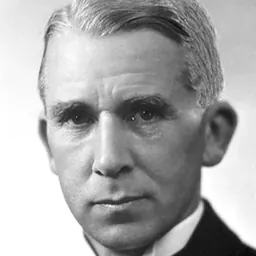
Lived 1922 – 2004 (aged 82). Leon Golub was an American painter, printmaker and visual artist.
Leon Golub (January 23, 1922 – August 8, 2004) was an American painter. He was born in Chicago, Illinois, where he also studied, receiving his BA at the University of Chicago in 1942, and his BFA and MFA at the School of the Art Institute of Chicago in 1949 and 1950, respectively.
He was married to and collaborated with the artist Nancy Spero (August 24, 1926 – October 18, 2009). Their son Stephen Golub was an economics professor at Swarthmore College. Their son Philip Golub is Professor of International and Comparative Politics at the American University of Paris and was a longstanding contributing editor of the influential journal Le Monde diplomatique. Their youngest son Paul Golub is a theater director and acting teacher working in France.
Early life Born in Chicago in 1922, Golub received his B.A. in Art History from the University of Chicago in 1942. Then he was enlisted in the army. From 1947 to 1949, he studied under the G.I. Bill at the School of the Art Institute of Chicago (SAIC). The student body included a large number of vets, including Golub’s one-time flatmate Cosmo Campoli, George Cohen, Theodore Halkin and Seymour Rosofsky, whose work often reflected the horrors of war, as well as the uncertainties of the Cold War and Nuclear age. It was at SAIC that he met the artist Nancy Spero, to whom he was married for nearly fifty years. Golub helped organize and showed in the seminal Momentum Exhibitions of 1948–1949, put together by SAIC and Institute of Design students in protest over their exclusion from the Art Institute’s prestigious "Annual Exhibition by Artists of Chicago and Vicinity." The group included, in addition to Golub’s aforementioned classmates, June Leaf, H.C. Westermann, Irving Petlin, Evelyn Statsinger, Don Baum, and Arthur Lerner. In later years, the Monster Roster would be regarded as forerunners to the more widely known Chicago Imagists.
Career Golub, who always painted in a figural style, drew upon diverse representations of the body from ancient Greek and Roman sculpture, to photographs of athletic competitions, to gay pornography; often pulled directly from a huge database he assembled of journalistic images from the mass media. He likened his painting process to sculptural technique and employed a method of layering and scraping away paint, sometimes using a meat cleaver, leaving varying amounts of canvas untouched, a violently expressionistic style that Golub dubbed 'barbaric realism".
From 1959 through 1964, Golub and his wife, artist Nancy Spero opted to live in Paris, a move occasioned in part by the belief that Europe would be more receptive to their work dealing overtly with issues of power, sexual and political. During this period Golub's work increased in size because of larger available studio space and the inspiration of the French tradition of large-scale history painting. He also switched from using lacquer to acrylics, left more of the surface unpainted, and began to grind the paint directly into the canvas. While in Italy for the year of 1956, both Golub and Spero were profoundly influenced by the figurative works of Etruscan and Roman art, whose narratives addressed ancient themes of power and violence.
When Golub returned to New York from Paris in 1964, the Vietnam War was escalating, and he responded with his two series: Napalm and Vietnam, works that show the vulnerability of the body while also demonstrating the power of modern weapons. Golub's work for his Vietnam paintings were at first titled Assassins, eventually being changed to not attribute the intention of the soldiers. One of his longest works would include that of Vietnam II, with it stretching over twelve meters. He and Spero became active with Artists and Writers Protest, "the first such group to take a public stand against the war". This group would be centered around the organization of anti war activities. In 1967, as part of the group's Angry Arts Week, Golub organized The Collage of Indignation, a collaborative work by over 150 artists which he described as "not political art, but rather an expression of popular revulsion."
Golub had a career breakthrough that same year when he was selected to exhibit five paintings at the Museum of Modern Art's "New Images of Man" show in New York City. His work was included alongside that of such established and rising artists as Willem de Kooning, Francis Bacon and Jackson Pollock.
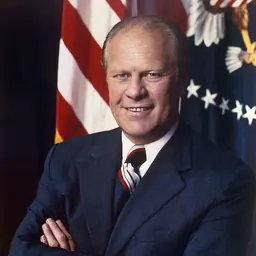
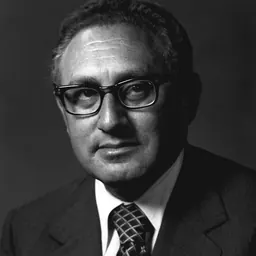
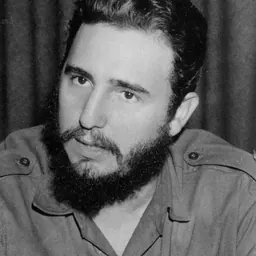
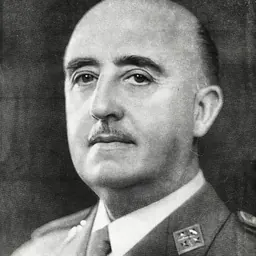
In the mid-1970s, Golub was beset with self-doubt caused by a lack of interest in his work. Between the years of 1974 to 1976, Golub would cut up and destroy many works he produced up to this period and nearly abandoned painting. In the late seventies, however, over the course of three years he would produce more than a hundred portraits of public figures, with sixty of those portraits having been completed between February and September 1976. His interest in creating these portraits would stem from a resemblance between a young Gerald Ford and a soldier from one of his works, Vietnam III. Among the portraits were political and military leaders, dictators, and religious figures. Leon Golub: Paintings, 1950-2000 includes several portraits of Nelson Rockefeller and Ho Chi Minh, along with images of Fidel Castro, Francisco Franco, Richard Nixon, and Henry Kissinger. Some of these portraits were included in the display 'Leon Golub: Political Portraits' (2016) at the National Portrait Gallery, London.
In the 1980s, Golub turned his attention to terrorism in a variety of forms, from the subversive operations of governments to urban street violence. Killing fields, torture chambers, bars, and brothels became inspiration and subject for work that dealt with such themes as violent aggression, racial inequality, gender ambiguity, oppression, and exclusion. Among the work produced in this period are the series Mercenaries, Interrogation, Riot, and Horsing Around. His Interrogation II (1981; Art Institute of Chicago ) is representative of the subject from this period and Golub's technique, "the canvas painted, scraped and repainted many times to create a tense, skinlike surface."
From the nineties to his death, Golub's work shifted toward the illusionistic, with forms semi-visible, and appropriated graphic styles from ancient carvings, medieval manuscripts, and contemporary graffiti. As an older man he began to consider his own mortality, and moved toward themes of separation, loss, and death. Text appeared in many of the paintings combined with a series of symbolic references, including dogs, lions, skulls, and skeletons.
Golub's work was seen in solo exhibitions throughout the world, among them World Wide (1991), a Grand Lobby project at the Brooklyn Museum of Art. For World Wide the artist created a process, repeated in exhibitions at several other museums, by which he enlarged images and details from his paintings and screened them on transparent sheets of vinyl, hung so that they surround the viewer. He was represented in many group exhibitions and was one of the few white artists included in Black Male: Representations of Masculinity in Contemporary American Art at the Whitney Museum of American Art in 1994.
In 1996, Golub was given a commission to design a set of stained glass windows for Temple Sholom in Chicago, the four windows depict the life of Joseph. These would be the only stained glass windows Leon Golub ever did. They were fabricated in New York by Victor Rothman and Gene Mallard.
2001: renaissance While Leon Golub's later works from the 1990s offer more fragmented (in his words "left-over") reincarnations of his early messages, it is his larger, carved works, vividly depicting power relations that have re-gained attention with the U.S.'s involvement in Iraq and Afghanistan.
In 2003, Golub revisited his 1959 painting, Reclining Youth, part of a series of paintings inspired by friezes at the Great Altar of Zeus in Pergamon. Working with Magnolia Editions, the artist translated the painting into a large-scale [] Jacquard tapestry, his first and only textile work.
Retrospectives From March to May 2015, the Serpentine Gallery in London held a career retrospective which was "spun off" and presented as a three-floor career retrospective at the Manhattan Hauser & Wirth in June 2015. In 2018, the Metropolitan Museum of Art presented Leon Golub: Raw Nerve featuring his painting Gigantomachy II, as well as paintings from his series, including Pylon, White Squad, Riot, and Horsing Around. In 2022, the Hall Art Foundation, in Reading, Vermont presented a major survey of approximately 70 Golub works from the Hall and Meyer Collections spanning Golub’s career from 1947 to 2003, which traveled to Kunstmuseum Schloss Derneburg in 2023. In 2024, the post-conceptual Black American artist Rashid Johnson curated the survey show Et in Arcadia ego: Leon Golub at Hauser & Wirth in New York City.
Collections, selected Selected public collections
Amon Carter Museum, Fort Worth, Texas Art Gallery of Western Australia, Perth, Australia Art Institute of Chicago, Illinois Baltimore Museum of Art, Maryland Bibliothèque nationale de France, Paris Blanton Museum of Art, Austin, Texas Brooklyn Museum, New York Carnegie Museum of Art, Pittsburgh, Pennsylvania Cincinnati Art Museum, Ohio Des Moines Art Center, Iowa Fogg Art Museum, Harvard University, Cambridge, Massachusetts Galleria degli Uffizi, Florence Hiroshima City Museum of Contemporary Art, Hiroshima, Japan Honolulu Museum of Art, Hawaii Indiana University Art Museum, Bloomington, Indiana Indianapolis Museum of Art, Indiana Israel Museum, Jerusalem Jewish Museum, New York Kent State University, Ohio Krannert Art Museum, University of Illinois, Champaign-Urbana Los Angeles County Museum of Art, California Madison Art Center, Madison, Wisconsin Metropolitan Museum of Art, New York Miami Art Museum, Florida Montreal Museum of Fine Arts, Canada Musei Civici di Udine, Friuli, Italy Museum of Contemporary Art, Chicago, Illinois Museum of Fine Arts, Houston, Texas Museum of Modern Art, New York National Gallery of Art, Washington, D.C. National Gallery of Australia, Canberra National Gallery of Victoria, Melbourne, Australia Nelson-Atkins Museum of Art, Kansas City, Missouri Norton Simon Museum of Art, Pasadena, California Smart Museum of Art, University of Chicago, Illinois Smithsonian American Art Museum, Washington, D.C. Spertus Institute for Jewish Learning and Leadership, Illinois Tate Gallery, London, United Kingdom Tel Aviv Museum of Art, Tel Aviv, Israel Tennessee State Museum, Nashville, Tennessee Toledo Museum of Art, Ohio University of California, Berkeley, California University of Massachusetts Amherst, Massachusetts University of North Carolina at Chapel Hill, North Carolina Vancouver Art Gallery, British Columbia, Canada Vietnam National Museum of Fine Arts, Hanoi Whitney Museum of American Art, New York
Selected private foundations Eli Broad Family Foundation, Los Angeles, California Hall Collection
Selected private collections Saatchi Collection, London Gene R. Summers, Chicago Ulrich Meyer and Harriet Horwitz, Chicago T.C. Williams II, Santa Fe, New Mexico
Films and videos Golub / Spero, DVD from Kartemquin Films, Chicago, Illinois, 2006 (which includes Golub: Late Works are the Catastrophes; Woman As Protagonist: The Art of Nancy Spero; Artemis, Acrobats, Divas and Dancers: Nancy Spero in the New York City Subway) Golub: The Late Works Are the Catastrophes, a film by Kartemquin Films, Chicago, Illinois, 2004 Golub, a film by Kartemquin Films, Chicago, Illinois, 1988 (previewed New York Film Festival, 1988) State of the Art: Ideas & Images of the 1980s, Program 5, TV Film Channel Four, London, England, 1987 Victims, Media Environment with Nancy Spero and Werner Wada, Rod Rodgers Dance Company The Mercenary Game, a documentary film by Alain d'Aix et al., The RadioTelevision du Quebec, 1983
Don’t just read it —
keep it.
Full-length biographies made to live with: read them, listen on the way to work, watch them tonight.
- E-book
- Audio
- Video
Instant download · yours to keep · every purchase keeps this site free
Important facts
Family & relationships
People in Leon Golub's life
Named in this biography and alive at the same time

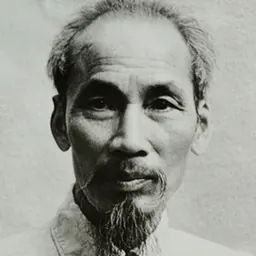


Related people
Same field, nearest in time


Contemporaries
People whose lives overlapped Leon Golub's

Frequently asked questions
Who was Leon Golub?
American artist (1922-2004)
When was Leon Golub born?
Leon Golub was born on 23 January 1922 in Chicago.
When did Leon Golub die?
Leon Golub died on 8 August 2004 in New York City.
What was Leon Golub's occupation?
Leon Golub was a painter, printmaker and visual artist.
What nationality was Leon Golub?
Leon Golub was American.
Sources & further reading
Cite this page
APA: Biography.guide. (2026). Leon Golub. https://biography.guide/leon-golub/
MLA: "Leon Golub." Biography.guide, https://biography.guide/leon-golub/.
Chicago: "Leon Golub." Biography.guide. https://biography.guide/leon-golub/.
Data last updated: 2026-09-20 · Spot an error? Report a correction.
Page generated 2026-09-27 05:01 UTC