
About Léon Brillouin
Lived 1889 – 1969 (aged 80). Léon Brillouin was a French and American physicist and professor, known for Acoustoelastic effect, Brillouin and Langevin functions and Brillouin doublet.
Léon Nicolas Brillouin (; August 7, 1889 – October 4, 1969) was a French physicist. He made contributions to quantum mechanics, radio wave propagation in the atmosphere, solid-state physics, and information theory.
Early life
Brillouin was born in Sèvres, near Paris, France. His father, Marcel Brillouin, grandfather, Éleuthère Mascart, and great-grandfather, Charles Briot, were physicists as well.
Education From 1908 to 1912, Brillouin studied physics at the École Normale Supérieure, in Paris. From 1911 he studied under Jean Perrin until he left for the Ludwig-Maximilians-Universität München (LMU), in 1912. At LMU, he studied theoretical physics with Arnold Sommerfeld. Just a few months before Brillouin's arrival at LMU, Max von Laue had conducted his experiment showing X-ray diffraction in a crystal lattice. In 1913, he went back to France to study at the University of Paris and it was in this year that Niels Bohr submitted his first paper on the Bohr model of the hydrogen atom. From 1914 until 1919, during World War I, he served in the military, developing the valve amplifier with G. A. Beauvais. At the conclusion of the war, he returned to the University of Paris to continue his studies with Paul Langevin, and was awarded his Docteur ès science in 1920. Brillouin's thesis jury was composed of Langevin, Marie Curie, and Jean Perrin and his thesis topic was on the quantum theory of solids. In his thesis, he proposed an equation of state based on the atomic vibrations (phonons) that propagate through it. He also studied the propagation of monochromatic light waves and their interaction with acoustic waves, i.e., scattering of light with a frequency change, which became known as Brillouin scattering.
Career
After receipt of his doctorate, Brillouin became the scientific secretary of the reorganized Journal de Physique et le Radium. In 1932, he became associate director of the physics laboratories at the Collège de France. In 1926, Gregor Wentzel, Hendrik Kramers, and Brillouin independently developed what is known as the Wentzel–Kramers–Brillouin approximation, also known as the WKB method, classical approach, and phase integral method. In 1928, after the Institut Henri Poincaré was established, he was appointed as professor to the Chair for Theoretical Physics. During his work on the propagation of electron waves in a crystal lattice, he introduced the concept of Brillouin zones in 1930. Quantum mechanical perturbations techniques by Brillouin and by Eugene Wigner resulted in what is known as the Brillouin–Wigner formula.
Since Brillouin's study with Sommerfeld, he was interested and did pioneering work in the diffraction of electromagnetic radiation in a dispersive media. As a specialist in radio wave propagation, Brillouin was appointed director general of the French state-run agency, Radiodiffusion Nationale about a month before war with Germany, August 1939. In May 1940, upon the collapse of France, as part of the government, he retired to Vichy. Six months later, he resigned and went to the United States. He lived in New York City until he died in 1969. Stéfa Prussak was born 17 December 1890 in Lodz, Poland and was a painter and avid collector of art. They had one daughter, Isabelle "Bella" Brillouin, who later married Gilbert Boris. Stéfa died in Paris on March 17, 1966 after an illness. Léon Brillouin remarried a few years later to a friend of his first wife, Marcelle van Praag (born Marcelle Esther Lioni), and were together until his death on October 4, 1969 . His widow Marcelle (known as Madame Brillouin), and his daughter from his first marriage, Bella, managed his estate and gifted his archival papers and papers related to his father and grandfather to the AIP Niels Bohr Library & Archives in 1970. La science et la théorie de l'information (Masson, 1959) Vie Matière et Observation (Albin Michel, 1959) Wave Propagation and Group Velocity (Academic Press, 1960) Science and Information Theory (Academic Press, 1956; second edition 1962, reprinted Dover, 2004) Scientific Uncertainty and Information (Academic Press, 1964) Tensors in Mechanics and Elasticity. Translated from the French By Robert O. Brennan. (Engineering Physics: An International Series of Monographs, Vol. 2) (Academic Press, 1964) Relativity Reexamined (Academic Press, 1970) Tres Vidas Ejemplares en la Física (Madrid, Marzo, 1970)
Don’t just read it —
keep it.
Full-length biographies made to live with: read them, listen on the way to work, watch them tonight.
- E-book
- Audio
- Video
Instant download · yours to keep · every purchase keeps this site free
Important facts
more
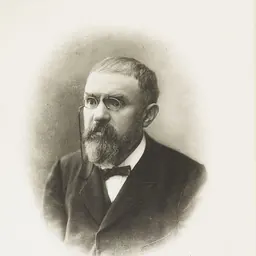
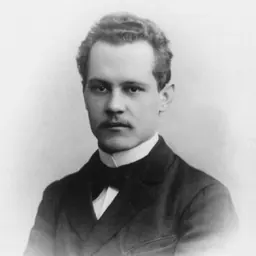
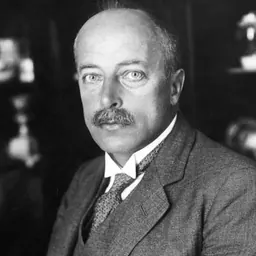
Brillouin zone, Brillouin–Wigner formula, Einstein–Brillouin–Keller method, Inertial electrostatic confinement, Negentropy, WKB approximationPeople in Léon Brillouin's life
Named in this biography and alive at the same time





Related people
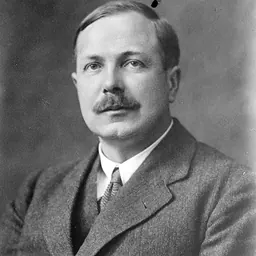
Same field, nearest in time

Contemporaries
People whose lives overlapped Léon Brillouin's

Frequently asked questions
Who was Léon Brillouin?
French physicist (1889-1969)
When was Léon Brillouin born?
Léon Brillouin was born on 7 August 1889 in Sèvres.
When did Léon Brillouin die?
Léon Brillouin died on 4 October 1969 in New York City.
What was Léon Brillouin's occupation?
Léon Brillouin was a physicist and professor.
What was Léon Brillouin known for?
Léon Brillouin was known for Acoustoelastic effect, Brillouin and Langevin functions, Brillouin doublet, Brillouin flow, Brillouin scattering and Brillouin theorem.
What nationality was Léon Brillouin?
Léon Brillouin was French and American.
Sources & further reading
Cite this page
APA: Biography.guide. (2026). Léon Brillouin. https://biography.guide/leon-brillouin/
MLA: "Léon Brillouin." Biography.guide, https://biography.guide/leon-brillouin/.
Chicago: "Léon Brillouin." Biography.guide. https://biography.guide/leon-brillouin/.
Data last updated: 2026-09-20 · Spot an error? Report a correction.
Page generated 2026-09-27 05:20 UTC