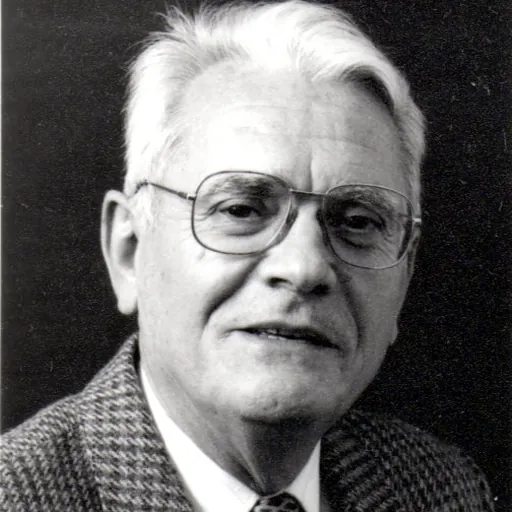
About Léo Figuères
Lived 1918 – 2011 (aged 93). Léo Figuères was a French politician and historian.
Léopold "Léo" Figuères (27 March 1918 – 1 August 2011) was a French politician and publicist belonging to the French Communist Party. A prominent member of the French Resistance, he was mayor of Malakoff from 1965 until his retirement in 1993.
Biography
Early life and career Figuères was born in Perpignan on into a family of farmers. His family moved to Prades in 1922, where his father had found work. After completing primary school and secondary school in Prades, he trained as a typographer from 1933 to 1935 and then worked in this profession in Perpignan. Although he grew up in a rather conservative family, reading L'Humanité made an impression on him and at the early age of 14, he joined the Mouvement Jeunes Communistes de France in 1932, then the French Communist Party in 1935. From 1935 to 1937 he attended the International Lenin School in Moscow. On his return to France, he was one of the founders of L'Union de la Jeunesse Agricole de France (UJAF) (roughly: Union of French Agricultural Youth) and helped form the French Volunteer Battalions of the International Brigades for the Spanish Civil War. In 1938 he was drafted into the French army in Corsica.
World War II, Vietnam and Algeria He immediately joined the French resistance after the establishment of the Vichy regime. In 1941 he met his future wife, Lea Lamoureux, who, like him, was a member of the resistance. By decision of October 10, 1944, he was sent to the Consultative Assembly along with Pierre Gauthier as one of the six delegates of the United Forces of Patriotic Youth (FUJP). After the liberation in 1946 he became general secretary of the Union of Young People of Republican France (UJRF), in which other communist youth organizations from the Resistance were also represented.
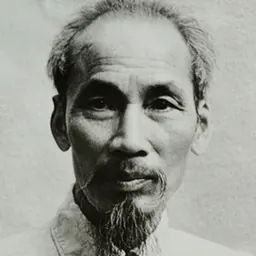
During the Indochina War he was director of the newspaper of the Avant-gard of the UJRF Communist Youth and went to Vietnam in 1950 as a journalist. He met the leaders of the Democratic Republic of Vietnam including Ho Chi Minh. He published stories and a book on the colonial war in which he called for the war to end and those responsible to be brought to justice. Towards the end of the war in Algeria, he took part as a leader in the demonstration against the Organization armée secrète (OAS) in Paris on February 8, 1962. He was severely beaten by the police during a demonstration at the Charonne metro station.
Léo Figuères died in Perpignan aged 92. He was buried at Los Masos.
Awards
Resistance Medal and Cross of the Resistance Volunteer Combatant Knight of the Legion of Honor, September 23, 1983 Knight of the Ordre des Arts et des Lettres, September 16, 1985.
Don’t just read it —
keep it.
Full-length biographies made to live with: read them, listen on the way to work, watch them tonight.
- E-book
- Audio
- Video
Instant download · yours to keep · every purchase keeps this site free
Important facts
People in Léo Figuères's life
Named in this biography and alive at the same time

Related people
Same field, nearest in time






Contemporaries
People whose lives overlapped Léo Figuères's


Frequently asked questions
Who was Léo Figuères?
French politician (1918-2011)
When was Léo Figuères born?
Léo Figuères was born on 27 March 1918 in Perpignan.
When did Léo Figuères die?
Léo Figuères died on 1 August 2011 in Perpignan.
What was Léo Figuères's occupation?
Léo Figuères was a politician and historian.
What nationality was Léo Figuères?
Léo Figuères was French.
Sources & further reading
Cite this page
APA: Biography.guide. (2026). Léo Figuères. https://biography.guide/leo-figueres/
MLA: "Léo Figuères." Biography.guide, https://biography.guide/leo-figueres/.
Chicago: "Léo Figuères." Biography.guide. https://biography.guide/leo-figueres/.
Data last updated: 2026-09-22 · Spot an error? Report a correction.
Portrait: Wikimedia Commons · author & licence
Page generated 2026-09-27 05:03 UTC