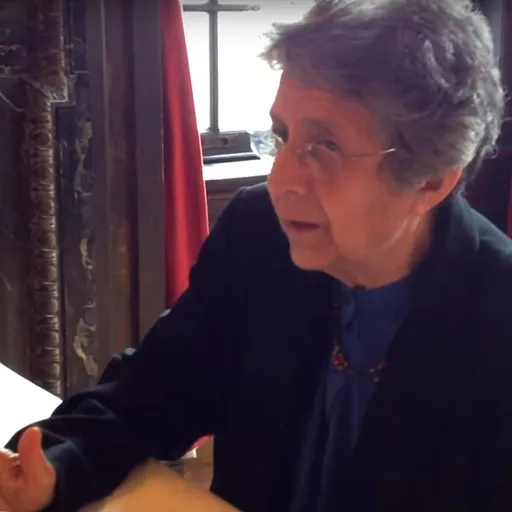
About Leila Ahmed
Born 1940. Leila Ahmed is an Egyptian and American university teacher and writer.
Leila Ahmed (; born 29 May 1940) is an Egyptian-American scholar of women's studies and religion. In 1992 she published her book Women and Gender in Islam, which is regarded as a pioneering historical analysis of the position of women in Arab Muslim societies. She became the first professor of women's studies in religion at Harvard Divinity School in 1999, and has held the Victor S. Thomas Professor of Divinity chair since 2003. She was later awarded the Victor S. Thomas Research Professor of Divinity in 2020.
Biography Born in the Heliopolis district of Cairo to a middle-class Egyptian father and an upper class Turkish mother in 1940, Ahmed's childhood was shaped both by Muslim Egyptian values and the liberal orientation of Egypt's aristocracy under the ancien régime. The Ahmed family became politically ostracized following the Free Officers Movement in 1952. Her father, a civil engineer, was a vocal opponent of Gamal Abdel Nasser's construction of the Aswan High Dam on ecological principles.
She earned her undergraduate and doctorate degrees from University of Cambridge during the 1960s before moving to the United States to teach and write, where she was appointed to professorship in Women's Studies and Near Eastern studies at the University of Massachusetts Amherst, and the position of director in said programs in 1981. A professorship in Women's Studies and Religion at the Harvard Divinity School followed in 1999, where she currently teaches.
Veiling In 2013, Ahmed, who had previously opposed the veil, received the University of Louisville Grawemeyer Award in Religion for her analysis of the veiling of Muslim women in the United States, in which she describes how some women wore the veil as a symbol of activism for justice and social change. As such, she no longer believes that the resurgence of the veil was solely driven by patriarchy, a view she held when she was younger, as she noted how many women in the United States wore it as a symbol of their Islamic identity, social justice, and to raise other women's awareness of society's sexist messages about women's bodies and dress. However, she believes that the veil has no universal meaning and is still driven by forces of patriarchy in other places around the world.
From a description of Ahmed's work provided by Yale University Press: "Ahmed observed that Islamism, with its commitments to activism in the service of the poor and in pursuit of social justice, is the strain of Islam most easily and naturally merging with western democracies' own tradition of activism in the cause of justice and social change. It is often Islamists, even more than secular Muslims, who are at the forefront of such contemporary activist struggles as civil rights and women's rights. Ahmed's surprising conclusions represent a near reversal of her thinking on this topic."
Work
A Border Passage (1999) In her 1999 memoir A Border Passage, Ahmed describes her multicultural Cairene upbringing and her adult life as an expatriate and an immigrant in Europe and the United States. She tells of how she was introduced to Islam through her grandmother during her childhood, and she came to distinguish it from "official Islam" as practiced and preached by a largely male religious elite. This realization would later form the basis of her first acclaimed book, Women and Gender in Islam (1992), a now-classic work on Islamic history, Muslim feminism, and the historical role of women in Islam as well as Muslim discourses about women.
Women and Gender in Islam (1992) In her germinal work, Women and Gender in Islam (1992), Ahmed argues that the oppressive practices to which women in the Middle East are subjected are caused by the prevalence of patriarchal interpretations of Islam rather than Islam itself.
Islamic doctrine developed within an androcentric, misogynist society, that of Abbasid Iraq, the customs of which were largely inherited from the Sasanian Empire after its conquest.
Despite such resistance, establishment Islam experienced little serious challenge until early 19th-century colonial encroachment. European colonialisms' remit was essentially economic; however, female emancipation was used as an argument to legitimate geopolitical incursion. Colonial feminism was a Western discourse of dominance which, "introduced the notion that an intrinsic connection existed between the issue of culture and the status of women, and … that progress for women could be achieved only through abandoning the native culture."
Inevitably, the initial reaction to this was a rejection of Western values by political Islamists. This rejection saw the conflation of Islam and culture where Islamic authenticity became defined in terms of cultural authenticity and, specifically, the role of women within Islam. This led to a reaffirmation of indigenous customs relating to women and restoration of the customs and laws of past Islamic societies. The underlying assumption was that there is an authentic interpretation of Islam that is based on the texts and institutions developed in Abbasid Iraq. According to such assumptions, the meaning of gender and the position of women within Islam is "unambiguous and ascertainable in some precise and absolute sense."
Women and Gender in Islam was republished by Yale University Press in 2021 in its Veritas paperback series with a foreword by Kecia Ali.
Don’t just read it —
keep it.
Full-length biographies made to live with: read them, listen on the way to work, watch them tonight.
- E-book
- Audio
- Video
Instant download · yours to keep · every purchase keeps this site free
Important facts
People in Leila Ahmed's life
Named in this biography and alive at the same time

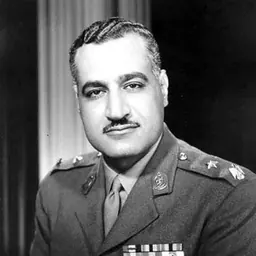

Related people
Same field, nearest in time




Contemporaries
People whose lives overlapped Leila Ahmed's



Frequently asked questions
Who is Leila Ahmed?
Egyptian-American writer and professor
When was Leila Ahmed born?
Leila Ahmed was born in 1940 in Heliopolis.
What is Leila Ahmed's occupation?
Leila Ahmed is a university teacher and writer.
What nationality is Leila Ahmed?
Leila Ahmed is Egyptian and American.
Sources & further reading
Cite this page
APA: Biography.guide. (2026). Leila Ahmed. https://biography.guide/leila-ahmed/
MLA: "Leila Ahmed." Biography.guide, https://biography.guide/leila-ahmed/.
Chicago: "Leila Ahmed." Biography.guide. https://biography.guide/leila-ahmed/.
Data last updated: 2026-09-20 · Spot an error? Report a correction.
Page generated 2026-09-27 05:10 UTC