
About Leela Roy
Lived 1900 – 1970 (aged 69). Leela Roy was an Indian politician.
Leela Roy (; 2 October 1900 – 11 June 1970) was a prominent Indian freedom fighter and reformer, and a close associate of Netaji Subhas Chandra Bose. She was born in Goalpara, Assam, to Girish Chandra Nag, who was a deputy magistrate, and her mother was Kunjalata Nag. She was the first female student of Dhaka University.
Family She was born into an upper middle class Bengali Kayastha family in Goalpara district of North-East Frontier and educated at Bethune College in Calcutta, graduating in 1917. She stood first among the girls and was awarded the 'Padmabati Gold Medal' along with a cash prize of Rs. 100 on 2 October 1917 by the department of English. Her father was Girischandra Nag. He was the tutor of Subhas Chandra Bose. She fought with university authorities and became the first woman to be admitted to the University of Dhaka and earned her M.A. degree. Co-education was not permitted in Dhaka University. The then vice chancellor, Philip Hartog, gave special permission for her admission.
Social work
She threw herself into social work and education for girls, starting the second girls school in Dhaka. She encouraged girls to learn skills and receive vocational training and emphasized the need for girls to learn martial arts to defend themselves. Over the years, she set up a number of schools and institutes for women.
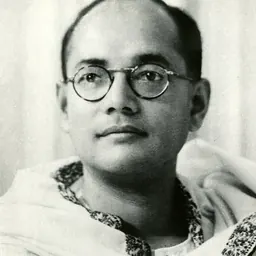
She contacted Netaji Subhas Chandra Bose when he was leading the relief action after the 1921 Bengal floods. Leela Nag, then a student at Dhaka University, was instrumental in forming the Dhaka Women's Committee and, in that capacity, raised donations and relief goods to help Netaji.
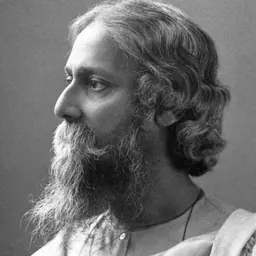
In 1931, she began publishing the Jayasree Patrika, the first magazine edited, managed, and wholly contributed to by women writers. It received the blessings of many eminent personalities, including Rabindranath Tagore, who suggested its name.
In 1947 she founded the Jatiya Mahila Sanghati, a women's organisation in West Bengal.
Later years
In 1960 she became the chairwoman of the new party formed with the merger of the Forward Bloc (Subhasist) and the Praja Socialist Party but was disappointed with its working. After two years she retired from active politics.
Leela Roy's letters were recovered from the items of an ascetic named Bhagwanji, who died in Faizabad in 1985. The letters reveal that Leela Roy came in touch with Bhagwanji in 1962, at Neemsar, Uttar Pradesh. She stayed in touch with him till her death in 1970, and kept providing for him.
She died in June 1970, after a prolonged illness.
In March 2023, an examination hall of the arts faculty at Dhaka University was named Leela Nag Examination Hall after her.
Don’t just read it —
keep it.
Full-length biographies made to live with: read them, listen on the way to work, watch them tonight.
- E-book
- Audio
- Video
Instant download · yours to keep · every purchase keeps this site free
Important facts
Family & relationships
People in Leela Roy's life
Named in this biography and alive at the same time


Related people
Same field, nearest in time





Contemporaries
People whose lives overlapped Leela Roy's



Frequently asked questions
Who was Leela Roy?
Indian independence activist and politician
When was Leela Roy born?
Leela Roy was born on 2 October 1900 in Assam.
When did Leela Roy die?
Leela Roy died on 11 June 1970 in Kolkata.
What was Leela Roy's occupation?
Leela Roy was a politician.
What nationality was Leela Roy?
Leela Roy was Indian.
Sources & further reading
Cite this page
APA: Biography.guide. (2026). Leela Roy. https://biography.guide/leela-roy/
MLA: "Leela Roy." Biography.guide, https://biography.guide/leela-roy/.
Chicago: "Leela Roy." Biography.guide. https://biography.guide/leela-roy/.
Data last updated: 2026-09-20 · Spot an error? Report a correction.
Page generated 2026-09-27 05:24 UTC