
Lawson H. M. Sanderson
About Lawson H. M. Sanderson
Lived 1895 – 1973 (aged 77). Lawson H. M. Sanderson was an American united States Naval Aviator.
Lawson Harry McPhearson Sanderson (July 22, 1895 – June 11, 1973) was an aviation pioneer of the United States Marine Corps with the rank of major general. He is most noted for his effort in development of the dive bombing technique.
Further interwar service
Sanderson returned to the United States in March 1920 and was assigned for instruction at Officers Training School within Quantico Base, Virginia. He graduated one year later and was subsequently selected for special flight with De Havilland 4A plane from Washington, D.C. to Santo Domingo. Sandy set a new record in then-longest round-trip flight over water and land and received Distinguished Flying Cross for this feat. He was also commissioned second lieutenant in the regular Marine Corps on May 2, 1921.
Young Sandy was assigned back to 1st Brigade of Marines and sailed again for Haiti in April 1922. After a one-year tour of duty at Haiti, he was ordered to Navy Department in Washington, D.C., where he was assigned to the Bureau of Aeronautics. In October 1923, he attended the Company Officers Course at Marine Corps Schools at Quantico, Virginia.
World War II General Sanderson (seated in the center) accepts Japanese surrender of Wake Island from admiral Shigematsu Sakaibara (second from the left). With the outbreak of World War II, First Marine Aircraft Group was expanded to the 1st Marine Aircraft Wing under the command of Colonel Louis E. Woods and Sanderson was appointed wing operations officer. Wing was sent to the Pacific in September 1942 and subsequently participated in the Guadalcanal campaign. For his service in this capacity, Sanderson was decorated with the Legion of Merit.
Sanderson was appointed commanding officer of the Marine Aircraft Group 11 based on New Hebrides Islands in January 1943 and participated in the air attacks against Japanese fortifications during Solomon Islands campaign. However, he was transferred back to the United States in March 1943 and subsequently appointed commander of Marine Base Defense Aircraft Group 42 within 3rd Marine Aircraft Wing at Marine Corps Air Station Santa Barbara, California. He was responsible for the training of new Marine aviators in this capacity.
Sanderson assumed command of Marine Fleet Air, West Coast in September 1944 and continued in his previous training duties. Nevertheless, he was promoted to the rank of brigadier general in January 1945 and remained in command of Marine Fleet Air, West Coast until May 1945, when he was transferred back to Pacific. Sanderson relieved Brigadier General Louis E. Woods in command of 4th Marine Aircraft Wing and subsequently participated in air support operations over Gilbert and Marshall Islands. He also accepted surrender of Wake Island from Japanese admiral Shigematsu Sakaibara on September 4, 1945, who was later sentenced to death by a military tribunal for war crimes in connection with execution of 98 civilian workers in October 1943 and hanged on June 18, 1947.
Postwar service
Sanderson was attached to the staff of Aircraft, Fleet Marine Force, Pacific in March 1946, and served under Major General William J. Wallace. He remained there until the end of June and subsequently was appointed commanding general of 1st Marine Aircraft Wing based in Tientsin, China. The 1st MAW remained in China until October 1947, when it was ordered back to the United States. Upon his return, Sanderson was appointed deputy commander of the 1st MAW again under the command of Major General Woods and served in this capacity until July 1949.
Sanderson was subsequently appointed deputy commander of General William J. Wallace within Aircraft, Fleet Marine Force, Atlantic and later followed General Wallace to 2nd Marine Aircraft Wing also as deputy commander. He retired from active duty in December 1951 and advanced to the rank of major general on the retired list for having been specially commended in combat.
Sanderson died on June 11, 1973, in San Diego, California, and is buried at Arlington National Cemetery, Virginia, together with his wife Louise N. Sanderson. They had together a son, Lawson E. and a daughter Doris N. In August 1966, Sanderson Field was named in his honor.
Decorations
Here is the ribbon bar of Major General Lawson H. M. Sanderson:
Legion of Merit citation
Don’t just read it —
keep it.
Full-length biographies made to live with: read them, listen on the way to work, watch them tonight.
- E-book
- Audio
- Video
Instant download · yours to keep · every purchase keeps this site free
Important facts
People in Lawson H. M. Sanderson's life
Named in this biography and alive at the same time
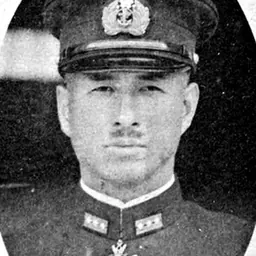

Related people
Same field, nearest in time



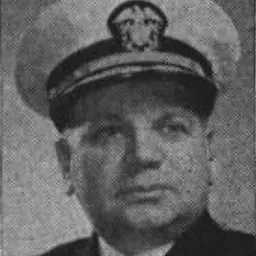

Contemporaries
People whose lives overlapped Lawson H. M. Sanderson's


Frequently asked questions
Who was Lawson H. M. Sanderson?
(1895-1973)
When was Lawson H. M. Sanderson born?
Lawson H. M. Sanderson was born on 22 July 1895 in Shelton.
When did Lawson H. M. Sanderson die?
Lawson H. M. Sanderson died on 11 June 1973 in San Diego.
What was Lawson H. M. Sanderson's occupation?
Lawson H. M. Sanderson was a united States Naval Aviator.
What nationality was Lawson H. M. Sanderson?
Lawson H. M. Sanderson was American.
Sources & further reading
· Wikipedia: Lawson H. M. Sanderson
· DBpedia: Lawson H. M. Sanderson
Cite this page
APA: Biography.guide. (2026). Lawson H. M. Sanderson. https://biography.guide/lawson-h-m-sanderson/
MLA: "Lawson H. M. Sanderson." Biography.guide, https://biography.guide/lawson-h-m-sanderson/.
Chicago: "Lawson H. M. Sanderson." Biography.guide. https://biography.guide/lawson-h-m-sanderson/.
Data last updated: 2026-09-20 · Spot an error? Report a correction.
Page generated 2026-09-27 05:34 UTC