
About Lauder Brunton
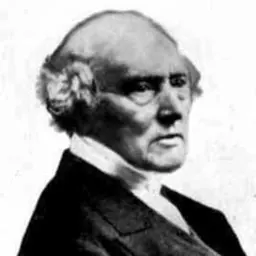
Lived 1844 – 1916 (aged 72). Lauder Brunton was a British physician and pharmacologist, known for Angina pectoris.
Sir Thomas Lauder Brunton, 1st Baronet, (14 March 1844 – 16 September 1916) was a British physician who is most-closely associated with the use of amyl nitrite to treat angina pectoris.
Early life Brunton was born on 14 March 1844 in Roxburgh in southeastern Scotland, the son of James Brunton (1781–1863) and his second wife Agnes Stenhouse (1807–1848). James's first wife was Euphemia Lauder (1794–1822), which gives explanation for his middle name, although he was not directly related to the Lauder's of the Bass. He studied medicine at the University of Edinburgh, beginning research into pharmacology while still a student there, and receiving a gold medal for his 1866 thesis on digitalis.
Career He left Edinburgh to work in Austria, the Netherlands, and Germany, returning to University College, London, and while there he was selected for a position at St. Bartholomew's Hospital. Brunton's clinical use of amyl nitrite to treat angina was inspired by earlier work with the same reagent by Arthur Gamgee and Benjamin Ward Richardson. Brunton reasoned that the pain and discomfort of angina could be reduced by administering amyl nitrite to open the coronary arteries of patients. In 1874, Brunton was made a Fellow of the Royal Society. He delivered the Goulstonian Lecture in 1877 on "Pharmacology and Therapeutics" and the Croonian Lecture in 1889 on "The Chemical structure of Physiological Action", both to the Royal College of Physicians. He was appointed a Knight Bachelor in the 1900 New Year Honours list, received the knighthood by Queen Victoria at Osborne House on 9 February 1900, and was made a baronet in 1908. In 1915, he was awarded the Cameron Prize for Therapeutics of the University of Edinburgh.
Diabetes
Brunton favoured a low-carbohydrate high-fat diet to treat diabetes. In 1874, he recommended a diet consisting of butcher meat, fish, eggs and soup with butter, cheese, cream and oil. All fruit and vegetables apart from cress, lettuce and spinach were forbidden.
In The Lancet in 1894, Brunton stated that he was the first to use raw meat to treat diabetic patients in 1873. The results were not successful.
He was succeeded in the baronetcy by his eldest son Stopford Brunton . Another son, Lt. Edward Brunton, was killed at the Battle of Loos.
Some of Brunton's papers are held at the National Library of Medicine.
Selected publications
Don’t just read it —
keep it.
Full-length biographies made to live with: read them, listen on the way to work, watch them tonight.
- E-book
- Audio
- Video
Instant download · yours to keep · every purchase keeps this site free
Important facts
more
Thomas Lauder BruntonPeople in Lauder Brunton's life
Named in this biography and alive at the same time

Related people
Same field, nearest in time



Contemporaries
People whose lives overlapped Lauder Brunton's

Frequently asked questions
Who was Lauder Brunton?
British doctor (1844-1916)
When was Lauder Brunton born?
Lauder Brunton was born on 14 March 1844 in Roxburgh.
When did Lauder Brunton die?
Lauder Brunton died on 16 September 1916 in London.
What was Lauder Brunton's occupation?
Lauder Brunton was a physician and pharmacologist.
What was Lauder Brunton known for?
Lauder Brunton was known for Angina pectoris.
What nationality was Lauder Brunton?
Lauder Brunton was British.
Sources & further reading
Cite this page
APA: Biography.guide. (2026). Lauder Brunton. https://biography.guide/lauder-brunton/
MLA: "Lauder Brunton." Biography.guide, https://biography.guide/lauder-brunton/.
Chicago: "Lauder Brunton." Biography.guide. https://biography.guide/lauder-brunton/.
Data last updated: 2026-09-20 · Spot an error? Report a correction.
Page generated 2026-09-27 05:22 UTC