
L. P. Jacks
British educator, philosopher, and Unitarian minister
About L. P. Jacks
Lived 1860 – 1955 (aged 94). L. P. Jacks was a British philosopher, writer and unitarianism.
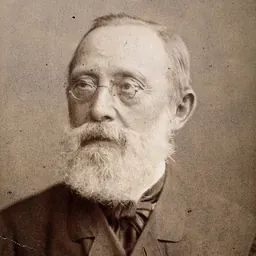
Lawrence Pearsall Jacks (9 October 1860 – 17 February 1955), abbreviated L. P. Jacks, was an English educator, philosopher, and Unitarian minister who rose to prominence in the period from World War I to World War II.
Early life Jacks was born on 9 October 1860 in Nottingham. In 1882, he enrolled in Manchester New College (which then was in London). After graduating with a M.A. in 1886, he spent a year at Harvard University, where he studied with the philosopher Josiah Royce. Jacks was appointed minister for the Church of the Messiah, Birmingham in 1894.
After the war, Jacks wrote prolifically and gained popularity as a lecturer in Britain and America. He frequently returned to the theme of militarism and the "mechanical" mindset, which he regarded as one of the greatest threats in modern life. In his Revolt Against Mechanism (1933), he wrote that "The mechanical mind has a passion for control—of everything except itself. Beyond the control it has won over the forces of nature it would now win control over the forces of society of stating the problem and producing the solution, with social machinery to correspond." In his article "A Demilitarized League of Nations", ("Hibbert Journal", August 1936) Jacks argued the League of Nations should completely eschew military force.
Although he continued to preach Unitarianism, he became increasingly critical of all forms of institutional religion and denominationalism, and refused to let his name be added to a list of Unitarian ministers published by the General Assembly of Unitarian and Free Christian Churches in 1928. He accepted an invitation to preach in Liverpool Cathedral in 1933; a Convocation of the Church of England rebuked the cathedral for allowing a Unitarian to preach, igniting a controversy in the press.
Jacks published prolifically over a period of fifty years, including philosophical and visionary treatises, biographies, articles, and moral parables. He died in Oxford on 17 February 1955, at the age of 94.
Works
Mad Shepherds and Other Human Studies (1910) The Alchemy of Thought (1910) Among the Idolmakers (1911) All Men Are Ghosts (1913) From the Human End (1916) Life and Letters of Stopford Brooke (1917) The Legends of Smokeover (1921) Religious Perplexities (1922) A Living Universe (1924) Realities and Shams (1924) The Faith of a Worker (1925) The Heroes of Smokeover (1926) The Magic Formula and Other Stories (1927) Constructive Citizenship (1927) My Neighbour the Universe: A Study of Human Labour (1929) The Inner Sentinel: A Study of Ourselves (1930) Education for the Whole Man (1931) Education Through Recreation (1932) Revolt Against Mechanism (1933) Co-operation or Coercion? (1938) The Last Legend of Smokeover (1939) Near the Brink: Observations of a Nonagenarian (1952)
Articles "The Universe as Philosopher," The Hibbert Journal, Vol. VI, October 1907/July 1908. "The Alchemy of Thought," The Hibbert Journal, Vol. VI, October 1907/July 1908. "A Psychologist Among the Saints," The Hibbert Journal, Vol. X, October 1911/July 1912. "Democracy and Discipline," The Hibbert Journal, Vol. XI, October 1912/ July 1913. "Does Consciousness 'Evolve'?," The Hibbert Journal, Vol. XI, October 1912/ July 1913. "Mechanism, Diabolism and the War," The Hibbert Journal, Vol. XIII, October 1914/July 1915. "The Tyranny of Mere Things," The Hibbert Journal, Vol. XIII, October 1914/July 1915. "A Theological Holiday — and After," The Hibbert Journal, Vol. XIV, October 1915/July 1916. "An Interim Religion," The Hibbert Journal, Vol. XIV, October 1915/July 1916. "The Insane Root," The Atlantic Monthly, Vol. CXIX, 1917. "Punishment and Reconstruction," The Hibbert Journal, Vol. XV, October 1916/July 1917. "The Theory of Survival in the Light of its Context," The Hibbert Journal, Vol. XV, October 1916/July 1917. "The War-Made Empires and the Martial Races of the Western World," The Hibbert Journal, Vol. XVI, 1917/1918. "Loyalty Once More," The Atlantic Monthly, Vol. CXXI, 1918. "Arms and Men: A Study in Habit," The Hibbert Journal, Vol. XVI, October 1918/July 1919. "International Control of War Finance," The Hibbert Journal, Vol. XVI, October 1918/July 1919. "Why We Are Disappointed," The Hibbert Journal, Vol. XVIII, October 1919/July 1920. "The International Mind," The Atlantic Monthly, Vol. 125, 1920. "A League of Nations as a League of Governments?" The Atlantic Monthly, Vol. 131, No. 2, February 1923.
Don’t just read it —
keep it.
Full-length biographies made to live with: read them, listen on the way to work, watch them tonight.
- E-book
- Audio
- Video
Instant download · yours to keep · every purchase keeps this site free
Important facts
People in L. P. Jacks's life
Named in this biography and alive at the same time


Related people
Same field, nearest in time




Contemporaries
People whose lives overlapped L. P. Jacks's


Frequently asked questions
Who was L. P. Jacks?
British educator, philosopher, and Unitarian minister (1860-1955)
When was L. P. Jacks born?
L. P. Jacks was born on 9 October 1860 in Nottingham.
When did L. P. Jacks die?
L. P. Jacks died on 17 February 1955 in Oxford.
What was L. P. Jacks's occupation?
L. P. Jacks was a philosopher, writer and unitarianism.
What nationality was L. P. Jacks?
L. P. Jacks was British.
Sources & further reading
Cite this page
APA: Biography.guide. (2026). L. P. Jacks. https://biography.guide/l-p-jacks/
MLA: "L. P. Jacks." Biography.guide, https://biography.guide/l-p-jacks/.
Chicago: "L. P. Jacks." Biography.guide. https://biography.guide/l-p-jacks/.
Data last updated: 2026-09-25 · Spot an error? Report a correction.
Page generated 2026-09-27 05:12 UTC