
About L. Heisler Ball
Lived 1861 – 1932 (aged 71). L. Heisler Ball was an American politician.
Lewis Heisler Ball (September 21, 1861 – October 18, 1933) was an American physician and politician from Mill Creek Hundred, New Castle County, Delaware. He was a member of the Republican Party and served as U.S. Representative from Delaware and two terms as U.S. Senator from Delaware. He was known by his middle name.
Early life and family Ball was born in Mill Creek Hundred, New Castle County, Delaware, the son of John Ball and Sarah (Baldwin) Ball. He attended the Rugby Academy at Wilmington, Delaware, and graduated from the Delaware College at Newark, Delaware in 1882. He received his medical degree from the University of Pennsylvania School of Medicine in Philadelphia in 1885 and began the practice of medicine at Brandywine Springs, near Wilmington in 1887. He married Katherine Springer Justis on November 14, 1893.
The Addicks era At the turn of the twentieth century, Delaware was going through a political transformation. Most obvious to the public was the bitter division in the Republican Party caused, in part, by the ambitions of J. Edward Addicks for a seat in the U.S. Senate. A gas company industrialist, he spent vast amounts of his own fortune to build a Republican Party, with that purpose in mind. Largely successful in heavily Democratic Kent County and Sussex County, he financed the organization of a faction that came to be known as "Union Republicans". Meanwhile, he was making bitter enemies of the New Castle County "Regular Republicans", many of whom considered him nothing more than a carpetbagger from Philadelphia.
Ball was a "Regular Republican", and an outspoken opponent of Addicks. As such he was elected State Treasurer of Delaware in 1898. He was then elected to the U.S. House of Representatives in 1900, and served with the Republican majority in the 57th Congress from March 4, 1901, until March 3, 1903, during the administrations of U.S. Presidents William McKinley and Theodore Roosevelt.
In 1899 one of the U.S. Senate seats for Delaware became vacant and the Union Republicans in the Delaware General Assembly attempted to elect Addicks. Although they did not have enough votes to do so, the Union Republicans were able to block the election of any other candidate. Because of this deadlock, the seat remained vacant for four years. When the other Senate seat came open in 1901, it too was left vacant due to the deadlock. Finally, in 1903, the matter became national news and too much of an embarrassment. Addicks relented and allowed Ball to be elected to the remaining two years left in the first seat and Addicks' lieutenant, J. Frank Allee, was elected to the second seat.
United States Senator Ball was elected to the U.S. Senate on March 2, 1903, and served the remaining two years of the term with the Republican majority in the 58th Congress. In 1905, when Ball's term ended, the General Assembly again deadlocked and took another two years to fill the seat. The repeated inability of the Delaware General Assembly to fulfill this constitutional duty contributed strong evidence throughout the nation of the need for the Seventeenth Amendment providing for the popular election of U.S. Senators.
In 1918, Ball was elected to the U.S. Senate in the second popular election of a U.S. Senator in Delaware, defeating incumbent Democratic U.S. Senator Willard Saulsbury Jr. During this term, Ball served with the Republican majority in the 66th, 67th and 68th U.S. Congress. In the 66th Congress, he was chairman of the Committee on Enrolled Bills and in the 67th and 68th Congress, he was a member of the Committee on the District of Columbia. He was also appointed as a member of the rent commission of Washington. Ball's actions with the rent commission angered some people. In August 1921, a shot was fired at Ball as he drove in an automobile, although he was not injured. The senator had received a threatening letter the day of the assault.
In June 1919 he cast his vote in favor of the Nineteenth Amendment providing for Women's suffrage.
Ball was never considered an especially effective U.S. Senator in terms of gaining patronage for Delaware. He became a rival of T. Coleman du Pont, the former President of E. I. du Pont de Nemours and Company and the effective leader of the Republican Party in Delaware. Du Pont had hoped to be the Republican candidate for U.S. President in 1920, but his efforts began to collapse when Ball deserted him after the first ballot at the 1920 Republican National Convention. Then, in 1922, Ball failed to support du Pont as he sought a full term in the U.S. Senate himself. By 1924 du Pont thought he had a score to settle and defeated Ball for their party’s nomination for a full term in 1924.
Death and legacy Ball died on the morning of October 18, 1933, at his home in Faulkland, Delaware, due to pneumonia. He is buried in the St. James Episcopal Church Cemetery near Stanton, Delaware.
United States Congressional service Dates Congress Chamber Majority President Committees Class/District1901–190357thU.S. HouseRepublicanWilliam McKinleyTheodore Rooseveltat-large1903–190558thU.S. Senate RepublicanTheodore Rooseveltclass 11919–192166thU.S. Senate RepublicanWoodrow Wilsonclass 21921–192367thU.S. Senate RepublicanWarren G. HardingCalvin Coolidgeclass 21923–192568thU.S. Senate RepublicanCalvin Coolidgeclass 2
Don’t just read it —
keep it.
Full-length biographies made to live with: read them, listen on the way to work, watch them tonight.
- E-book
- Audio
- Video
Instant download · yours to keep · every purchase keeps this site free
Important facts
People in L. Heisler Ball's life
Named in this biography and alive at the same time

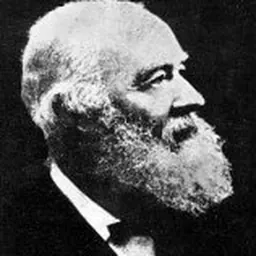
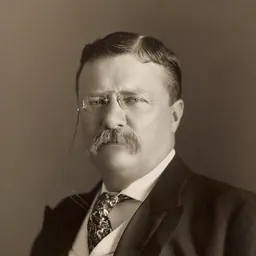
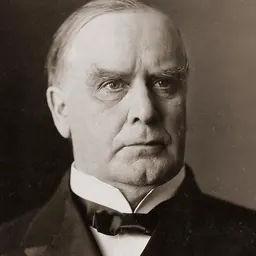
Related people
Same field, nearest in time

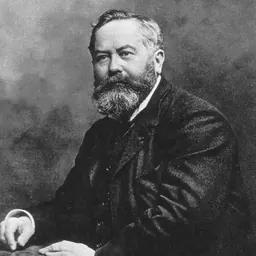



Contemporaries
People whose lives overlapped L. Heisler Ball's



Frequently asked questions
Who was L. Heisler Ball?
American politician (1861–1932)
When was L. Heisler Ball born?
L. Heisler Ball was born on 21 September 1861 in New Castle County.
When did L. Heisler Ball die?
L. Heisler Ball died on 18 October 1932 in Wilmington.
What was L. Heisler Ball's occupation?
L. Heisler Ball was a politician.
What nationality was L. Heisler Ball?
L. Heisler Ball was American.
Sources & further reading
Cite this page
APA: Biography.guide. (2026). L. Heisler Ball. https://biography.guide/l-heisler-ball/
MLA: "L. Heisler Ball." Biography.guide, https://biography.guide/l-heisler-ball/.
Chicago: "L. Heisler Ball." Biography.guide. https://biography.guide/l-heisler-ball/.
Data last updated: 2026-09-20 · Spot an error? Report a correction.
Page generated 2026-09-27 05:30 UTC