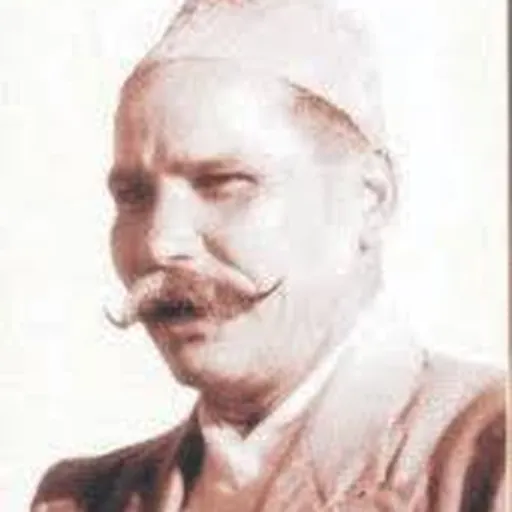
About Kunwar Inderjit Singh
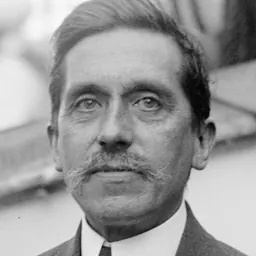
Lived 1906 – 1982 (aged 75–76). Kunwar Inderjit Singh was a Nepali politician.
Kunwar Indrajit Singh (; 1906 – 4 October 1982), popularly known as Dr. K.I. Singh or just K.I. Singh was a Nepali politician and revolutionary who served as the 20th Prime Minister of Nepal in 1957. He was a key member of the Nepali Congress for his role in organizing the 1951 Nepali Revolution, and was a leader in its militant wing, the Muktisena, and later refused to recognize the Delhi Accord and was forced to flee the country following a revolt he took part in. He was not, however, properly supported by Gopal Shumsher, the son of Rudra Shumsher, a Rana who was in the line of succession but was removed following Juddha Shumsher's purge in 1934. Gopal was a C-class Rana who was in command of Singh's section of the border, but Singh had a history of being hostile to all Rana's, even boycotting a merger with the Nepali National Congress and Subarna Shamsher Rana's Nepali Democratic Congress, and therefore did not work effectively with Gopel and did not receive proper support from him. He launched another unsuccessful attack on Bhairawa, but was soon arrested in February 1951 by Indian and Nepali troops. When he was captured, his force was said to number 300-500 men. Following his arrest, he quickly escaped, but was recaptured, and sent to a jail in Kathmandu.
The Raksha Dal Revolt The Raksha Dal was an auxiliary security force set up immediately after the revolution, mostly from members of the Muktisena, Nepali Congress' militant wing. In January 1952, Ram Prasad Rai, a militant revolutionary similar to K.I. Singh who also refused to accept the Delhi Accord, started a protest in Kathmandu against Prime Minister Mohan Shumsher and the Delhi Accord. After Rai had made a speech in the city, declaring the need for a renewed revolt, he was arrested. This arrest led to a revolt of the Raksha Dal in Kathmandu, who freed both Ram Prasad Rai and K.I. Singh from jail and occupied the Singha Durbar. Rai and Singh tried to negotiate with the government, but after a few days, the revolting Raksha Dal were defeated, for the army and most of the Raksha Dal officers remained loyal to the government. He also did not receive any support from the Chinese government, and apparently did not meet either Mao Zedong or Zhou Enlai. While he was away, he became a legend in Nepal, and the "Society of Friends of K.I. Singh" was formed, to agitate for his return. He was said to be both a royalist and a revolutionary, and he espoused nationalist, isolationist, and anti-imperialist rhetoric. He claimed to not work for any party or have any ideology; rather, he was solely working for the betterment of Nepal. His view on India was contradictory, both claiming India was an imperialist power who controlled Nepal and talking of the need of Nepali-Indian cooperation.
In July 1957, K.I. Singh was made Prime Minister by Mahendra, replacing his predecessor Tanka Prasad Acharya of the Nepal Praja Parishad. However, his 110-day premiership was unremarkable, and mostly wasted with conspiracies and attempts to curtail Singh's enemies. He resigned as Prime Minister on 15 November, however the reason for this is unclear. There were claims that there were conspiracies against Singh, involving foreign powers like the United Kingdom, though it is not known for sure. In April 1963, he stated he planned to launch a satyagraha to agitate for the restoration of parliamentary democracy. Eventually, after negotiating with the King to try to gain some form of political office, in March 1964 he announced the satyagraha would go ahead, leading to his arrest. A year later, K.I. Singh died of throat cancer, aged 76.
Don’t just read it —
keep it.
Full-length biographies made to live with: read them, listen on the way to work, watch them tonight.
- E-book
- Audio
- Video
Instant download · yours to keep · every purchase keeps this site free
Important facts
People in Kunwar Inderjit Singh's life
Named in this biography and alive at the same time



Related people
Same field, nearest in time






Contemporaries
People whose lives overlapped Kunwar Inderjit Singh's
Frequently asked questions
Who was Kunwar Inderjit Singh?
politician (1906–1982)
When was Kunwar Inderjit Singh born?
Kunwar Inderjit Singh was born in 1906 in Doti District.
When did Kunwar Inderjit Singh die?
Kunwar Inderjit Singh died on 4 October 1982 in Kathmandu.
What was Kunwar Inderjit Singh's occupation?
Kunwar Inderjit Singh was a politician.
What nationality was Kunwar Inderjit Singh?
Kunwar Inderjit Singh was Nepali.
Sources & further reading
· Wikipedia: Kunwar Inderjit Singh
· DBpedia: Kunwar Indrajit Singh
Cite this page
APA: Biography.guide. (2026). Kunwar Inderjit Singh. https://biography.guide/kunwar-inderjit-singh/
MLA: "Kunwar Inderjit Singh." Biography.guide, https://biography.guide/kunwar-inderjit-singh/.
Chicago: "Kunwar Inderjit Singh." Biography.guide. https://biography.guide/kunwar-inderjit-singh/.
Data last updated: 2026-09-21 · Spot an error? Report a correction.
Portrait: Wikimedia Commons · author & licence
Page generated 2026-09-27 05:01 UTC