
About Kroger Babb
Lived 1906 – 1980 (aged 73). Kroger Babb was an American film producer.
Howard W. "Kroger" Babb (December 30, 1906 – January 28, 1980) was an American film producer and showman. His marketing techniques were similar to a travelling salesman's, with roots in the medicine show tradition. Self-described as "America's Fearless Young Showman", he is best known for his presentation of the 1945 exploitation film Mom and Dad, which was added to the National Film Registry of the Library of Congress in 2005.
Babb was involved in the production and marketing of many films and television shows, promoting each according to his favorite marketing motto: "You gotta tell 'em to sell 'em." His films ranged from sex education-style dramas to "documentaries" on foreign cultures, intended to titillate audiences rather than to educate them, maximizing profits via marketing gimmicks.
Youth Babb was born in 1906 in Lees Creek, Ohio. He earned the nickname "Kroger" either from his childhood job at the grocer of the same name or from his father's preference for B.H. Kroger coffee. but first achieved success after his promotion to publicity manager for the Chakeres-Warners movie theaters, where he would create different kinds of stunts to lure audiences
Babb's biggest success was Mom and Dad, which he conceived and produced and which William Beaudine directed in six days. Babb headed the promotion of this film following its premiere in early 1945, often going on the road with it himself. with a "presenter"—later known as an advance man—and the presenter would stir up his own controversy in the weeks preceding the film's arrival by writing protest letters to local churches and newspapers and fabricating letters from the mayors of nearby cities relating tales of young women encouraged by the film to discuss similar predicaments. and the Los Angeles Times estimated that it grossed anywhere from $40 million to $100 million. and ultimately was added to the National Film Registry in 2005. ) According to entertainer Card Mondor, an Elliot Forbes in the 1940s who later purchased the Australian and New Zealand rights for Mom and Dad, the Forbeses were "mostly local men (from Wilmington, Ohio) who were trained to give the lecture . . . t was a cross-section of the male population, mostly clean-cut young guys . . . The whole concept would have never worked with a trashy look."
During the intermission and after the showing, books relevant to the subject of the film were sold. Mom and Dad distributor Modern Film Distributors sold over 45,000 copies of Man and Boy and Woman and Girl, written by Babb's wife,
As well as being at the forefront of the battles over censorship and the motion picture censorship system, the exploitation genre faced numerous challenges during the 1940s and 1950s.
Later films Following the success of Mom and Dad, Babb renamed his company Hallmark Productions, continuing the marketing approaches of Hygienic Productions while going beyond health and sex education films. He would later set up a larger distribution company, named Hallmark's Big-6.
Babb cheaply acquired the rights to what would become "She Shoulda Said No!" shortly after Robert Mitchum and Lila Leeds were arrested for marijuana use. Its original producer had struggled to get it distributed as Wild Weed, and Babb quickly presented it as The Story of Lila Leeds and Her Exposé of the Marijuana Racket, hoping that the title would draw audiences. When it failed to stir up much interest, Babb instead focused on the one scene of female nudity, using a photo of Leeds in a showgirl outfit, and retitled it "She Shoulda Said 'No'!", with taglines such as "How Bad Can a Good Girl Get . . . without losing her virtue or respect???"
Other ventures After the success of Mom and Dad, Babb talked of an "unrealized" project called Father Bingo, which he advertised in BoxOffice magazine as "An Exposé of Gambling in the Parish Halls" and described as a comedy with an anti-gambling message about a corrupt priest who runs a "controlled" bingo night at his parish. Babb called it "the best 'snow-job' of my life", and it has been speculated that he never intended to make it, despite the trade ads that appeared for years. On the strength of his past successes, Babb joined John Miller's film production company, Miller-Consolidated Pictures, as vice president and general manager in 1959. Babb advocated the use of the hard-selling technique he had perfected as a presenter: "selling the sizzle instead of the steak", according to an interview. He wrote a column for BoxOffice at the same time. His personal anecdotes provided advice for selling films, such as writing off expenses as tax deductions, and using women's clubs to expand advertising and revenues cheaply. He noted that there were "over 30,000 women's clubs", and that "practically every women's club has a 16mm projector". ), it used similar roadshow techniques to market television programs such as The Ern Westmore Show. Babb also acted as a showman for hire, promoting others' films when not working on his own. Among them was a nudie-cutie picture titled Kipling's Women, a peep show, but the two struck up a conversation about it. They stayed together in a common-law marriage; Horn wrote a number of Babb's screenplays, including Mom and Dad, as well as companion books.
Babb had tax troubles in the years after his success with Mom and Dad. He suggested to the Press-Enterprise that his operation was so diffuse that sales of his one-dollar sex education pamphlets were too difficult to track accurately.
Babb suffered from various ailments toward the end of his life, including a stroke. and died of heart failure (due to complications from diabetes) on January 29, 1980, in Palm Springs, California.
Works Babb worked in various areas of the entertainment industry, in both traditional and exploitation genres. He claimed to have made twenty films, radio, and even the stage. This is an incomplete collection of works owing to the nature of the exploitation genre. The titles are as they were finally presented by Babb, with earlier titles noted in parentheses.
As film producer
Dust to Dust (1938) Mom and Dad (1945) The Lawton Story (1949) One Too Many (1951) Secrets of Beauty (1951)
As film writer One Too Many
As film distributor
She Shoulda Said No! (previously Marijuana, the Devil's Weed, The Devil's Weed, Wild Weed, The Story of Lila Leeds and Her Exposé of the Marijuana Racket) (1949) Monika, the Story of a Bad Girl (original title Sommaren med Monika, later re-issued by others in full as Summer with Monika) (1949) Delinquent Angels (1951) The Best is Yet to Come (1951) Karamoja (1954) Kipling's Women (1961) Kwaheri (1961) Five Minutes to Love (previously The Rotten Apple, It Only Takes Five Minutes) (1963) Uncle Tom's Cabin (1970) originally released in Europe in 1965 Redheads vs. Blondes (undated) producer (1953)
Stage French Follies
Don’t just read it —
keep it.
Full-length biographies made to live with: read them, listen on the way to work, watch them tonight.
- E-book
- Audio
- Video
Instant download · yours to keep · every purchase keeps this site free
Important facts
Family & relationships
People in Kroger Babb's life
Named in this biography and alive at the same time
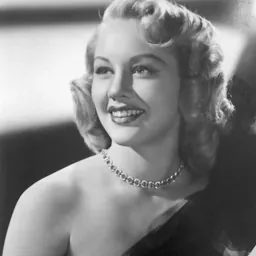


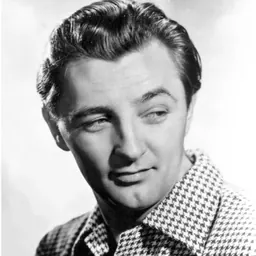


Related people
Same field, nearest in time



Contemporaries
People whose lives overlapped Kroger Babb's
Frequently asked questions
Who was Kroger Babb?
American film and TV producer (1906–1980)
When was Kroger Babb born?
Kroger Babb was born on 30 December 1906 in Lees Creek.
When did Kroger Babb die?
Kroger Babb died on 28 January 1980 in Palm Springs.
What was Kroger Babb's occupation?
Kroger Babb was a film producer.
What nationality was Kroger Babb?
Kroger Babb was American.
Sources & further reading
Cite this page
APA: Biography.guide. (2026). Kroger Babb. https://biography.guide/kroger-babb/
MLA: "Kroger Babb." Biography.guide, https://biography.guide/kroger-babb/.
Chicago: "Kroger Babb." Biography.guide. https://biography.guide/kroger-babb/.
Data last updated: 2026-09-22 · Spot an error? Report a correction.
Page generated 2026-09-27 05:11 UTC