
About Konrad Pałubicki
Lived 1910 – 1992 (aged 82). Konrad Pałubicki was a Polish musicologist, composer and pedagogue.
Konrad Józef Pałubicki (1910–1992) was a Polish composer, musicologist, teacher, cultural activist and animator in Gdańsk and Bydgoszcz. He created the hymn of Bydgoszcz and taught at the Academy of Music in Gdańsk and the Institute of Music Education of the Higher Pedagogical School in Bydgoszcz (today's Kazimierz Wielki University in Bydgoszcz).
Biography Early life Konrad was born on 16 March 1910 in Dziembówko, a village near Chodzież. He was the son of Wanda Née Wyrwicka and Franciszek, a railway official. His mother was a teacher and played the piano; she instilled in her son a love of music, literature and theater.
By the end of World War I, he moved with his parents to live in Bydgoszcz. There he attended the State High School of Humanities, today the High Seminary of Bydgoszcz Diocese at 18 Grodzka Street. At the age of 17, he became interested in music and started taking private piano lessons from , a pianist from Lviv who settled in Bydgoszcz in 1923 to teach at the Conservatory of Music.
Thanks to a scholarship holder from the Directorate of Railways in Gdańsk, Pałubicki then studied music at the Adam Mickiewicz University in Poznań. In June 1937, he received a master's degree in philosophy of musicology. Concurrently, he graduated from 's (1867–1943) piano class at the Wielkopolska Music School, He was a member of the program committee of the international festival Musica Antiqua Europae Orientalis in Bydgoszcz. Finally, he became involved in organizing International Summer Courses in the Lubostroń Palace which ran concurrently with the festival.
Gdańsk years In 1950, Konrad Pałubicki started some stints in the Tricity; he worked initially at the State Higher School of Music of Sopot and then at the Academy of Music in Gdańsk.
There, he took different positions: dean of the Faculty of Composition and Music Theory (1952–1972) head of the Department of Composition and Music Theory (1961–1972) vice-rector (1971–1972)
During this period, he kept cooperating with the Bydgoszcz scientific and musical community, performing lectures at the Kazimierz Wielki University. Together with Andrzej Szwalbe, in 1958 he joined the Bydgoszcz Scientific Society which he co-founded, and served as a chairman of the Faculty of Humanities from 1958 to 1968. ) chamber pieces (string quartets for violin, cello and flute) compositions for solo instruments or solo with orchestra (i.e. Muzyka na głos i orkiestrę) stage works (Chimery - ballet). Composed in 1964, it was performed as a symphonic work and as a ballet music for the Opera Nova. This work was displayed part of a triptych prepared for the Bydgoszcz Music Festival in 1964 under the name Polish Ballets
At the time of his compositions, Konrad created works for specific performers including pianists Lucjan Galon, Jerzy Sulikowski, Krystyna Suchecka and cellist Roman Suchecki. Among his major creations performed in Bydgoszcz, one can cite Koncert skrzypcowy (Violin Concerto) (1951) and Concertino na fortepian i orkiestrę (Concerto for piano and orchestra) (1956). In 1992, Pałubicki attended his last composer's concert at the Pomeranian Philharmonic, a few months before his death.
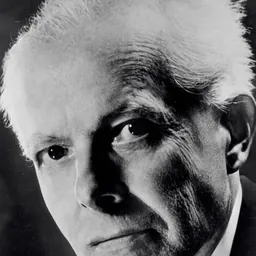
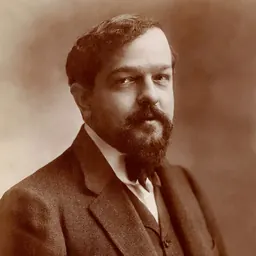
From 1954 onwards, he had been organizing scientific sessions devoted to the works of 20th century composers (1955 Karol Szymanowski, 1963 Claude Debussy, 1965 Béla Bartók, 1973 Tadeusz Szeligowski). This tradition continues to this day. Elżbieta (born 1915) who lived with Konrad in Bydgoszcz. They inhabited the apartment of pianist Magdalena Bylczyńska, Elżbieta being under the care of Magdalena's family until her death in 1966
Orders and commemorations 1955 – Medal of the 10th anniversary of the Polish People's Republic 1957 – Golden Cross of Merit 1964 – Knight's Cross of the Order of Polonia Restituta 1978 – Medal of the National Education Commission 1984 – Medal of the 40th Anniversary of the People's Republic of Poland Badge of honor Meritorious for the city of Bydgoszcz Badge of honor Meritorious for the Bydgoszcz Voivodeship
In 1957, Konrad was awarded the academic title of docent and in 1967 the title of associate professor. He was an honorary member of the Music Society of Bydgoszcz, a long-time member of the Union of Polish Composers and the president of the Gdańsk union of composers.
In the 1970s and the 1980s, he participated in the Doctoral Study Committee at the Faculty of Composition, Music Theory and Conducting at the Academy of Music in Warsaw.
Konrad Pałubicki was portrayed as Professor Pałuba-Pałubiński in Maciej Dęboróg-Bylczyński's novel Wygnańcy Ewy (Exiles of Eve), published in 2016.
Don’t just read it —
keep it.
Full-length biographies made to live with: read them, listen on the way to work, watch them tonight.
- E-book
- Audio
- Video
Instant download · yours to keep · every purchase keeps this site free
Important facts
People in Konrad Pałubicki's life
Named in this biography and alive at the same time


Related people
Same field, nearest in time

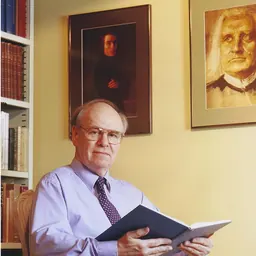
Contemporaries
People whose lives overlapped Konrad Pałubicki's






Frequently asked questions
Who was Konrad Pałubicki?
Polish musician
When was Konrad Pałubicki born?
Konrad Pałubicki was born on 16 March 1910 in Dziembówko.
When did Konrad Pałubicki die?
Konrad Pałubicki died on 22 October 1992 in Gdańsk.
What was Konrad Pałubicki's occupation?
Konrad Pałubicki was a musicologist, composer and pedagogue.
What nationality was Konrad Pałubicki?
Konrad Pałubicki was Polish.
Sources & further reading
Cite this page
APA: Biography.guide. (2026). Konrad Pałubicki. https://biography.guide/konrad-palubicki/
MLA: "Konrad Pałubicki." Biography.guide, https://biography.guide/konrad-palubicki/.
Chicago: "Konrad Pałubicki." Biography.guide. https://biography.guide/konrad-palubicki/.
Data last updated: 2026-09-20 · Spot an error? Report a correction.
Page generated 2026-09-27 05:24 UTC