
About Karol Szymanowski
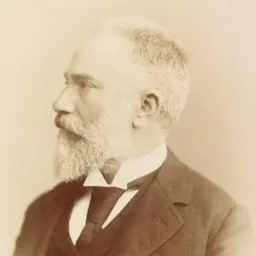
Lived 1882 – 1937 (aged 54). Karol Szymanowski was a Russian and Polish composer, music educator, university teacher, pianist and author.
Karol Maciej Szymanowski (; 3 October 188229 March 1937) Since musical opportunities in Congress Poland were quite limited, he traveled throughout Europe and North Africa.
Career
In Berlin, Szymanowski founded the Young Polish Composers' Publishing Company (1905–1912), whose primary aim was to publish new works by his countrymen. During his stay in Vienna (1911–1914), he wrote the opera Hagith and two song cycles, The Love Songs of Hafiz, which represent a transition between his first and second stylistic periods. Being lame in one knee made Szymanowski unsuitable for military service in World War I, and between 1914 and 1917, he composed many works and devoted himself to studying Islamic culture, ancient Greek drama, and philosophy. His works from this period, such as Mity (1914; Myths), Metopy (1915; Métopes), and Maski (1916; Masques), are characterized by great originality and diversity of style. The dynamic extremes in Szymanowski's music lessened, and the composer started to employ coloristic orchestration and use polytonal and atonal material while preserving the expressive melodic style of his previous works.
In 1918, Szymanowski completed the manuscript (now mostly lost) of a two-volume novel, Efebos, which took homosexuality as its subject. ("Efebos" or ephebos is the Greek term for a male adolescent.) His travels, especially those to the Mediterranean area, provided him with new experience, both personal and artistic. Arthur Rubinstein found Szymanowski different when they met in Paris in 1921: "Karol had changed; I had already begun to be aware of it before the war when a wealthy friend and admirer of his invited him twice to visit Sicily. After his return, he raved about Sicily, especially Taormina. 'There,' he said, 'I saw a few young men bathing who could be models for Antinous. I couldn't take my eyes off them.' Now he was a confirmed homosexual. He told me all this with burning eyes".
Of his works created or first imagined, such as Król Roger (King Roger), during 1917-21, both musical and literary, one critic has written: "we have a body of work representing a dazzling personal synthesis of cultural references, crossing the boundaries of nation, race and gender to form an affirmative belief in an international society of the future based on the artistic freedom granted by Eros."
Szymanowski's long correspondence with the pianist Jan Smeterlin, a significant champion of his piano works, was published in 1969.
Influences Szymanowski was influenced by the music of Richard Wagner, Richard Strauss, Max Reger, Alexander Scriabin and the impressionism of Claude Debussy, and Maurice Ravel. He was also significantly influenced by his countryman Frédéric Chopin and by Polish folk music. Like Chopin, he wrote a number of mazurkas for piano. He was specifically influenced by the folk music of the Polish Highlanders, which he discovered in Zakopane in the southern Tatra highlands. He wrote in his article "About Goral Music": "My discovery of the essential beauty of Goral music, dance and architecture is a very personal one; much of this beauty I have absorbed into my innermost soul". According to Jim Samson, it is "played on two fiddles and a string bass" and "has uniquely 'exotic' characteristics, highly dissonant and with fascinating heterophonic effects".
Aleksander Laskowski has said of Szymanowski's music and its changing style: "He invented a musical language [...] His works were true and ingenious creations. And his oeuvre shows an incredible development from the Straussian and Wagnerian, through an interesting and very romantic Oriental period, and finishing with a national period influenced by his time in the Tatras."
Works
Among Szymanowski's better-known orchestral works are four symphonies (including No. 3, Song of the Night, with choir and vocal soloists, and No. 4, Symphonie Concertante, with piano concertante) and two violin concertos. His stage works include the ballets Harnasie and Mandragora and the operas Hagith and King Roger. He wrote much piano music, including the four Études, Op. 4 (of which No. 3 was once his most popular piece), many mazurkas and Métopes. Other works include the Three Myths for violin and piano, Nocturne and Tarantella, two string quartets, a sonata for violin and piano, a number of orchestral songs (some to texts by Hafiz and James Joyce) and his Stabat Mater.
According to Samson, "Szymanowski adopted no thorough-going alternatives to tonal organization [...] the harmonic tensions and relaxations and the melodic phraseology have clear origins in tonal procedure, but [...] an underpinning tonal framework has been almost or completely dissolved away."
Recognition Szymanowski's music has received international recognition. In the 1920s and the 1930s, his music proved immensely popular. His works were performed throughout the world by soloists such as Arthur Rubinstein, Harry Neuhaus, Robert Casadesus, Paweł Kochański, Bronisław Huberman, Joseph Szigeti, and Jacques Thibaud, and by orchestras led by conductors including Emil Młynarski, Albert Coates, Pierre Monteux, Philippe Gaubert, Leopold Stokowski, and Willem Mengelberg. European and American performances of his Stabat Mater were world-scale events, progressing successfully in Naples, Paris, Liège, New York, Chicago and Worcester. A performance of King Roger in Prague on 21 October 1932 directed by Josef Munclingr closely reflected Szymanowski's own idea of the piece, and was a huge success, as was the stage production of Harnasie. A Polish recording of his Symphony No. 4 in 1932 was followed by a series of performances abroad, mostly with Szymanowski at the piano and conducted by Grzegorz Fitelberg. In 1933, the symphony was performed in London, Bologna, Cleveland; Moscow, Zagreb, Bucharest; in 1934 in Paris, Sofia, London; in 1935 in Stockholm, Oslo, Bergen, Berlin, Rome, Liège and Maastricht; and in 1937 in The Hague.
Recordings In 1994, Charles Dutoit recorded both of Szymanowski's violin concertos with the Montreal Symphony Orchestra. In the past two decades, Szymanowski's music has enjoyed a revival and been performed around the world. It has been recorded by conductors and musicians such as Pierre Boulez, Edward Gardner, Vladimir Jurowski, Mark Elder and Krystian Zimerman.
Remembrance
Szymanowski received numerous awards, including the Officer Cross of the Order of Polonia Restituta; the Officer of the Order of the Crown of Italy; the Commander of the Order of the Crown of Italy; the Knight of Legion d'Honneur; an honorary plaque at the Accademia Nazionale di Santa Cecilia; the Commander Cross of the Order of Polonia Restituta; and the Academic Golden Laurel of the Polish Academy of Literature, Order of Merit of the Republic of Poland. He was also a Doctor Honoris Causa of the Jagiellonian University, Kraków and an honorary member of the Czech Academy of Learning, the Latvian Conservatory of Music in Riga, the St Cecilia Royal Academy in Rome, the Royal Academy of Music in Belgrade, and the International Society for Contemporary Music. On 11 November 2018, to commemorate the 100th anniversary of the regaining of Polish independence, President Andrzej Duda posthumously awarded Szymanowski and 24 other distinguished Poles Poland's highest decoration, the Order of the White Eagle. Szymanowski inspired the character of composer Edgar Szyller in Jarosław Iwaszkiewicz's novel Fame and Glory (Polish: Sława i chwała).
On 3 October 2023, Szymanowski was celebrated with a Google Doodle for his 141st birthday.
Awards and decorations
Don’t just read it —
keep it.
Full-length biographies made to live with: read them, listen on the way to work, watch them tonight.
- E-book
- Audio
- Video
Instant download · yours to keep · every purchase keeps this site free
Important facts
People in Karol Szymanowski's life
Named in this biography and alive at the same time


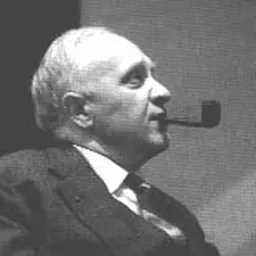
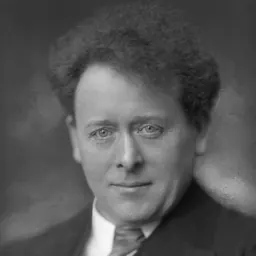
Related people
Same field, nearest in time
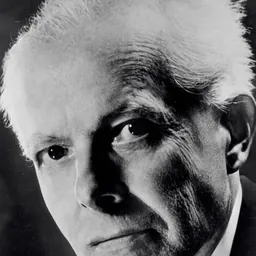


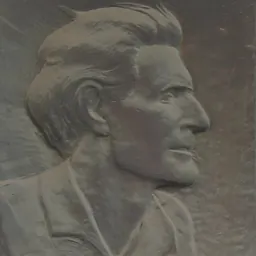
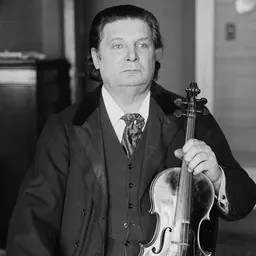
Contemporaries
People whose lives overlapped Karol Szymanowski's
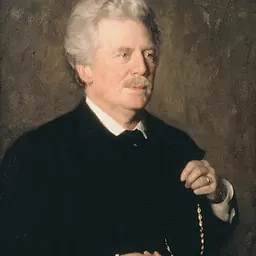
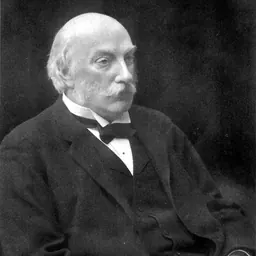

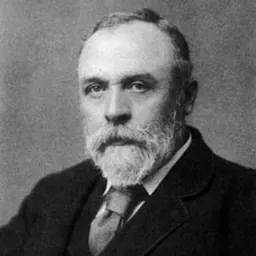
Frequently asked questions
Who was Karol Szymanowski?
Polish composer (1882–1937)
When was Karol Szymanowski born?
Karol Szymanowski was born on 3 October 1882 in Tymoshivka.
When did Karol Szymanowski die?
Karol Szymanowski died on 29 March 1937 in Lausanne.
What was Karol Szymanowski's occupation?
Karol Szymanowski was a composer, music educator, university teacher, pianist and author.
What nationality was Karol Szymanowski?
Karol Szymanowski was Russian and Polish.
Sources & further reading
· Wikipedia: Karol Szymanowski
Cite this page
APA: Biography.guide. (2026). Karol Szymanowski. https://biography.guide/karol-szymanowski/
MLA: "Karol Szymanowski." Biography.guide, https://biography.guide/karol-szymanowski/.
Chicago: "Karol Szymanowski." Biography.guide. https://biography.guide/karol-szymanowski/.
Data last updated: 2026-09-25 · Spot an error? Report a correction.
Page generated 2026-09-27 05:12 UTC