
About Tadeusz Szeligowski
Lived 1896 – 1963 (aged 66). Tadeusz Szeligowski was a Polish composer, music educator, university teacher, pianist and music critic.
Tadeusz Szeligowski (13 September 1896 – 10 January 1963) was a Polish composer, educator, lawyer and music organizer. His works include the operas The Rise of the Scholars, Krakatuk and Theodor Gentlemen, the ballets The Peacock and the Girl and Mazepa ballets, two violin concertos, chamber and choral works.
As a music teacher, Szeligowski was very well established in Vilnius, Lublin, Poznań and Warsaw. He was also a respected music writer who frequently wrote for journals and magazines specialized in music such as the Kurier Wileński, Tygodnik Wileński, Muzyka and the Kurier Poznański. His achievements include the creation of the Poznan´ Philharmonic, where he served as its first director between the years 1947–1949, and the founding of the Poznań Musical Spring, one of the most important festivals of contemporary music at the time.
Life and work
Musical education Tadeusz Szeligowski was born on 13 September 1896 in Lemberg, then in Austro-Hungarian Galicia and now in western Ukraine. Szeligowski's first music and piano teacher was his mother. Later he began studying music at the Conservatory of Music of the Polish Society in L'vov in the years 1910–1914, where he studied piano under the direction of Vilem Kurz, and then from 1918 to 1923 in Kraków, where he studied piano with H. Peters, and composition with Bolesław Wallek-Walewski. Szeligowski's further education included musicology with Zdzisław Jachimecki and law at the Jagiellonian University in Kraków, where he received his doctorate in 1922. There he found work as repetiteur at the Kraków Opera House, allowing him to become well acquainted with the opera repertoire. There he attended many concerts and intensely experienced the latest compositions by Darius Milhaud, Francis Poulenc, ballet productions of many famous companies, as well as highly acclaimed performances by Jascha Heifetz, Vladimir Horowitz, Arthur Rubinstein and Ignacy Jan Paderewski. he began teaching music in Poznań until 1939, and then moved to Lublin for a little while after World War II. In addition, he was the initiator of the festival of contemporary music, the "Poznań Musical Spring", where modern music was then presented in all its glory, Tadeusz Szeligowski died in Poznań on 10 January 1963 and since 1965 he has been buried in the Poznań Skalka crypt of Merit.
Also, he received numerous prizes and awards, including: The City of Poznań Music Prize
Timeline-event|date=|event= Medal Order of Polonia Restituta Theodore Gentleman, opera in 2 acts ( 1960)
Don’t just read it —
keep it.
Full-length biographies made to live with: read them, listen on the way to work, watch them tonight.
- E-book
- Audio
- Video
Instant download · yours to keep · every purchase keeps this site free
Important facts
People in Tadeusz Szeligowski's life
Named in this biography and alive at the same time



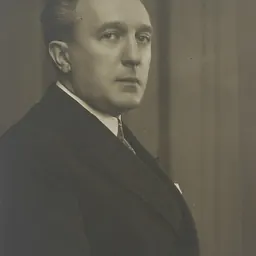




Related people
Same field, nearest in time



Contemporaries
People whose lives overlapped Tadeusz Szeligowski's

Frequently asked questions
Who was Tadeusz Szeligowski?
Polish musician (1896–1963)
When was Tadeusz Szeligowski born?
Tadeusz Szeligowski was born on 13 September 1896 in Lviv.
When did Tadeusz Szeligowski die?
Tadeusz Szeligowski died on 10 January 1963 in Poznań.
What was Tadeusz Szeligowski's occupation?
Tadeusz Szeligowski was a composer, music educator, university teacher, pianist and music critic.
What nationality was Tadeusz Szeligowski?
Tadeusz Szeligowski was Polish.
Sources & further reading
· Wikipedia: Tadeusz Szeligowski
· DBpedia: Tadeusz Szeligowski
Cite this page
APA: Biography.guide. (2026). Tadeusz Szeligowski. https://biography.guide/tadeusz-szeligowski/
MLA: "Tadeusz Szeligowski." Biography.guide, https://biography.guide/tadeusz-szeligowski/.
Chicago: "Tadeusz Szeligowski." Biography.guide. https://biography.guide/tadeusz-szeligowski/.
Data last updated: 2026-09-22 · Spot an error? Report a correction.
Page generated 2026-09-27 05:23 UTC