
About Kong Xun
Lived 884 – 931 (aged 46–47). Kong Xun was a Chinese politician.
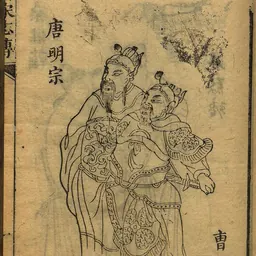
Kong Xun (884 -April 4, 931 ), known early in his life as Zhao Yinheng , also having used surnames of Li and Zhu early in life, was an official of the Chinese Five Dynasties and Ten Kingdoms period states Later Liang and Later Tang. He became prominent during the reign of Emperor Mingzong of Later Tang due to his alliance with Emperor Mingzong's trusted advisor An Chonghui, but later had a fallout with An, was ejected from the central government, and would not return to it toward the end of his life.
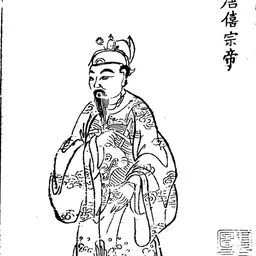
Background Kong Xun was born in 884, during the reign of Emperor Xizong of Tang, but his ancestry and home territory has been lost to history, as was his original personal name. He became an orphan early in his life, and gradually ended up in Bian Prefecture (汴州, in modern Kaifeng, Henan). He was taken into the household of a rich man named Li Rang , and Li raised him as an adoptive son. Later, when Zhu Quanzhong became the military governor (Jiedushi) of Xuanwu Circuit (宣武, headquartered at Bian Prefecture), Li became an adoptive son of Zhu's, and so Kong also changed his family name to Zhu. As he grew older, he served in Zhu Quanzhong's army, and became favored by a wet nurse of one of Zhu Quanzhong's sons. She thus took him as an adoptive son, and as her husband's family name was Zhao, Kong took the family name of Zhao and a new personal name of Yinheng. Once Emperor Zhaozong arrived in Luoyang, all of the palace personnel were commissioned by Zhu, so that Zhu could tightly control the palace affairs. Zhao Yinheng became one of the deputy directors of palace affairs (宣徽副使, Xuanhui Fushi), under the director Wang Yin . While serving in that office, he participated in plotting, at Zhu's order, the assassination of Emperor Zhaozong in late 904, along with Jiang Xuanhui and Zhang Tingfan .
During the reign of Emperor Ai of Tang In 905, Zhu Quanzhong was in preparation of seizing the imperial throne. Jiang Xuanhui, Zhang Tingfan, and another of Zhu's associates, the chancellor Liu Can, thus were preparing various traditional ceremonial steps for the dynastic transition, including the creation of Zhu to a princely title greater than the Prince of Liang title that he carried at that time and also the bestowment of the nine bestowments. Zhu, however, was impatient and wanted the transition to be speeded up. Wang Yin and Zhao Yinheng were jealous of Jiang and wanted to replace him, and so they submitted false accusations to Zhu stating that Jiang and Liu were using these ceremonies to try to extend Tang's dynastic life, hoping for a change in circumstances. Zhu believed in the accusations, and shortly after had Jiang, Liu, and Zhang arrested and executed. Wang and Zhao then further falsely accused Emperor Ai's mother Empress Dowager He of having an affair with Jiang; she thereafter was also killed by Wang and Zhao under secret order from Zhu.
During Later Liang Sometime during Later Liang, Zhao Yinheng changed his family name back to Kong and took a new personal name of Xun. Among the offices he served in were defender of Ru Prefecture (汝州, in modern Zhumadian, Henan), general of the imperial guards, and director of material pricing (租庸使, Zuyongshi), but it is not clear what the exact progression of his offices were. Kong Xun became a subject of Later Tang's Emperor Zhuangzong, and as of 924 was serving as a general of the imperial guards. That year, the Later Tang director of material pricing Wang Zhengyan suffered a stroke. Under the recommendation of Emperor Zhuangzong's favored performer Jing Jin , Emperor Zhuangzong promoted Wang's deputy Kong Qian to be director, with Kong Xun serving as his deputy. For the rest of Emperor Zhuangzong's reign, Kong Qian became known for inflicting heavy taxation on the people so that he could increase the emperor's personal wealth, which caused the people's anger against Emperor Zhuangzong; how much involvement Kong Xun had in Kong Qian's oppressive tax scheme is unclear.
As of 926, Kong Xun was serving as the acting prefect of Bian Prefecture, when Emperor Zhuangzong was facing multiple rebellions against him due to the resentment of the people and his own generals. One of the chief rebels was Emperor Zhuangzong's adoptive brother Li Siyuan, who had rebelled at Yedu (鄴都, in modern Handan, Hebei) (under duress by his own subordinates, according to traditional sources). Li Siyuan was advancing south from Yedu toward Bian Prefecture, while Emperor Zhuangzong was trying to head from the capital Luoyang to Bian Prefecture to cut off Li Siyuan's advance. Kong decided to play both sides, so he sent emissaries to both Emperor Zhuangzong and Li Siyuan welcoming them, while secretly informing his subordinates, "Whoever gets here first will get to enter." Li Siyuan arrived at Bian Prefecture first, so he welcomed Li Siyuan into the city. where he was then killed in a mutiny headed by the officer Guo Congqian . Li Siyuan subsequently entered Luoyang and was initially declared regent (while Li Siyuan was still pondering whether to take the throne himself or to offer the throne to Emperor Zhuangzong's son Li Jiji, who was then returning from the campaign in which Later Tang forces conquered Former Shu). Under the recommendation of Li Siyuan's ally Li Shaozhen, Li Siyuan made Kong Xun his chief of staff (Shumishi) when the carryover chief of staff Zhang Juhan requested retirement. Shortly after, when Li Jiji's own officers turned against him, Li Jiji committed suicide, so Li Siyuan prepared to take the throne. Li Shaozhen and Kong advocated that he end the use of the Tang dynastic name, but under the advice of the official Li Qi, Li Siyuan decided to retain the Tang dynastic name, taking the throne in the role of Emperor Zhuangzong's heir (as Emperor Mingzong).
During Emperor Mingzong's reign Shortly after Emperor Mingzong took the throne, the Bian Prefecture officer Zhang Jian started a mutiny there, but the mutiny was quickly suppressed by the general Li Yanrao . Emperor Mingzong briefly put Kong Xun in charge of Bian Prefecture, and he arrested the mutineers' family members — some 3,000 households — and slaughtered them. During this time, there was a commoner at Luoyang who violated the ban against private brewing of liquors (which was a state monopoly), and Kong reacted by slaughtering his entire family. Emperor Mingzong viewed this as a gross injustice (although he apparently did not punish Kong for it) and therefore in 928 ended the liquor monopoly.
Notes and references
New History of the Five Dynasties, vol. 43. Zizhi Tongjian, vols. 265, 273, 274, 275, 276, 277.
Don’t just read it —
keep it.
Full-length biographies made to live with: read them, listen on the way to work, watch them tonight.
- E-book
- Audio
- Video
Instant download · yours to keep · every purchase keeps this site free
Important facts
People in Kong Xun's life
Named in this biography and alive at the same time




Related people
Same field, nearest in time


Contemporaries
People whose lives overlapped Kong Xun's

Frequently asked questions
Who was Kong Xun?
Tang dynasty politician
When was Kong Xun born?
Kong Xun was born in 884.
When did Kong Xun die?
Kong Xun died in 931.
What was Kong Xun's occupation?
Kong Xun was a politician.
What nationality was Kong Xun?
Kong Xun was Chinese.
Sources & further reading
Cite this page
APA: Biography.guide. (2026). Kong Xun. https://biography.guide/kong-xun/
MLA: "Kong Xun." Biography.guide, https://biography.guide/kong-xun/.
Chicago: "Kong Xun." Biography.guide. https://biography.guide/kong-xun/.
Data last updated: 2026-09-20 · Spot an error? Report a correction.
Page generated 2026-09-27 05:10 UTC