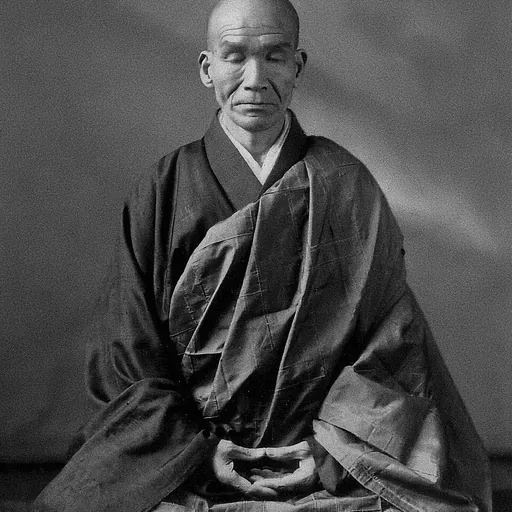
About Kodo Sawaki
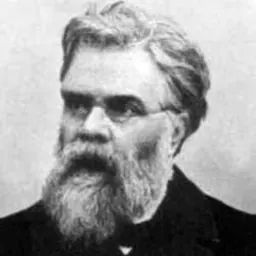
Lived 1880 – 1965 (aged 85). Kodo Sawaki was a Japanese buddhist monk, military personnel and rōshi.
was a prominent Japanese Sōtō Zen teacher of the 20th century. He is considered to be one of the most significant Zen priests of his time for bringing Zen practice, in particular meditation, into the lives of laypeople and popularizing the ancient tradition of sewing the kesa.
Biography
Early life Sawaki was born in Tsu, Mie on June 16, 1880. Both his parents died when he was young, his mother when he was four and his father three years later. Sawaki was described as a tough street kid though he also visited Buddhist Pure Land temples.
Path to Ordination
When he was 16, he ran away from home to become a monk at Eihei-ji, one of the two head temples of the Sōtō Zen sect. A monk at the entrance tried to turn him away but Sawaki stated he would rather die than return home. Eihei-ji is also where Sawaki was first introduced to zazen. Sawaki lacked money so he, in a state of fear, recited the Heart Sutra to a ferry captain as payment and was allowed passage. Sawaki faced cold conditions and became covered in lice. Realizing he would not make it in his current state, Sawaki visited temples and reunited with his sister to receive care. Sawaki was ordained in 1899 by Koho Sawada. Sawaki became popular, which resulted in some jealousy from another monk who bullied him. During a segaki ceremony making an offering to hungry ghosts, Sawaki fought the bullying monk and was praised by his fellow monks for standing up for himself. Sawaki was asked to read a sutra during a funeral for an impoverished man whose father had died. Sawaki stated “Discarding one’s body beneath the military flag is true selflessness. It is in doing this that you immediately become faithful retainers of the emperor and perfect soldiers.” When he regained consciousness he woke up in a medical tent marked as a patient likely to die. After someone noticed him breathing he was treated and sent to a hospital in Hiroshima then Nagoya.
At Daijiji, Sawaki would develop his own very direct and occasionally crass teaching style and stated the students at the Fifth High School of Kumamoto were the greatest influences in his life as a Zen practitioner. Sawaki struggled with these younger students stating he lacked robashin (grandmotherly love). This experience led him to realize he did not just need to teach discipline but also needed to truly sympathize with his students. Sawaki also praised others in his talks including Sontoku Ninomiya who helped rebuild homes in Sakura Village as a peasant laborer.
Sawaki later became a Zen teacher, and during the 1930s he served as a professor at Komazawa University. Sawaki thought Buddhism is realized through practice and understood through the body. Therefore, we must practice zazen and have proper control over our muscles. With zazen as the standard, we can train ourselves to have the proper attitude for life. Generally speaking, practice should be the approach to life. He said one never feels that you can catch hold of zazen as you never chase after it and you never run from it and it is nothing to fear. Sawaki saw that people always rush to get ahead of a group. Sawaki stated that the dharma teaches there are demons, hungry ghosts, and beasts and a world of heavenly beings in which one goes back and forth between these worlds of desire but with zazen you cannot be turned around, you just sit. The full version contains 34 "to you" statements.
To you who have just begun brooding over life "In a part of Manchuria, the carts are pulled by huge dogs. The driver hangs a piece of meat in front of the dog’s nose, and the dog runs like crazy to try to get at it. But of course he can’t. He’s only thrown his meat after the cart has finally reached its destination. Then in a single gulp, he swallows it down. It’s exactly the same with people and their paychecks. Until the end of the month they run after the salary hanging in front of their noses. Once the salary is paid, they gulp it down, and they’re already off: running after the next payday. Nobody can see farther than the end of their nose. The question is: why are you straining your forehead so much? If you aren’t careful, you’ll spend your whole life doing nothing besides waiting for your ordinary-person hopes to someday be fulfilled."
Lineage Calligraphy by Kōdō Sawaki. 海底泥牛吼 (Clay ox howls on the floor of the sea)
Dharma transmission
Though Sawaki ordained many monks and nuns, only five monks and three nuns received Dharma Transmission (Shihō) from Sawaki:
Shūyū Narita (1914–2004): students in Japan and Europe. Kosho Uchiyama (1912–1998): succeeded Sawaki as abbot of Antai-ji. Sodō Yokoyama (1907–1980): also called "Kusabue Zenji (Zen master of the grass-flute)". Satō Myōshin. Kōjun Kishigami (born 1941): lives in Japan; students in Japan, France and Germany. Jōshin Kasai (1920–1985): female, active in kesa sewing. Kōbun Okamoto (1925-?): female, active in kesa sewing. Baikō Fukuda: female, part time tenzô (cook) in Antaiji.
Influential students
Other influential students of Sawaki who did not receive Dharma transmission from him are:
Gudo Wafu Nishijima (1919–2014) Taisen Deshimaru (1914–1982): went to France in 1967 and lived there for the rest of his life, establishing the Association Zen Internationale. Kōbun Chino Otogawa (1938–2002): taught many students over the years in the United States and Europe.
Don’t just read it —
keep it.
Full-length biographies made to live with: read them, listen on the way to work, watch them tonight.
- E-book
- Audio
- Video
Instant download · yours to keep · every purchase keeps this site free
Important facts
People in Kodo Sawaki's life
Named in this biography and alive at the same time

Related people
Same field, nearest in time



Contemporaries
People whose lives overlapped Kodo Sawaki's




Frequently asked questions
Who was Kodo Sawaki?
Japanese zen Buddhist monk (1880-1965)
When was Kodo Sawaki born?
Kodo Sawaki was born on 16 June 1880 in Tsu.
When did Kodo Sawaki die?
Kodo Sawaki died on 21 December 1965 in Antai-ji Temple.
What was Kodo Sawaki's occupation?
Kodo Sawaki was a buddhist monk, military personnel and rōshi.
What nationality was Kodo Sawaki?
Kodo Sawaki was Japanese.
Sources & further reading
Cite this page
APA: Biography.guide. (2026). Kodo Sawaki. https://biography.guide/kodo-sawaki/
MLA: "Kodo Sawaki." Biography.guide, https://biography.guide/kodo-sawaki/.
Chicago: "Kodo Sawaki." Biography.guide. https://biography.guide/kodo-sawaki/.
Data last updated: 2026-09-20 · Spot an error? Report a correction.
Portrait: Wikimedia Commons · author & licence
Page generated 2026-09-27 04:58 UTC