
Kōbō Abe
Japanese writer, playwright, photographer and inventor
About Kōbō Abe
Lived 1924 – 1993 (aged 68). Kōbō Abe was a Japanese writer, novelist, playwright, photographer, screenwriter and science fiction writer.
, known by his pen name , was a Japanese writer, playwright and director. His 1962 novel The Woman in the Dunes was made into an award-winning film by Hiroshi Teshigahara in 1964. Abe has often been compared to Franz Kafka for his modernist sensibilities and his surreal, often nightmarish explorations of individuals in contemporary society. He died aged 68 of heart failure in Tokyo after a brief illness.
Biography Abe was born on March 7, 1924 in Kita, Tokyo, Japan and grew up in Mukden (now Shenyang) in Manchuria. His mother had been raised in Hokkaido, while he experienced childhood in Manchuria. This triplicate assignment of origin was influential to Abe, who told Nancy Shields in a 1978 interview, "I am essentially a man without a hometown.
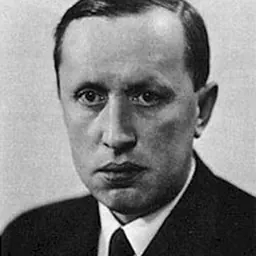
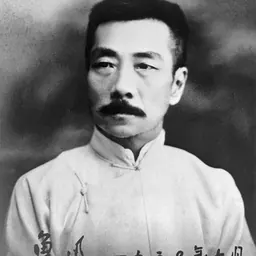
As the postwar period progressed, Abe's stance as an intellectual pacifist led to his joining the Japanese Communist Party, with which he worked to organize laborers in poor parts of Tokyo. Soon after receiving the Akutagawa Prize in 1951, Abe began to feel the constraints of the Communist Party's rules and regulations alongside doubts about what meaningful artistic works could be created in the genre of "socialist realism." The next year, Abe traveled to Eastern Europe for the 20th Convention of the Soviet Communist Party. He saw little of interest there, but the arts gave him some solace. He visited Kafka's house in Prague, read Rilke and Karel Čapek, reflected on his idol Lu Xun, and was moved by a Mayakovsky play in Brno. He later wrote a play about the protests, The Day the Stones Speak, which was staged several times in Japan and China in 1960 and 1961. In the summer of 1961, Abe joined a group of other authors in criticizing the cultural policies of the Communist Party. He was forcibly expelled from the party the following year. His political activity came to an end in 1967 in the form of a statement published by himself, Yukio Mishima, Yasunari Kawabata, and Jun Ishikawa, protesting the treatment of writers, artists, and intellectuals in Communist China.
His experiences in Manchuria were also deeply influential on his writing, imprinting terrors and fever dreams that became surrealist hallmarks of his works. In his recollections of Mukden, these markers are evident: "The fact is, it may not have been trash in the center of the marsh at all; it may have been crows. I do have a memory of thousands of crows flying up from the swamp at dusk, as if the surface of the swamp were being lifted up into the air." In 1970, Abe's Inter Ice Age 4 became the first Japanese science fiction novel to appear in English, in a translation by American scholar E. Dale Saunders.
In the 1960s, he collaborated with Japanese director Hiroshi Teshigahara on the film adaptations of The Pitfall, Woman in the Dunes, The Face of Another, and The Man Without a Map. Woman in the Dunes received widespread critical acclaim and was released only four months after Abe was expelled from the Japanese Communist Party.
In 1971, he founded the Abe Studio, an acting studio in Tokyo. , and Hisashi Igawa starred. Abe had become dissatisfied with ability of the theatre to materialize the abstract, reducing it to a passive medium. Until 1979, he wrote, directed, and produced 14 plays at the Abe Studio. He also published two novels, Box Man (1973) and Secret Rendezvous (1977), alongside a series of essays, musical scores, and photographic exhibits.
Awards Among the honors Abe received were the Akutagawa Prize in 1951 for The Crime of S. Karuma, the Yomiuri Prize in 1962 for The Woman in the Dunes, and the Tanizaki Prize in 1967 for the play Friends. Kenzaburō Ōe credited Abe and other modern Japanese authors for "[creating] the way to the Nobel Prize", which he himself won. Abe was mentioned multiple times as a possible recipient, but his early death precluded that possibility. 1951 Chinnyusha "Intruders" Juliet Winters Carpenter Collected in Beyond the Curve 1951 Shijin no Shougai "The Life of a Poet" Juliet Winters Carpenter Collected in Beyond the Curve 1951 Ueta hihu "The Starving Skin" 1952 Noa no hakobune "Noah's Ark" Juliet Winters Carpenter Collected in Beyond the Curve 1952 Suichu toshi "The Underwater City" 1954 Inu "The Dog" Andrew Horvat Collected in Four Stories by Kobo Abe 1954 Henkei no kiroku "Record of a Transformation" Juliet Winters Carpenter Collected in Beyond the Curve 1954 Shinda musume ga utatta "Song of a Dead Girl" Stuart A. Harrington Collected in The Mother of Dreams and Other Short Stories: Portrayals of Women in Modern Japanese Fiction 1956 R62 gou no hatumei "Inventions by No. R62" 1957 Yuwakusha "Beguiled" Juliet Winters Carpenter Collected in Beyond the Curve 1957 Yume no heishi "The Dream Soldier" First translation, 1973 by Andrew HorvatSecond translation, 1991 by Juliet Winters Carpenter First translation collected in Four Stories by Kobo AbeSecond translation collected in Beyond the Curve 1957 Namari no tamago "The Egg of Pb" 1958 Shisha "The Special Envoy" Juliet Winters Carpenter Collected in Beyond the Curve 1960 Kake "The Bet" Juliet Winters Carpenter Collected in Beyond the Curve 1961 Mukankei na shi "An Irrelevant Death" Juliet Winters Carpenter Collected in Beyond the Curve 1964 Toki no gake "The Cliff of Time" Andrew Horvat Collected in Four Stories by Kobo Abe. Adapted into a short film in 1971 starring Hisashi Igawa that was directed by Abe himself. 1966 Kabu no mukou "Beyond the Curve" Juliet Winters Carpenter First collection published in English Bou ni natta otoko The Man Who Turned Into A Stick Donald Keene Collected in The Man Who Turned Into A Stick: Three Related Plays The 1969 production was the first time Abe directed his own work. His wife designed the set.
Essays Sakura wa itan shinmonkan no monshōThe Dark Side of the Cherry BlossomsDonald KeenePublished in The Washington Post, The Guardian, and The Asahi Shinbun
Poetry
Don’t just read it —
keep it.
Full-length biographies made to live with: read them, listen on the way to work, watch them tonight.
- E-book
- Audio
- Video
Instant download · yours to keep · every purchase keeps this site free
Important facts
People in Kōbō Abe's life
Named in this biography and alive at the same time




Related people
Same field, nearest in time


Contemporaries
People whose lives overlapped Kōbō Abe's

Frequently asked questions
Who was Kōbō Abe?
Japanese writer, playwright, photographer and inventor
When was Kōbō Abe born?
Kōbō Abe was born on 7 March 1924 in Kita.
When did Kōbō Abe die?
Kōbō Abe died on 22 January 1993 in Tokyo.
What was Kōbō Abe's occupation?
Kōbō Abe was a writer, novelist, playwright, photographer, screenwriter and science fiction writer.
What nationality was Kōbō Abe?
Kōbō Abe was Japanese.
Sources & further reading
Cite this page
APA: Biography.guide. (2026). Kōbō Abe. https://biography.guide/kobo-abe/
MLA: "Kōbō Abe." Biography.guide, https://biography.guide/kobo-abe/.
Chicago: "Kōbō Abe." Biography.guide. https://biography.guide/kobo-abe/.
Data last updated: 2026-09-20 · Spot an error? Report a correction.
Page generated 2026-09-27 05:23 UTC