
About Kiron Sinha
Lived 1916 – 2009 (aged 93). Kiron Sinha was a painter.
Kiron Sinha (Bengali: কিরন সিনহা; 4 March 1916 – 5 December 2009) was an Indian painter and sculptor. He was associated with the Santiniketan School.
Early life Kiron Chandra Sinha (Bengali: কিরন সিনহা) was born on 4 March 1916 in Khalapara, Netrokona District, Bengal (now in Bangladesh). He was the fourth of five children of Umesh Chandra Sinha Chaudhury, a school teacher, and Niraja Devi, a folk artist.
The family followed Orthodox Hindu traditions. Sinha displayed artistic ability at an early age, encouraged by both his parents. He later regarded his mother as his first art teacher.
When he was about twelve years old, his mother died of cholera. This loss had a significant impact on his life, and in later years he dedicated many of his artworks to her memory. The theme of motherhood subsequently became prominent in his work, with dedications both to his mother and to his wife in her role as a mother.
In 1933, along with Ramkinkar and other students, Sinha contributed sculptural work to the university buildings Shyamali and Kalabari. He enrolled at Sun Yat-sen University as a scholar, travelling with Rabindranath Tagore's signed recommendation, blessings, and a travel allowance.
South India, Rajasthan, Lahore, Santiniketan Upon his return to India in early 1938, Sinha was employed as an art teacher by K. Sankara Menon at Rukmini Devi's institution, the Kalakshetra Foundation. In 1939, he was appointed art master at Vidyodaya Schools, where he designed costumes for school performances and created the school crest that continues to be in use.
During his time at Kalakshetra, Sinha met the Vienna-born artist and art teacher Gertrude Hirsch (15 June 1911 – 5 September 2011), who was then teaching at the Annie Besant Memorial School. From February to April 1942, he collaborated with Gertrude to produce a pair of murals for the Students' Common Room at the Women's Christian College, Chennai. These murals remain in place today. During this period, Sinha painted Old Mali
Shillong, 1948–1950 From 1949 to 1951, the couple lived in Shillong, Assam (now in Meghalaya), where Gertrude held a government-funded post as Industrial Art Expert under Thomas Hayley, Secretary and Director of Rural Development to the Government of Assam. The artists collaborated on various projects, including the design and production of woodblocks.
After Sinha and Gertrude settled in Santiniketan, they continued to design and carve woodblocks for many years. Gertrude used these blocks to create printed textiles such as wall hangings, household items, and garments, which became highly sought after.
Santiniketan: 1950s and 1960s By June 1951, the family returned to Santiniketan, where they remained for the rest of their lives.
During the 1950s and 1960s, Sinha produced a substantial body of work and held exhibitions in Delhi, Calcutta, Lucknow, and Australia. Gandhi became an admirer of Sinha's paintings and Gertrude's hand-printed textiles, acquiring several works. These were displayed in public offices and also presented to foreign visitors and dignitaries.
Influenced by the monumental works of his teacher and mentor Ramkinkar Baij, Sinha further developed the use of cement for sculpture, occasionally incorporating coloured oxides. They often engaged in discussions on art and contemporary movements, with A. Ramachandran describing Kiron as a "guide" and an "sobering influence".
In 1957, the painter Shantanu Ukil visited Santiniketan and met Sinha. He was influenced by Sinha's neo-Impressionistic style, bold colour palette, and depictions of the Santal people.
Naggar: 1960s In 1962, Sinha was introduced to M. S. Randhawa, who admired his work, particularly his depictions of local people. Randhawa suggested that Sinha spend time in the Kulu and Kangra Valleys to document the landscape and inhabitants.
In the mid-1960s, Sinha built a house in Naggar, where the family stayed on several occasions until the late 1960s. During this period, they developed a friendship with the Russian painter Svetoslav Roerich and his wife, Devika Rani. Sinha's years in the Kulu Valley were especially productive, and works from this time were acquired by Randhawa for the Government Museum and Art Gallery, Chandigarh, while others entered the collection of the Birla Academy of Art and Culture, Kolkata. His work there focused primarily on the design of ceramics and textiles.
Loss of Kamona In March 1972, Sinha and Gertrude's only daughter, Kamona (nicknamed Bulbul), died in an accident. In the following years, Sinha produced a series of paintings reflecting his grief and his vision of Bulbul in the spirit world. These included Bulbul Playing the Mouth Organ in a Tree, Bulbul Passing to the Spirit World, Spirit of Kamona, and Grieving Father.
His lifelong interest in folk art is evident, with many of his works across decades exploring these themes. His works are also held at Visva-Bharati University and in private and government collections in Australia, India, the United Kingdom, Spain, the United States, Switzerland, Sweden, Russia, Indonesia, and Germany. Several of these works were presented by the Government of India to other countries. | 17-30 August 1948 Government Museum, Madras The first monthly Art Exhibition of the South Indian Society of Painters Group Exhibition December 1950 New Delhi Exhibition of hand printed textiles with designs from folk and tribal art|Opened by Indira Gandhi Contemporary Art Society Adelaide Annual Exhibition Opened by A. N. Jeffares Two of Sinha's works were shown. 17–21 December 1952 Freemason's Hall, New Delhi Kiron and Gertrude Sinha: Paintings and Textiles 3–9 December 1953 All India Fine Arts and Crafts Society, New Delhi Paintings by Kiron Sinha|Inaugurated by E W. Meyer, German Ambassador 16 June – 17 October 1954 India Pavilion, Central Pavilion (Room 39), Giardini, Venice Venice Biennale March 1955 Jaipur House, New Delhi Lalit Kala Akademi, First National Exhibition of Art|Inaugurated by Rajendra Prasad 17-15 December 1955 All India Fine Arts and Crafts Society, New Delhi An exhibition of paintings and textiles alongside A. A. Raiba 1956 New Delhi Exhibition opened by Lorraine Rowan Shevlin (wife of Sherman Cooper, the US Ambassador to India). 16–18 November 1956 Bulbul Art Gallery, Santiniketan Opened by Visva Bharati, Satyendra Nath Bose 8-16 November 1958 All India Fine Arts and Craft Society, New Delhi Saga on the Santals: Exhibition of Kiron Sinha's paintings and textiles by Gertrude Sinha|Opened by Humayun Kabir, Union Minister for Scientific Research and Culture 14 May – 16 July 1959 Museum Folkwang, Essen, Germany Moderne Indische Kunst 4–10 February 1961 Academy of Fine Arts, Kolkata Saga on the Santhals 23 September – 6 October 1963 Argus Gallery, Melbourne, Australia Saga on the Santals|Opened by JS Bloomfield, Minister for Education, in the presence of the Maharajah of Mysore, Jayachamarajendra Wadiyar 15–25 October 1963 Dominion Art Galleries, Sydney, Australia Saga on the Santals Opened by Sri G. L. Puri, Indian Trade Commissioner 1–7 October 1964 All India Fine Arts and Crafts Society, New Delhi An exhibition of Kulu Paintings Inaugurated by M. S. Randhawa 1965 Lucknow Opened by Chief Minister Sucheta Kriplani 11-15 December 1966 Kala Bhavana, Santiniketan Solo Exhibition 16-22 January 1967 Academy of Fine Arts, Kolkata The Call of the Himalayas 7-12 November 1968 Alliance Francaise, Kolkata 1973 Max Mueller Bhavan, Kolkata 26 September – 1 October 1989 Birla Academy of Art and Culture, Kolkata Artists who Care for Children|One painting of Sinha's was exhibited in this group exhibition 11–13 October 1996 Devlalikar Kala Veethika, Indore Hintaal: Retrospective of Kiron Sinha 19 July - 16 August 2017 Druck + Galerie, Munich, Germany Kiron Sinha - Holzschnitte [Woodcuts]| 11 February – 26 March 2023 Delhi Art Gallery, Janpath, New Delhi Iconic Masterpieces of Indian Modern Art Edition 2 7 November - 2 December 2025 Gallery Flaneur, Adelaide, Australia The Art of Connection''
Don’t just read it —
keep it.
Full-length biographies made to live with: read them, listen on the way to work, watch them tonight.
- E-book
- Audio
- Video
Instant download · yours to keep · every purchase keeps this site free
Important facts
People in Kiron Sinha's life
Named in this biography and alive at the same time

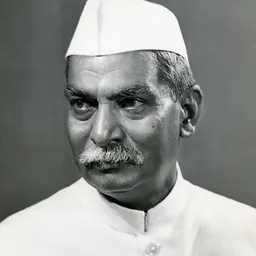
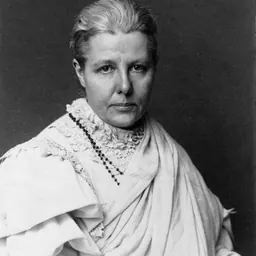

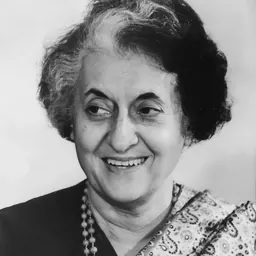
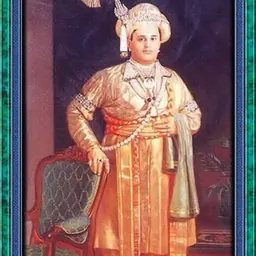
Related people
Same field, nearest in time

Contemporaries
People whose lives overlapped Kiron Sinha's



Frequently asked questions
Who was Kiron Sinha?
Indian artist (1916–2009)
When was Kiron Sinha born?
Kiron Sinha was born on 4 March 1916.
When did Kiron Sinha die?
Kiron Sinha died on 5 December 2009.
What was Kiron Sinha's occupation?
Kiron Sinha was a painter.
Sources & further reading
Cite this page
APA: Biography.guide. (2026). Kiron Sinha. https://biography.guide/kiron-sinha/
MLA: "Kiron Sinha." Biography.guide, https://biography.guide/kiron-sinha/.
Chicago: "Kiron Sinha." Biography.guide. https://biography.guide/kiron-sinha/.
Data last updated: 2026-09-20 · Spot an error? Report a correction.
Page generated 2026-09-27 05:00 UTC