
King Hagler
King of the Catawba tribe
About King Hagler
Lived 1700 – 1763.
Election as chief Hagler became Eractasswa (Chief) after the death of King Yanabe Yalangway, who was murdered by a group of Iroquois warriors in October 1750. In keeping with Catawba tradition, the new chief (Hagler) was the former chief's sister's son. Immediately after Yalangway's death, Hagler was elected by the Catawba General Council to lead the tribe.
Peace treaties with other Native American groups One of Hagler's first tasks was to negotiate a peace treaty with the Iroquois Six Nations. In June 1751 Hagler, accompanied by Lieutenant Governor William Bull and a delegation of Catawba leaders, attended a peace conference in Albany, New York, where Hagler smoked a peace pipe with the Mohawk leader Hendrick Theyanoguin. In 1752 an Iroquois delegation visited the Catawba and an exchange of prisoners followed. The Catawba also brokered a peace treaty with the Shawnee, who were not members of the Six Nations federation. The Catawba were invited to incorporate with the Cherokee but Hagler refused this offer.
On 26 May 1756, he met with North Carolina Chief Justice Peter Henley in Salisbury, North Carolina to discuss the provisions of a recent treaty. Hagler took another opportunity to decry the sale of alcohol to the Catawba: I desire a stop may be put to the selling of strong Liquors by the White people to my people especially near the Indian Nation. If the White people make strong drink, let them sell it to one another or drink it in their own Families. This will avoid a great deal of mischief which otherwise will happen from my people getting drunk and quarreling with the White people.
Hagler also attempted to discipline Catawbas who committed crimes while intoxicated, contrary to the traditional Catawba custom of pardoning such behavior as a form of temporary madness. In 1754 Hagler supported the execution of a Catawba warrior who, while drunk, had murdered a young girl. The execution was carried out by the perpetrator's cousin in the presence of colonial witnesses, "the White people, in Order to shew our Willingness to punish such offenders."
In response to Hagler's complaints, regulations adopted at the Augusta Conference of 1767 attempted to limit the amount of alcohol brought into Native American communities: "Any Trader who by himself, substitute, or servant, shall carry more than fifteen Gallons of Rum, at any one time, into any nation of Indians...shall forfeit his bond and license."
Hagler and Catawba land rights Catawba Fort In May 1756 Hagler was asked to provide Catawba warriors to support the British during the French and Indian War (1754-1763), and he pledged to contribute the services of forty warriors. In return, Hagler requested that North Carolina Governor Arthur Dobbs supply gifts and ammunition and construct a fort to protect the Catawba while their warriors were away fighting for the British. Dobbs reluctantly agreed, and a site was selected. He purchased 640 acres from the Catawba just west of modern day Fort Mill, South Carolina. He then sent Captain Hugh Waddell and a company of 50 Provincial soldiers to build the fort. The project was interrupted several times due to the interference of Governors Bull and Lyttelton of South Carolina. The North Carolina fort project was abandoned in August, 1757, after the Catawba requested South Carolina build them the fort instead. Governor Dobbs wrote:
"[After] we had wrought 3 or 4 months upon the Fort, [the Catawba] sent down to Governor William Lyttelton to stop building the Fort; they will not have it built by us but by them."
The Catawba were angry that Governor Dobbs had continued to approve land grants to white settlers on land that the Catawba had considered to be their traditional homeland. Surveyors had been running surveys through Catawba communities and desecrating burial grounds. In April 1759, King Hagler and a delegation of Catawba Indians traveled to Charleston to ask Governor Lyttleton to construct a fort. Governor Lyttelton appropriated funds for the construction, as he was anxious to maintain the Catawba as allies against the Cherokees. In early 1761, during the Anglo-Cherokee War, Catawba warriors joined British regulars and South Carolina provincials in fighting against the Cherokees, who were eventually forced into a peace accord. Lyttelton then commissioned surveyor and Indian trader Samuel Wyly (also spelled Wylie) to build the new Catawba fort. In 1761, Wyly and his crew erected a wooden stockade near present-day Van Wyck, South Carolina. However, as hostilities with the Cherokees had ended, neither the Catawba nor provincial troops ever garrisoned the fort.
Death and burial On August 30, 1763, Hagler was in the Waxhaws, a Waxhaw community in the Piedmont region of North and South Carolina, when he was ambushed and killed by a band of seven Shawnees. He was reportedly shot six times.
The motive for the murder was never clearly determined. Hagler was interred with his most valuable possessions, but the grave site was desecrated by white settlers soon after his burial. His body was later moved to a secret location. On 29 January, 1765, a meeting of Catawbas under the supervision of Samuel Wyly elected Captain Frow to replace Ayers. On 31 May, 1768, Frow claimed to have hunted down and killed six of the Shawnee warriors who killed King Haglar and presented their scalps to Governor William Bull.
Legacy James H. Merrell characterizes Hagler as a shrewd negotiator who struck a balance between preserving Catawba tradition and adapting to the pressures of the growing colonial population:
On the one hand, [Hagler] operated within a dual colonial and Catawba framework he had not constructed and could not escape. He was not the first Eractasswa to acknowledge his people's dependence upon Anglo-America, nor was he the first to negotiate with colonial officials...On the other hand, however, Nopkehe was particularly well suited by background and temperament to fulfill the simultaneous demands of old and young, settlers and distant officials. By birth and upbringing he fit a traditional mold; through experience he had learned at once the futility of challenging colonial society openly and the means of manipulating that society covertly...At a critical time in the life of the Nation Hagler was instrumental in maintaining intercultural peace and internal unity, charting a course through the troubled waters of depopulation, dependence, and despair on which so many other Indian nations foundered. It can be seen today on the city hall tower in Camden. A portrait of King Hagler hangs in the South Carolina Hall of Fame, located inside the Myrtle Beach Convention Center in Myrtle Beach, SC. He was inducted in 2009. In October, 2012 a statue by Maria J. Kirby-Smith depicting King Hagler meeting Colonel Joseph Kershaw (1727-1791) was unveiled on Market Street in downtown Camden. In December, 2014 sculptor Chas Fagan created a statue depicting King Hagler meeting Thomas Spratt, one of the first European settlers in what is today Charlotte, North Carolina. The Catawba Two Kings Casino is named after Hagler and the city of Kings Mountain, North Carolina.
Don’t just read it —
keep it.
Full-length biographies made to live with: read them, listen on the way to work, watch them tonight.
- E-book
- Audio
- Video
Instant download · yours to keep · every purchase keeps this site free
Important facts
People in King Hagler's life
Named in this biography and alive at the same time

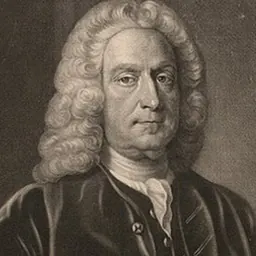
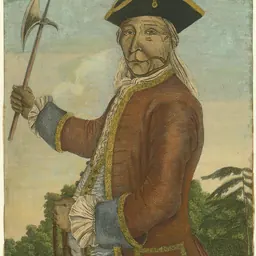
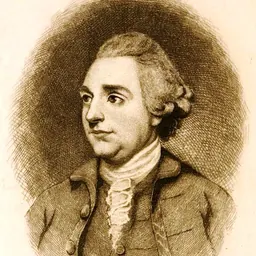
Contemporaries
People whose lives overlapped King Hagler's



Frequently asked questions
Who was King Hagler?
King of the Catawba tribe
When was King Hagler born?
King Hagler was born in 1700 in Province of Carolina.
When did King Hagler die?
King Hagler died on 30 August 1763 in British America, Province of South Carolina.
Sources & further reading
Cite this page
APA: Biography.guide. (2026). King Hagler. https://biography.guide/king-hagler/
MLA: "King Hagler." Biography.guide, https://biography.guide/king-hagler/.
Chicago: "King Hagler." Biography.guide. https://biography.guide/king-hagler/.
Data last updated: 2026-09-20 · Spot an error? Report a correction.
Page generated 2026-09-27 05:33 UTC