
About Kenzō Yano
Lived 1896 – 1981 (aged 84). Kenzō Yano was a Japanese politician.
was a Japanese bureaucrat who served for the police force and the Imperial Japanese Army. He served as Governor of Toyama Prefecture from 1938 to 1941. Prior to that, he held positions in Kyoto, Chiba, Aomori, and Okayama Prefectures.
As a bureaucrat, Yano's career spanned from 1921. On 1 August 1942, he was assigned as Governor of West Sumatra, Indonesia, which was then occupied by the Japanese. However, due to his opposition to Japanese policies in the occupied territories, he resigned and ended his career as a bureaucrat at the end of March 1944. His pen name was .
Career
Yano Kanzo came from an Osaka family, the third son of Yabou Risaburo. After completing his studies at Kansai University School of Law in 1919, he worked at Sakura Cement. In October 1920, he passed the Civil Service Examination. In 1921, he was posted to the Japanese Ministry of the Interior and became a commissioned officer in the Social Affairs Bureau. Thereafter, he served as the mayor of Atago County in Kyoto Prefecture; an administrative officer at the Tokyo Metropolitan Police Department; secretary and head of the Aomori Prefecture Educational Affairs Department; secretary and head of the Chiba Prefecture Police Department; chief of the Tokyo Metropolitan Police Department Secretariat; and head of the General Affairs Department of Okayama Prefecture.
In April 1938, he was appointed Governor of Toyama Prefecture. He was instrumental in the wartime response. However, he resigned in January 1941. On 7 July 1942, he was appointed Chief Magistrate of Imperial Army Administration.
Governor of West Sumatra
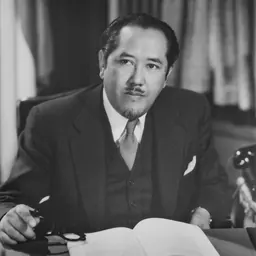
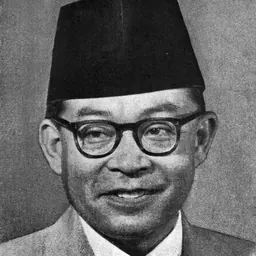
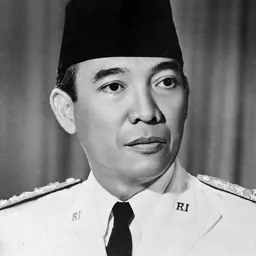
Yano Kenzo with the Founding Fathers of Indonesia. (left to right, Ali Sastroamidjojo, Mohammad Yamin, Agus Salim, Yano Kenzo, Mohammad Hatta, and Sukarno.) In August 1942, Yano was appointed by the Imperial Japanese Army as Governor of West Sumatra, when the area was under the control of the 25th Division Army. He became the only civilian leader in the Japanese-occupied areas of Indonesia (other areas were led by the local military commander). Through culture, Yano Kenzo approached the Minangkabau people. He sympathised with the people's aspirations for independence and opposed the occupation government's policies that did not agree with his views. However, due to his differences, he resigned in protest at the end of March 1944. He was succeeded by Hattori Naoaki the following month.
One of Yano's legacies in office was the Kerukunan Minangkabau (Gui Gan), a body initiated to consolidate the power of the Minangkabau elite. Its members came from each district and subdistrict, comprising nagari heads, adat heads, clerics, youth, and educated groups. They met regularly and acted as an informal advisory council to the governor. Historian Gusti Asnan notes that Kerukunan Minangkabau was an early form of the House of Representatives (DPR), which was later established by the occupation government in each shu or province of Indonesia.
Post-war After leaving the governorship and returning to his home country, Yano worked as an auditor for the Nagata Seiki company.
Role in the Sanmu incident From his experience in the Dutch East Indies would led him to become a radical anti-war activist. He wrote about his views while serving as governor in West Sumatra in an article in 1967. Yano later taught the Three No's Principle (no taxation, no unemployment, and no war) to Toyosaku Kawanami, the mastermind of the Sanmu incident in 1961, a coup d'état attempt against the Japanese government. He was also an advisor to the Japan Industrial Development Corporation, which was established under Kawanami's influence.
Publications "Factory Disaster Assistance Theory: Commentary on Factory Assistance Laws", Sanseido, 1931. "Factory Scenery" Ichibankan Printing Publishing Department, 1931. "Factories and Regional System", Tokyo Factory Association, 1932. "Essays: Travelling around the Village" (Yano Yoya), Koshi Shobo, 1939. "Listening to the Regular Meeting", Toyama Prefecture Association of Town and Village Mayors, 1940. "Pickle Stone: The Elegance of Being a Human Official", Daiichi Koronsha, 1941. "Standing at the Gun's Muzzle", Shinseikai Publishing Department, 1961. "Prison Diaries: The Hidden Story of the Cruel End of the War", Chobunsha, 1962.
Honors August 15, 1940 (Showa 15) – Commemorative medal for the 2,600th anniversary of the founding of the Empire of Japan.
Don’t just read it —
keep it.
Full-length biographies made to live with: read them, listen on the way to work, watch them tonight.
- E-book
- Audio
- Video
Instant download · yours to keep · every purchase keeps this site free
Important facts
People in Kenzō Yano's life
Named in this biography and alive at the same time

Related people
Same field, nearest in time





Contemporaries
People whose lives overlapped Kenzō Yano's




Frequently asked questions
Who was Kenzō Yano?
Japanese politician
When was Kenzō Yano born?
Kenzō Yano was born on 13 September 1896 in Osaka.
When did Kenzō Yano die?
Kenzō Yano died on 19 February 1981.
What was Kenzō Yano's occupation?
Kenzō Yano was a politician.
What nationality was Kenzō Yano?
Kenzō Yano was Japanese.
Sources & further reading
Cite this page
APA: Biography.guide. (2026). Kenzō Yano. https://biography.guide/kenzo-yano/
MLA: "Kenzō Yano." Biography.guide, https://biography.guide/kenzo-yano/.
Chicago: "Kenzō Yano." Biography.guide. https://biography.guide/kenzo-yano/.
Data last updated: 2026-09-20 · Spot an error? Report a correction.
Page generated 2026-09-27 05:20 UTC