
About Keith Feiling
Lived 1884 – 1977 (aged 93). Keith Feiling was a British historian and writer.
Sir Keith Grahame Feiling (7 September 1884 – 16 September 1977) was a British historian, biographer and academic. He was Chichele Professor of Modern History at the University of Oxford, from 1946 to 1950. He was noted for his conservative interpretation of the past, showing an empire-oriented ideology in defence of hierarchical authority, paternalism, deference, the monarchy, Church, family, nation, status, and place.
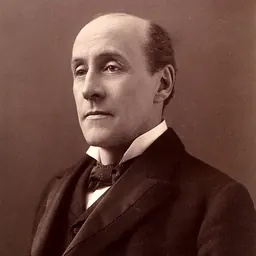
Early life and education He was born at Elms House, Leatherhead, the son of stockbroker Ernest Feiling and Joan Barbara (née Hawkins). His mother was the sister of novelist Sir Anthony Hope and a first cousin of Kenneth Grahame, who wrote the classic The Wind in the Willows.
In 1907, he was appointed lecturer in history at the University of Toronto under Professor George MacKinnon Wrong. Two years later, he returned to Christ Church, Oxford to lecture and resume his studies toward a doctorate. When the First World War began, he was commissioned into the Royal Highlanders. In 1916, he was posted to India and served in Jhansi and Dalhousie. From 1917 to 1919, he worked as secretary to the Central Recruiting Board of India. English historian A.J.P. Taylor in 1950 praised Feiling's historiography, calling it "Toryism" in contrast to the more common "Whig history", or liberal historiography, written to show the inevitable progress of mankind. Taylor explains, "Toryism rests on doubt in human nature; it distrusts improvement, clings to traditional institutions, prefers the past to the future. It is a sentiment rather than a principle."
Honours He was appointed an Officer of the Order of the British Empire in the 1919 New Year Honours for his work during the First World War. He was awarded the James Tait Black Award for his biography of Warren Hastings in 1954 and was knighted in the 1958 Birthday Honours.
For Feiling's 80th birthday in 1964, Hugh Trevor-Roper edited a festschrift, Essays in British history presented to Sir Keith Feiling with a foreword by Lord David Cecil.
Personal life
In December 1912, he married Caroline (née Janson), with whom he had two daughters and one son. He died in a nursing home in Putney, London, aged 93.
Published works
Italian policy since 1870 (1914) A history of the Tory party, 1640-1714 (1924) England under the Tudors and Stuarts (1927) British foreign policy, 1660-1672 (1930) What is conservatism? (1930) The second Tory party, 1714-1832 (1938) The life of Neville Chamberlain (1946) The study of the modern history of Great Britain, 1862–1946; an inaugural lecture delivered before the University of Oxford on 1 February 1947 (1947) A history of England, from the coming of the English to 1918 (1950) Warren Hastings (1954)
Don’t just read it —
keep it.
Full-length biographies made to live with: read them, listen on the way to work, watch them tonight.
- E-book
- Audio
- Video
Instant download · yours to keep · every purchase keeps this site free
Important facts
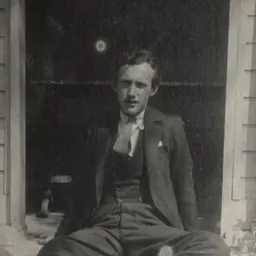
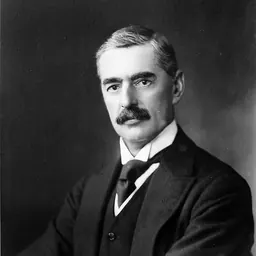
People in Keith Feiling's life
Named in this biography and alive at the same time




Related people
Same field, nearest in time

Contemporaries
People whose lives overlapped Keith Feiling's

Frequently asked questions
Who was Keith Feiling?
British historian
When was Keith Feiling born?
Keith Feiling was born on 7 September 1884 in Leatherhead.
When did Keith Feiling die?
Keith Feiling died on 16 September 1977 in Putney.
What was Keith Feiling's occupation?
Keith Feiling was a historian and writer.
What nationality was Keith Feiling?
Keith Feiling was British.
Sources & further reading
Cite this page
APA: Biography.guide. (2026). Keith Feiling. https://biography.guide/keith-feiling/
MLA: "Keith Feiling." Biography.guide, https://biography.guide/keith-feiling/.
Chicago: "Keith Feiling." Biography.guide. https://biography.guide/keith-feiling/.
Data last updated: 2026-09-20 · Spot an error? Report a correction.
Page generated 2026-09-27 05:07 UTC