
About Anthony Hope
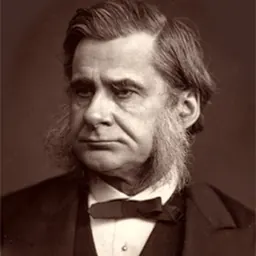
Lived 1863 – 1933 (aged 70). Anthony Hope was a British barrister, writer, novelist and poet lawyer.
Sir Anthony Hope Hawkins (9 February 1863 – 8 July 1933), better known as Anthony Hope, was a British novelist and playwright. He was a prolific writer, especially of adventure novels but he is remembered predominantly for only two books: The Prisoner of Zenda and its sequel Rupert of Hentzau (1898).
These works, "minor classics" of English literature, are set in the contemporaneous fictional country of Ruritania and spawned the genre known as Ruritanian romance, books set in fictional European locales similar to the novels. Zenda has inspired many adaptations, most notably the 1937 Hollywood movie of the same name and the 1952 version.
Early career and Zenda
Hope was educated at St John's School, Leatherhead, Marlborough College and Balliol College, Oxford. In an academically distinguished career at Oxford he obtained first-class honours in Classical Moderations (Literis Graecis et Latinis) in 1882 and in Literae Humaniores ('Greats') in 1885.
Hope trained as a lawyer and barrister, being called to the Bar by the Middle Temple in 1887. He served his pupillage under the future Liberal Prime Minister H. H. Asquith, who thought him a promising barrister and who was disappointed by his decision to turn to writing.
Hope had time to write, as his working day was not overfull during these early years and he lived with his widowed father, then Rector of St Bride's Church, Fleet Street. His short pieces appeared in periodicals but for his first book, he was forced to resort to a self-publishing press. A Man of Mark (1890) is notable primarily for its similarities to Zenda: it is set in an imaginary country, Aureataland, and features political upheaval and humour. More novels and short stories followed, including Father Stafford in 1891 and the mildly successful Mr Witt's Widow in 1892. He stood as the Liberal candidate for Wycombe in the election of 1892 but was not elected.
In 1893, he wrote three novels (Sport Royal, A Change of Air and Half-a-Hero) and a series of sketches that first appeared in The Westminster Gazette and were collected in 1894 as The Dolly Dialogues, illustrated by Arthur Rackham.
Dolly was his first major literary success. A. E. W. Mason deemed these conversations "so truly set in the London of their day that the social historian would be unwise to neglect them," and said that they were written with "delicate wit [and] a shade of sadness."
The idea for Hope's tale of political intrigue, The Prisoner of Zenda, being the history of three months in the life of an English gentleman, came to him at the close of 1893 as he was walking in London. Hope finished the first draft in a month and the book was in print by April. The story is set in the fictional European kingdom of 'Ruritania', a term which has come to mean "the novelist's and dramatist's locale for court romances in a modern setting." Zenda achieved instant success and its witty protagonist, the debonair Rudolf Rassendyll, became a well-known literary creation. The novel was praised by Mason, literary critic Andrew Lang, and Robert Louis Stevenson.
The popularity of Zenda persuaded Hope to give up the "brilliant legal career [that] seemed to lie ahead of him" to become a full-time writer but he "never again achieved such complete artistic success as in this one book." Also in 1894, Hope produced The God in the Car, a political story,
Later years Hope wrote 32 volumes of fiction over the course of his lifetime and he had a large popular following. In 1896 he published The Chronicles of Count Antonio, followed in 1897 by a tale of adventure set on a Greek island, entitled Phroso.
In 1898, he wrote Simon Dale, a historical novel involving actress and courtesan Nell Gwyn. Marie Tempest appeared in the dramatisation, called English Nell. One of Hope's plays, The Adventure of Lady Ursula, was produced in 1898. This was followed by his novel The King's Mirror (1899), which Hope considered one of his best works; and Captain Dieppe (1899). In 1900, he published Quisanté and he was elected chairman of the committee of the Society of Authors. He wrote Tristram of Blent in 1901, The Intrusions of Peggy in 1902, and Double Harness in 1904, followed by A Servant of the Public in 1905, about the love of acting.
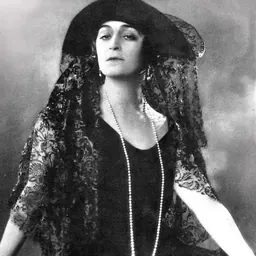
In 1906, he produced Sophy of Kravonia, a novel in a similar vein to Zenda which was serialised in The Windsor Magazine; Roger Lancelyn Green is especially damning of this effort. Nevertheless, the story was filmed twice, in Italy in 1916 as Sofia De Kravonia, and in the United States in 1920 as Sophy of Kravonia or, The Virgin of Paris. Both adaptations featured the actress Diana Karenne in the title role (billed as "Diana Kareni" in the latter film).
In 1907, a collection of his short stories and novelettes was published under the title Tales of Two People; as well as the novel Helena's Path. In 1910, he wrote Second String, followed by Mrs Maxon Protests the next year.
Hope wrote and co-wrote many plays and political non-fiction during the First World War, some under the auspices of the Ministry of Information. Later publications included The Secret of the Tower, and Beaumaroy Home from the Wars, in 1919 and Lucinda in 1920. Lancelyn Green asserts that Hope was "a first-class amateur but only a second-class professional writer.
Personal life Hope married Elizabeth Somerville (1885/6–1946) in 1903 and they had two sons and a daughter. He was knighted in 1918 for his contribution to propaganda efforts during World War I.
He published an autobiographical book, Memories and Notes, in 1927.
Death Hope died of throat cancer at the age of 70 at his country home, Heath Farm at Walton-on-the-Hill in Surrey. There is a blue plaque on his house in Bedford Square, London.
Don’t just read it —
keep it.
Full-length biographies made to live with: read them, listen on the way to work, watch them tonight.
- E-book
- Audio
- Video
Instant download · yours to keep · every purchase keeps this site free
Important facts
People in Anthony Hope's life
Named in this biography and alive at the same time




Related people
Same field, nearest in time

Contemporaries
People whose lives overlapped Anthony Hope's



Frequently asked questions
Who was Anthony Hope?
English novelist (1863–1933)
When was Anthony Hope born?
Anthony Hope was born on 9 February 1863 in London.
When did Anthony Hope die?
Anthony Hope died on 8 July 1933 in Walton on the Hill.
What was Anthony Hope's occupation?
Anthony Hope was a barrister, writer, novelist and poet lawyer.
What nationality was Anthony Hope?
Anthony Hope was British.
Sources & further reading
Cite this page
APA: Biography.guide. (2026). Anthony Hope. https://biography.guide/anthony-hope/
MLA: "Anthony Hope." Biography.guide, https://biography.guide/anthony-hope/.
Chicago: "Anthony Hope." Biography.guide. https://biography.guide/anthony-hope/.
Data last updated: 2026-09-25 · Spot an error? Report a correction.
Page generated 2026-09-27 05:13 UTC