
About Katie Wilson
Born 1982. Katie Wilson is an American politician.
Katherine Barrett Wilson (born July 12, 1982) is an American politician and activist serving as the 58th mayor of Seattle since 2026. She is the co-founder and executive director of the Transit Riders Union, a group that focuses on improving public transportation and workers' rights.
Wilson, a democratic socialist, was elected mayor of Seattle in 2025, narrowly defeating incumbent mayor Bruce Harrell.
Early life and activism
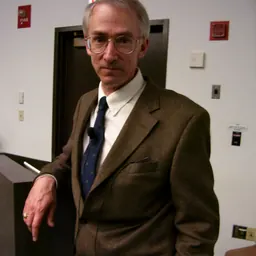
Wilson was raised in Binghamton, New York, by her parents, Anne Barrett Clark and David Sloan Wilson, both evolutionary biologists. She graduated in 2000 as salutatorian from Binghamton High School before studying physics and philosophy at Balliol College of Oxford in England. She worked several jobs after moving, including working in boat repair, construction, and as an office assistant. The TRU is an organization that campaigns and lobbies for progressive causes. In 2014, Wilson and the TRU successfully lobbied King County for the creation of the ORCA Lift program, which provided reduced fares for low-income individuals. The TRU previously campaigned for increases to the minimum wage in Burien, SeaTac and Tukwila, as well as greater renters' rights, and better public transport. Wilson was also a member of Harrell's Seattle Revenue Stabilization Workgroup, which explored and recommended additional progressive revenue to address the city's budget deficit. For several years, Wilson was also a member of the board of the Economic Opportunity Institute.
Wilson has written policy columns for Cascade PBS and The Stranger.
Mayor of Seattle 2025 campaign
In March 2025, Wilson announced a campaign to challenge incumbent Bruce Harrell for mayor of Seattle. She cited Harrell's opposition to a February 2025 ballot measure that would fund housing through taxes on businesses as a factor in her decision to run. Wilson, running as a progressive, stated her top three priorities as mayor are housing, homelessness, and protecting Seattle from federal actions.
In the weeks leading to the primary, polls indicated a close race between Wilson and Harrell, with both raising nearly $500,000. In the August nonpartisan primary, Wilson placed first among a field of eight candidates, with 50.9% of the vote, and advanced to the general election with Harrell who earned 41.3%.
Wilson's campaign was likened to the campaign of Zohran Mamdani in the 2025 New York City mayoral election by several publications, including The Nation and The Stranger. According to The Nation, Wilson created a winning electoral coalition from the precariat of Seattle renters, Sound transit riders, and Democratic Socialists of America members. Fox News credited Wilson's electoral success to her ability to appeal to progressive voters by advocating for city-run grocery stores, taxing the rich, and "Trump-proofing" the city. On the campaign trail, Wilson argued Harrell did not properly address homelessness during his tenure as mayor, and failed to lower the cost of living. Harrell emphasized his administration's efforts on public safety, transportation, and housing affordability, while noting Wilson's previous support for the "Defund the police" movement. During the campaign Wilson did not call for defunding the police, instead arguing that armed officers are not needed to respond to mental health and other non-crime calls that should be handled by other kinds of professionals.
Tenure
Wilson's term began on January 1, 2026. She was ceremonially sworn into office on January 2, 2026, with local transit union leader Pauline Van Senus administering the oath of office.
Immigrant community advocacy Since taking office, Wilson has publicly supported Seattle's Somali community and opposed Republican-led oversight committees investigating fraud allegations linked to the Somali immigrant community of Minnesota. Wilson has supported local Seattle immigrant communities and activist networks that oppose ICE arrests in the city.
Artificial intelligence policy In March 2026, Wilson stopped a citywide rollout of the Microsoft Copilot AI chatbot for city employees that had begun under her predecessor. The 500 employees who were already using it were allowed to continue.
Starbucks boycott comments Shortly after being elected mayor, Wilson joined the Starbucks Workers United picket line outside a Starbucks Reserve in the Capitol Hill neighborhood as part of a larger strike by unionized Starbucks workers around America amid stalled contract negotiations. At the event, Wilson urged Seattleites to boycott the chain, declaring, "I am not buying Starbucks and you shouldn't either," and led a chant in support of striking workers. Wilson later told the South Seattle Emerald that she would continue to support unionization efforts, describing Seattle as a 'union town.' However, she noted that she planned to maintain positive relationships with major corporations such as Starbucks, citing the company's million-dollar contribution to the city's 'Shelter Acceleration' program.
Homelessness policy In June 2026, the first batch of single-adult home units (colloquially known as "tiny homes") finished construction in the city's Interbay neighborhood. This community of tiny homes was officially designated as the Bayside Shelter. When open, Bayside will provide 24/7 transitional housing for homeless individuals currently living on the streets. The Bayside Shelter project cost $3.95 million. Wilson did not meet her previous goal of building five hundred tiny homes before the start of the 2026 FIFA World Cup.
Crime reduction initiatives In an effort to combat open-air drug markets and crime in the city's Little Saigon and the North Beacon Hill neighborhoods, Wilson increased police presence in the area and committed additional city resources to tackle the issue. This included booking individuals caught selling drugs into jail and enrolling them in the city's L.E.A.D. diversion program. In a statement to KING-TV, Wilson said, "we must disrupt the drug dealing, public disorder, and other illegal activity that has destabilized this community."
Wilson also said she wanted a citywide shift to a neighborhood policing model to build relationships between the police and the community. Wilson said residents sent a clear message that the status quo was not working when they took matters into their own hands. The city removed resident made barriers, and installed temporary traffic calming devices on 4 streets along Aurora Ave.
Surveillance and privacy policy
In March 2026, Wilson announced that she would pause the expansion of the city's CCTV network, which included installing cameras near Garfield High School and around Capitol Hill, while installing, but not turning on, the cameras in the Stadium district around Lumen Field and T-Mobile Park. This expansion will remain paused until an independent audit of the city's surveillance system has been completed. She also turned off a camera that faced a clinic that provided reproductive and gender affirming care.
In late March 2026, Wilson held a town hall that focused on her decision to turn off some, but not all, of the surveillance cameras. Most people in attendance, which included former Wilson campagin staffers expressed concerns over privacy and federal access to footage. During the townhall, Wilson said, "I don’t feel that I am breaking a campaign promise."
Wilson said that the cameras in the Stadium District would be turned on if there was a credible threat during the 2026 FIFA World Cup, and turned off when the games concluded. Following the end of the games in Seattle, Wilson ordered the cameras to be deactivated.
In a statement to Fox 13 Seattle in July 2026, Wilson defended her decision, saying, "Public safety is my most fundamental responsibility as the elected leader of this city, and I take that seriously." She continued, "We can keep our city safe and safeguard people’s privacy, and I believe the people of Seattle agree." Supporters of Wilson's decision have expressed concerns about who has access to the footage, how it is being used, and how long it is being retained. Wilson responded to the letter in an official statement, "Different people and different communities experience the cameras differently ... it's important to base a decision on more than feelings." Wilson emphasized that the cameras would remain deactivated until an independent audit concluded in September.
2026 Washington primary endorsements In June 2026, Wilson endorsed progressive Hannah Sabio-Howell and Ron Davis, who were challenging moderate incumbents for the Washington State Legislature, as well as Jaelynn Scott, who was running for an open seat. The move was seen as a test of her political influence; however, both candidates who were challenging incumbents lost to their respective incumbents in the August primary. Scott won her primary with 88% of the vote.
Shon Barnes's resignation as police chief On July 26, 2026, a deadly shootout took place at the annual Bite of Seattle food festival, claiming the lives of three victims and injuring four others. One suspect, an unnamed 15 year-old male, was charged as a juvenile with first-degree assault and second-degree unlawful possession of a firearm. A second 19 year-old suspect died at the scene and at least one other suspect may have been involved also.
In the hours following the shooting, both the mayor's office and the Seattle Police Department drew public criticism for delays in releasing official updates. Wilson had initially announced that two suspects had been taken into custody, a statement she later retracted. The city also did not send out any notifications via its emergency alert system. The public blamed police chief Shon Barnes's absence for contributing to the breakdown in communication, though this causation was not proven. According to Barnes, he had been attending a National Organization of Black Law Enforcement Executives conference in Texas when the shooting happened. Following media speculation that Wilson intended to remove him, Barnes announced his resignation as police chief on July 30. No reason for his resignation was given. Wilson accepted the resignation and appointed Deputy Chief Andre Sayles as interim chief of police.
According to statements made by multiple Seattle city council members, Wilson had asked Barnes to resign the night of July 29.
After hearing word of Barnes's resignation, several Black community organizations spoke out in opposition to the mayor. This coalition of organizations included the NAACP's Seattle branch and the Urban League of Metropolitan Seattle, among others. Leaders of the coalition argued that Barnes was unfairly blamed for the delay in communication following the shooting and should not have been asked to resign. They also criticized city officials for removing the city's top law enforcement official ahead of the Seafair Weekend Festival, one of the busiest times of year for the Seattle Police Department.
Several city council members including Robert Kettle, Alexis Mercedes Rinck, and Rob Saka expressed concern also, citing a lack of transparency regarding the decision to have the city's police chief resign. Kettle, who had supported Barnes, expressed his concerns by saying, "now this creates a crisis in confidence. And that’s troubling because that hurts us in terms of our public safety. It hurts our efforts to go forward." Council member Maritza Rivera questioned the mayor's rationale, stating Barnes's tenure as police chief was having a positive effect on local crime statistics.
Barnes's resignation as Seattle chief of police marked the fourth leadership change for the position in a 30-month period.
During a news conference on July 31, Wilson introduced the new interim police chief and outlined what qualities she would seek in Barnes's permanent replacement. Wilson confirmed that she had asked Barnes to resign. When asked why Barnes had resigned, she responded that the reason was a combination of multiple factors, saying, "some of which were related to the events of Sunday, but that certainly wasn't the only thing." When asked by another reporter about her concerns regarding Barnes's performance as police chief, Wilson stated, “I believe the path we are on now is the one that is gonna put us in the best position to achieve our public safety outcomes, and that includes transparent communication with the public...”
Political views Wilson is a self-described democratic socialist, but is not a member of and was not endorsed by the Democratic Socialists of America. However, she was endorsed by the University of Washington youth chapter of the DSA.
Public transportation Through the Transit Riders Union, Wilson successfully lobbied for the creation of the ORCA Lift program for low-income riders and free ORCA cards for students in Seattle Public Schools. Wilson also proposed fare-free transit in Seattle following the adoption of fare-free policy by Olympia-based Intercity Transit in 2020. She also advocated for subsidies on e-bikes and transit passes for employees, congestion pricing and a parking cash-out law.
Rent regulations Wilson is a supporter of rent stabilization. She also supported increasing zoning for houses and public housing to tackle high rents, along with banning algorithmic price fixing and "junk fees" in rent costs. Additionally, she supported limiting the purchase of homes by private equity firms.
Taxes Wilson has been highly critical of Washington's state tax laws, which she deemed as the "worst" in the United States. Specifically, she notes that the lack of an income tax in Washington forces reliance on other sources of revenue like sales, excise, and property taxes that she claims benefit large companies like Amazon and Microsoft. In 2020, Wilson advocated for the Amazon Tax campaign in Seattle City Council, led by Councilmember Kshama Sawant. She similarly supported the JumpStart Tax, which focused on taxing larger businesses with high-earning employees, including Amazon.
During her mayoral campaign, Wilson proposed additional taxes to generate revenue for the city, including a tax on landlords that own vacant properties and a capital gains tax.
Personal life Wilson is married to Scott Myers, an activist whom she met during high school in Binghamton. They rent a one-bedroom apartment in Capitol Hill and have one daughter. Since becoming mayor of Seattle, she is transported by a security detail.
Electoral history 2025 Seattle mayoral election
Don’t just read it —
keep it.
Full-length biographies made to live with: read them, listen on the way to work, watch them tonight.
- E-book
- Audio
- Video
Instant download · yours to keep · every purchase keeps this site free
Important facts
People in Katie Wilson's life
Named in this biography and alive at the same time






Related people
Same field, nearest in time


Contemporaries
People whose lives overlapped Katie Wilson's



Frequently asked questions
Who is Katie Wilson?
Mayor of Seattle since 2026
When was Katie Wilson born?
Katie Wilson was born on 12 July 1982 in Binghamton.
What is Katie Wilson's occupation?
Katie Wilson is a politician.
What nationality is Katie Wilson?
Katie Wilson is American.
Sources & further reading
Cite this page
APA: Biography.guide. (2026). Katie Wilson. https://biography.guide/katie-wilson/
MLA: "Katie Wilson." Biography.guide, https://biography.guide/katie-wilson/.
Chicago: "Katie Wilson." Biography.guide. https://biography.guide/katie-wilson/.
Data last updated: 2026-09-20 · Spot an error? Report a correction.
Page generated 2026-09-27 05:21 UTC