
About Karlo Štajner
Lived 1902 – 1992 (aged 90). Karlo Štajner was a Yugoslav politician, opinion journalist, writer and printing works, known for Gulag.
Karlo Štajner (15 January 1902 – 1 April 1992) was an Austrian-Yugoslav communist activist, prominent Gulag survivor and memoirist. Štajner was born in Vienna, where he joined the Communist Youth of Austria, but emigrated to the Kingdom of Serbs, Croats and Slovenes in 1922 on the order of the Young Communist International to help the newly established Communist Party of Yugoslavia. After an illegal communist printing house in Zagreb where Štajner worked was raided by the police in 1931, he fled Yugoslavia, visiting Paris, Vienna, and Berlin before finally settling in the Soviet Union in 1932, where he worked in the Comintern publishing house in Moscow. During the Great Purge in 1936, Štajner was arrested and spent the next 17 years in prisons and gulags and three more years in exile in Siberia. He was released in 1956, after having been rehabilitated, and returned to Yugoslavia. He spent the rest of his life in Zagreb with his wife Sonya whom he married in Moscow in the 1930s.
In 1971, Štajner published a memoir book titled "Seven Thousand Days in Siberia" about his experiences in the Soviet Union. The book was a bestseller in Yugoslavia and was named the "book of the year 1972" by the Vjesnik newspaper.
Biography Štajner was born Karl Steiner in Vienna, Austria-Hungary on 15 January 1902. He worked as printing worker when he joined the communist movement in the First Austrian Republic in 1919. He became a member of the Communist Youth of Austria and later became a member of the organization's Central Committee. During this time, he became a citizen of the Kingdom of Yugoslavia.
In 1931, Yugoslav police found out about the printing house, so Štajner fled the country to avoid arrest. He initially traveled to Paris in 1935. On 4 November 1936, during the height of the Great Purge, Štajner was arrested by the NKVD agents and accused of being a "counterrevolutionary, Gestapo agent, and accomplice in the murder of Sergey Kirov". From November 1936 til May 1937, Štajner was confined in the NKVD prisons Lubyanka and Butyrka, and then submitted to the military court and confined in the Lefortovo Prison. In June 1937, he was found guilty by the military court and sentenced to ten years in prison. He was then transferred to the Solovki prison camp on the Solovetsky Islands, where he was held until August 1939. He was then transferred to the Nadezhda work camp near Dudinka in northern Siberia. There, he took part in the building of the railway and then in the building of the city of Norilsk. In 1943, Štajner was sentenced to ten more years in prison, plus five years of loss of rights. In 1948, after the Tito–Stalin split and the expulsion of the CPY from the Comintern, the NKVD asked him to testify against the Yugoslav leadership, which he refused. Shortly afterwards, he was transferred to Irkutsk, where he was held until 1949, and then to Bratsk, where he was held until September 1953. His 17-year prison term ended on 22 September 1953, six months after the death of Stalin. After being released from prison, Štajner was not allowed to return to Moscow, but was forced to live in exile in Siberia according to the 101st kilometre Law. While in exile, Štajner lived in Krasnoyarsk, Yeniseysk and Maklakovo between 1953 and 1956. There, he worked as a stonemason, and then as a factory worker.
In 1955, Yugoslavia and the Soviet Union resumed diplomatic relations. In June 1956, during an official visit to Soviet Union, Tito handed Khrushchev a list of 113 Yugoslav communists who had disappeared during the Great Purge, and asked about their fate. Khrushchev promised he would answer in two days, when he found out. Two days later, Khrushchev informed Tito that exactly one hundred of the persons on the list were dead by then. Then, the remaining thirteen were located by the KGB in Siberia, and eleven of them returned to Yugoslavia. Štajner was among them. Shortly before that, the Supreme Collegium of the Supreme Court of the USSR rehabilitated him. He traveled from Maklakovo to Moscow to meet his wife. Soon afterwards, they returned to Yugoslavia, which he considered his home country. He was issued an exit permit to leave the Soviet Union on 30 July 1956. After return to Yugoslavia he was awarded a state pension, and he spent the rest of his life living in Zagreb. He visited Soviet Union once more in 1966. On 24 April 1972, Štajner was welcomed by Josip Broz Tito at Vila Zagorje during Tito's stay in Zagreb. During this meeting, Štajner presented his book "Seven Thousand Days in Siberia" to Tito.
In June 1991, the Government of newly independent Croatia stripped Štajner (and many other communists) of the state pension. Štajner died on 1 April 1992, and was buried in Zagreb.
Family Štajner married Russian woman Sonya Yefimovna in Moscow in 1935. At the time of his arrest, she was 20 years old, and in the ninth month of pregnancy. She gave birth to a girl named Lida, but the baby died at the age of two due to a cold and a further illness. She never repudiated her husband, and spent most of her time trying to help him.
Literary work After his return to Yugoslavia, Štajner became an author and published three books about his arrest, trial, and experiences in Siberian gulags: "Seven Thousand Days in Siberia" (1971, ) "Return from the Gulag" (1981, ) "A Hand from the Grave " (1985, ) – a collection of interviews with Štajner, and texts about Štajner written by others. His first book, "Seven Thousand Days in Siberia" was very popular in Yugoslavia, and was translated to German, French, English, Esperanto (S.A.T., 1983). It was named "the book of the year" in 1972 by the Vjesnik newspapers, and Štajner was awarded the Ivan Goran Kovačić prize as the author of the book of the year. Štajner finished the manuscript for "Seven Thousand Days in Siberia" in 1958, but no publisher was able to publish it until 1971 because of political controversy. The copies of the manuscript he sent to the publishers in Zagreb and Belgrade disappeared without trace, but Štajner had already sent the original manuscript to his brother living in Lyon, France.
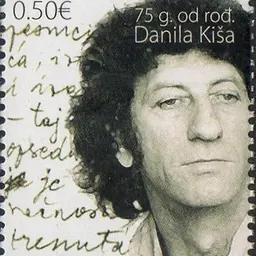
Štajner's life and work was a major inspiration for Danilo Kiš' book of stories A Tomb for Boris Davidovich, published in 1976. Kiš befriended Štajner and wrote an introduction to "Seven Thousand Days in Siberia". Kiš also wrote about Karlo and Sonya Štajner in his 1983 book of essays and interviews "Homo poeticus". Title of Štajner's book "A Hand from the Grave " comes from Miroslav Krleža who mentions Štajner in his "Diaries" and compares him to the biblical Lazarus who rises from the grave.
Don’t just read it —
keep it.
Full-length biographies made to live with: read them, listen on the way to work, watch them tonight.
- E-book
- Audio
- Video
Instant download · yours to keep · every purchase keeps this site free
Important facts
People in Karlo Štajner's life
Named in this biography and alive at the same time


Related people
Same field, nearest in time





Contemporaries
People whose lives overlapped Karlo Štajner's

Frequently asked questions
Who was Karlo Štajner?
Yugoslav communist (1902-1992)
When was Karlo Štajner born?
Karlo Štajner was born on 15 January 1902 in Vienna.
When did Karlo Štajner die?
Karlo Štajner died on 1 March 1992 in Zagreb.
What was Karlo Štajner's occupation?
Karlo Štajner was a politician, opinion journalist, writer and printing works.
What was Karlo Štajner known for?
Karlo Štajner was known for Gulag.
What nationality was Karlo Štajner?
Karlo Štajner was Yugoslav.
Sources & further reading
Cite this page
APA: Biography.guide. (2026). Karlo Štajner. https://biography.guide/karlo-stajner/
MLA: "Karlo Štajner." Biography.guide, https://biography.guide/karlo-stajner/.
Chicago: "Karlo Štajner." Biography.guide. https://biography.guide/karlo-stajner/.
Data last updated: 2026-09-22 · Spot an error? Report a correction.
Page generated 2026-09-27 05:09 UTC