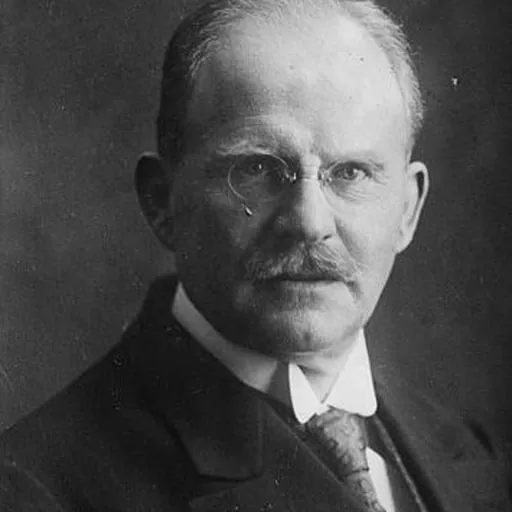
About Karl Stingl
Lived 1864 – 1936 (aged 72). Karl Stingl was a German politician and secretary of state.
Karl Stingl (29 July 1864 in Mitterteich – 9 November 1936 in Munich) was a German engineer, administrative official and politician of the Christian Convervative Bavarian People's Party during the era of the Weimar Republic.
Life and career After school, Stingle attended the Technical University of Munich to acquire a diploma in engineering. While studying, he joined the Cimbria München Burschenschaft in 1882. He started working for the Bavarian Postal Service in 1885 and was employed by the Bavarian Ministry of Transport in 1904. In 1910 he was promoted postal chief officer in Landshut. Starting in 1919, he led the postal division of the Ministry of Transport.
Public Offices Stingl was appointed State Secretary in 1920 and, in this capacity, served as head of the Munich division of the Reichspostministerium. During his tenure, the first automatic long-distance exchange with time and zone billing was put into operation in Weilheim, and the automatic operation of what was then Europe's largest direct-dialing system was completed in Munich.
From 22 November 1922 to 12 August 1923, and again from 15 January 1925 to 28 January 1927, he served as Reich Minister of Postal Affairs in the governments led by Reich Chancellors Wilhelm Cuno, Hans Luther, and Wilhelm Marx. During his second term in particular, he advocated for improving the economic management of the German Reichspost. Due to his special commitment to technical progress, the Technical University of Munich awarded him an honorary Doctor of Technical Sciences (Doctor of Engineering) in 1925.
When Stingl advocated for a stamp featuring Frederick the Great as part of a 1926 stamp series titled “Notable Men of German History”, it met with opposition from parties loyal to the Weimar Republic. Criticism even within his own party heralded the end of his political career. His successor as Reich Post Minister was Georg Schätzel. Stingl withdrew from politics and subsequently served on the supervisory boards of various companies for several years before passing away in 1936
Honours
Honorary Doctor of Technical Sciences (Dr.-Ing. h. c.) Karl-Stingl-Straße in Mitterteich
Literature
Helge Dvorak: Biographisches Lexikon der Deutschen Burschenschaft. Vol. I: Politiker. Sub-vol. 5: R–S. Winter, Heidelberg 2002, , pp. 523–524. Manfred Knedlik: Reichspostminister Dr. Karl Stingl. Ein Beitrag zur Postgeschichte der Weimarer Republik. In: Archiv für deutsche Postgeschichte. Heft 1/1992, , S. 46–52. Handwörterbuch des Postwesens; 1. Edition; p. 612 2. Edition; p. 698
Don’t just read it —
keep it.
Full-length biographies made to live with: read them, listen on the way to work, watch them tonight.
- E-book
- Audio
- Video
Instant download · yours to keep · every purchase keeps this site free
Important facts
People in Karl Stingl's life
Named in this biography and alive at the same time

Related people
Same field, nearest in time





Contemporaries
People whose lives overlapped Karl Stingl's




Frequently asked questions
Who was Karl Stingl?
German politician (1864-1936)
When was Karl Stingl born?
Karl Stingl was born on 29 July 1864 in Mitterteich.
When did Karl Stingl die?
Karl Stingl died on 1 November 1936 in Munich.
What was Karl Stingl's occupation?
Karl Stingl was a politician and secretary of state.
What nationality was Karl Stingl?
Karl Stingl was German.
Sources & further reading
Cite this page
APA: Biography.guide. (2026). Karl Stingl. https://biography.guide/karl-stingl/
MLA: "Karl Stingl." Biography.guide, https://biography.guide/karl-stingl/.
Chicago: "Karl Stingl." Biography.guide. https://biography.guide/karl-stingl/.
Data last updated: 2026-09-21 · Spot an error? Report a correction.
Portrait: Wikimedia Commons · author & licence
Page generated 2026-09-27 05:00 UTC