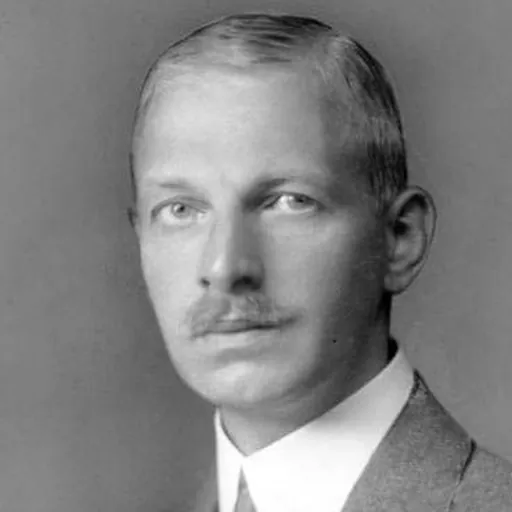
About Wilhelm Cuno
Lived 1876 – 1933 (aged 56). Wilhelm Cuno was a German politician and jurist.
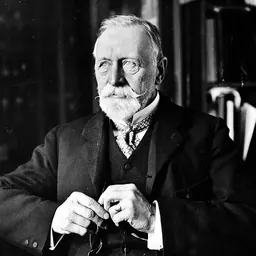
Wilhelm Carl Josef Cuno (2 July 1876 – 3 January 1933) was a German businessman and politician who was the chancellor of Germany from 1922 to 1923 for a total of 264 days. His tenure included the beginning of the occupation of the Ruhr by French and Belgian troops and the period in which inflation in Germany accelerated towards hyperinflation.
After beginning his career in the civil service, Cuno helped organize Germany's food supply during the early years of World War I before he went to work for the Hamburg America shipping company in 1917. Because of his economic expertise, he was involved in a number of important post-war negotiations with the victorious Allies. When he was appointed chancellor of Germany in November 1922, he formed a "business ministry" made up primarily of men who were, like himself, political independents. His plans to handle the war reparations issue and stabilise the currency were derailed by the French and Belgian occupation of the Ruhr in January 1923. Cuno instituted a policy of passive resistance and provided financial assistance to the workers and firms affected by it. The payments, made possible primarily by printing money, began the runup to the German hyperinflation of 1923.
After his government resigned in August 1923, Cuno returned to the Hamburg America Line.
Early life Wilhelm Cuno was born on 2 July 1876 in Suhl, in what was then Prussian Saxony and is now in Thuringia. He was the son of the administrative civil servant August George Wilhelm Cuno (1848–1915) and his wife Catherina Elisabeth Theresia, née Daske (1852–1878). He studied law in Berlin and Heidelberg and was awarded a Juris Doctor.
In 1920, Cuno led HAPAG into an alliance with United American Lines, helping to re-establish HAPAG as a passenger line. He also unofficially represented Germany's foreign policy interests during his travels abroad. The government was referred to alternatively as a "business ministry", an "economic government" or "cabinet of personalities", emphasizing that it was not the result of a coalition between the parliamentary parties. His government generally advocated policies of economic liberalism.
Hopes were high that a government of experts, led by a man with excellent connections abroad, would make headway in the difficult talks with the Allies. They were, however, disappointed. Cuno's plan to settle the reparations issue and to stabilise the German mark in the foreign exchange market was rejected by the Allies at the urging of French Prime Minister and Foreign Minister Raymond Poincaré. When Germany defaulted on its shipments of wood and coal (made as reparations in place of the gold currency that it lacked), the French declared it to be a deliberate breach of the agreements and on 11 January 1923 ordered its troops (later joined by Belgians) to occupy the Ruhr. The move, widely seen as illegal even outside Germany, caused the outraged Cuno government to call for passive resistance. Reparation shipments to France and Belgium were stopped, the mines were told not to make any more deliveries to the countries, and civil servants and railroad personnel were instructed to disobey orders by the occupation authorities.
Later life Cuno retired from politics and returned to serve as a director at HAPAG. In 1926, he once again became its director general. He was involved in negotiations about the release of German property impounded in the U.S. during the war and in working towards the merger with the Norddeutsche Lloyd shipping company, which took place in 1930.
Cuno died suddenly on 3 January 1933 at Aumühle near Hamburg.
Don’t just read it —
keep it.
Full-length biographies made to live with: read them, listen on the way to work, watch them tonight.
- E-book
- Audio
- Video
Instant download · yours to keep · every purchase keeps this site free
Important facts
People in Wilhelm Cuno's life
Named in this biography and alive at the same time

Related people
Same field, nearest in time





Contemporaries
People whose lives overlapped Wilhelm Cuno's

Frequently asked questions
Who was Wilhelm Cuno?
German chancellor (1876-1933)
When was Wilhelm Cuno born?
Wilhelm Cuno was born on 2 July 1876 in Suhl.
When did Wilhelm Cuno die?
Wilhelm Cuno died on 3 January 1933 in Aumühle.
What was Wilhelm Cuno's occupation?
Wilhelm Cuno was a politician and jurist.
What nationality was Wilhelm Cuno?
Wilhelm Cuno was German.
Sources & further reading
Cite this page
APA: Biography.guide. (2026). Wilhelm Cuno. https://biography.guide/wilhelm-cuno/
MLA: "Wilhelm Cuno." Biography.guide, https://biography.guide/wilhelm-cuno/.
Chicago: "Wilhelm Cuno." Biography.guide. https://biography.guide/wilhelm-cuno/.
Data last updated: 2026-09-23 · Spot an error? Report a correction.
Portrait: Wikimedia Commons · author & licence
Page generated 2026-09-27 05:06 UTC