
About Karl Schirdewan
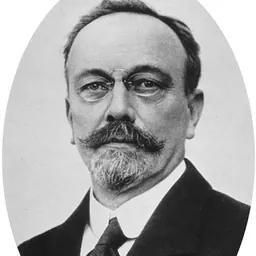
Lived 1907 – 1998 (aged 91). Karl Schirdewan was a German politician, resistance fighter, laborer and functionary.
Karl Schirdewan (14 May 1907 – 14 July 1998) was a German anti-fascist activist who after World War II became a high-ranking politician of the SED, later becoming disgraced for his outspoken critique of the party from a communist perspective. Ulbricht continued to lead the government until 1971, while 1958 was the year in which Schirdewan was thrown out of the Politburo a position from which he retired in 1964 or 1965. an industrial port city which at that time was the capital of the Prussian Province of Pomerania. His mother's name was Josephine Arentz. His father's identity is unknown, but interviewed in 1994 Schirdewan stated that he believed his father had died shortly after his own birth. Karl Schirdewan left school when he was 16 and looked, without success, for work in a book shop. He then, in 1922, began a commercial apprenticeship with a grain company: this occupied him till 1924 In 1931/32 he took over the publishing department of the party's "Junge Garde" newspaper, Schierdewan subsequently took over as chairman of the KJVD in the important East Prussia region. On 23 April 1945, he was freed by US forces while on a forced march, as the regime abandoned and rushed to try and destroy concentration camps in eastern parts of the country, which were being over-run by Soviet forces. During 1946/47, however, his political engagement was unavoidably compromised by illness, as a result of which a stay in a Berlin Hospital was followed by a period in the Sülzhayn Sanatorium.
When the SED party was created in the Soviet occupation zone in 1946 through a merger of the Communist Party and the more moderately left-wing SPD, the intention in Moscow seems to have been to accomplish something similar in the other military occupation zones further to the west and south. described by one authority as an operation "looking for ways to win over West German politicians for the Communist cause".
German Democratic Republic In October 1949, partly in response to the creation of the German Federal Republic (West Germany) five months earlier, Germany's Soviet administered zone was relaunched as the German Democratic Republic (East Germany), a stand-alone Soviet sponsored German states with constitutional arrangements increasingly modeled on those of the Soviet Union itself. Schirdewan's experience on the political front-line with West Germany and his Central Committee responsibilities for the "West Department" effectively made him the leader of the East German ruling party's on-going Social Democratic Action Sozialdemokratische Aktion / (SDA) project. On 6 May 1955, in a ceremony timed to honour the tenth anniversary of the "Liberation from Fascism", Karl Schirdewan was an early recipient of the Patriotic Order of Merit (Vaterländischer Verdienstorden) in Gold from president Wilhelm Pieck in recognition of his "struggle against Fascism and his contributions to the creation of the German Democratic Republic" 1952 was the year in which the German Democratic Republic abolished the regional tier of government, and it was the year in which Karl Schirdewan was appointed First Secretary of the party leadership in Saxony in succession to Ernst Lohagen. With the abolition of Saxony as a regional power hub politically, later that year he became First Secretary of the party leadership in the important Leipzig region, a post he held till 1957.
The mid 1950s were the high point of Karl Schirdewan's political career. Sources refer to him as the "Second Man" ("zweiter Mann"), second only to Walter Ulbricht in the national hierarchy. The 20th Congress is remembered by historians for a speech entitled "On the Cult of Personality and Its Consequences" in which the Soviet leader, Nikita Khrushchev, spelled out in considerable detail the errors of his predecessor, Joseph Stalin. The speech was delivered after the formal business of the congress had been concluded, during the evening of 24 February 1956, and because it was a long speech it was still being delivered during the early hours of 25 February 1956. in 1957 were less savage than those received by Johann Burianek or Günter Stempel in 1952, and the propaganda accompanying the show trials in 1957 was less shrill than it had been earlier in the decade. Nevertheless, there was nothing in the government's domestic policy to suggest that the Communist regime was about to apply the radical reformist thinking advocated by Khrushchev the previous year. Meanwhile, Moscow was increasingly preoccupied with events in Hungary, where the fast moving aftermath of the Secret Speech had culminated in a government declaration of intent to withdraw from the Warsaw Pact at the end of October 1956, and a Soviet military intervention with tanks on the streets of Budapest in November. Khrushchev had apparently come into line with the hardline faction headed up by his Kremlin deputy Vyacheslav Molotov. With Khrushchev distracted and possibly losing influence in Moscow, in East Berlin, Walter Ulbricht, backed by senior colleagues who included Erich Mielke and Erich Honecker, and was accompanied by a "stern rebuke" ("strenge Rüge").
Long retirement and rehabilitation Little was heard of Karl Schirdewan for the next thirty years. He retired from the national archives in 1964 or 1965. Sources differ as to which.
Schirdewan also lived long enough to contribute to the historiography of East Germany, giving at least one substantial interview. A second autobiographical volume, "Ein Jahrhundert Leben: Erinnerungen und Visionen : Autobiographie", was published in 1998 which was the year in which he died.
Personal life Schirdewan had already been married for some time to his wife, Gisela, at the time in February 1956 when she collected him from the airport on his return from hearing Khrushchev delivering his Moscow speech, "On the Cult of Personality and Its Consequences". At that stage there are hints that the couple were deferring having children because of the political uncertainties surrounding them. Many years later, addressing mourners at his funeral in 1998, the pioneering PDS leader Michael Schumann addressed Schirdevan's wife Gisela, his four children, his grand children and other relatives. The number of his grandchildren was not given, and sources focused on his political career are silent on his private life, which is usual with East German politicians.
Don’t just read it —
keep it.
Full-length biographies made to live with: read them, listen on the way to work, watch them tonight.
- E-book
- Audio
- Video
Instant download · yours to keep · every purchase keeps this site free
Important facts
People in Karl Schirdewan's life
Named in this biography and alive at the same time






Related people
Same field, nearest in time





Contemporaries
People whose lives overlapped Karl Schirdewan's


Frequently asked questions
Who was Karl Schirdewan?
German politician (1907-1998)
When was Karl Schirdewan born?
Karl Schirdewan was born on 14 May 1907 in Szczecin.
When did Karl Schirdewan die?
Karl Schirdewan died on 14 July 1998 in Potsdam.
What was Karl Schirdewan's occupation?
Karl Schirdewan was a politician, resistance fighter, laborer and functionary.
What nationality was Karl Schirdewan?
Karl Schirdewan was German.
Sources & further reading
Cite this page
APA: Biography.guide. (2026). Karl Schirdewan. https://biography.guide/karl-schirdewan/
MLA: "Karl Schirdewan." Biography.guide, https://biography.guide/karl-schirdewan/.
Chicago: "Karl Schirdewan." Biography.guide. https://biography.guide/karl-schirdewan/.
Data last updated: 2026-09-22 · Spot an error? Report a correction.
Page generated 2026-09-27 05:26 UTC