
About Karl Goldmark
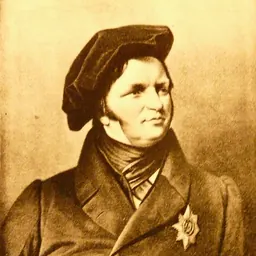
Lived 1830 – 1915 (aged 84). Karl Goldmark was a Hungarian composer, music educator, pianist, violinist, conductor and music teacher.
Karl Goldmark (born Károly Goldmark, Keszthely, 18 May 1830 – Vienna, 2 January 1915) was a Hungarian-born Viennese composer.
Life and career
Goldmark came from a large Jewish family. His father, Ruben Goldmark, was a chazan (cantor) to the Jewish congregation at Keszthely, Hungary, where Karl was born. Karl Goldmark's older brother Joseph became a physician and was later involved in the Revolution of 1848, and forced to emigrate to the United States. Karl Goldmark's early training as a violinist was at the Ödenburg music school in the city of Sopron (1842-3). The Revolution of 1848 forced the Conservatory to close down. Goldmark was largely self-taught as a composer. After the Conservatory's closing, Goldmark played violin for theaters and taught music to make ends meet. During this time, he honed his compositional talents.
To make ends meet, Goldmark also pursued a side career as a music journalist. Johannes Brahms and Goldmark developed a friendship as Goldmark's prominence in Vienna grew.
Death
Goldmark died in Vienna and is buried in the Zentralfriedhof (Central Cemetery), along with many other notable composers. Many of his autograph manuscripts are in the collection of the National Széchényi Library, with "G" catalogue numbers attached to various works (including those without opus number.)
List of works Operas Die Königin von Saba (The Queen of Sheba) (1875) Merlin (1886) Das Heimchen am Herd (1896), adapted from Dickens's The Cricket on the Hearth. Der Fremdling (1897) (The Changeling) Die Kriegsgefangene (1899), (The Prisoner of War) a Trojan War story taking Achilles' captive Briseis as central figure. Götz von Berlichingen (1902), after Goethe's play about the historical figure Ein Wintermärchen (1908), adapted from Shakespeare's The Winter's Tale.
Symphonies Rustic Wedding Symphony, Op. 26 Symphony No. 2 in E-flat, Op. 35
Works for Orchestra Sakuntala, Op. 13 (concert overture) Scherzo in E Minor, Op. 19 Penthesilea, Op. 31 (concert overture) Im Frühling (In Springtime), Op. 36 (concert overture) Sappho, Op. 44 (concert overture) Scherzo in A Major, Op. 45 Zrínyi, Op. 47 (symphonic poem) In Italien (In Italy), Op. 49 (concert overture) Aus Jugendtagen (From Youthful Days), Op. 53 (Note: All above works have been recorded by the Bamberg Symphony Orchestra under Fabrice Bollon for cpo label: Vol. 1 555 160-2 and Vol. 2 555 251–2.)
Concerti Violin Concerto No. 1 in A minor, Op. 28 Violin Concerto No. 2 (unpublished)
Chamber music Ballad for Violin and Piano, Op. 54 Piano Quintet in B-flat major, Op. 30 Piano Quintet in C-sharp minor, Op. 54 Romanze for Violin and Piano Sonata for Violin and Piano, Op. 25 Sonata for Cello and Piano, Op. 39 Piano Trio, Op. 33, No.2 Piano Trio, Op. 4 String Quartet in B-flat major, Op. 8 Suite for Violin and Piano in D major, Op. 11 Suite in A Major for Violin and Piano String Quintet in A minor, Op. 9
Piano works (solo unless indicated) Sturm und Drang, nine characteristic pieces, Op. 5 Three Pieces for Piano Duet, Op. 12 Hungarian Dances for Piano Duet, Op. 22 (later orchestrated by the composer) Zwei Novelletten, Op. 29 Georginen, six pieces, Op. 52
Choral works Regenlied for unaccompanied chorus, Op. 10 Two Pieces for unaccompanied men's chorus, Op. 14 Frühlingsnetz for men's chorus, 4 horns, and piano, Op. 15 Meeresstille und glückliche Fahrt for men's chorus and horns, Op. 16 Two Pieces for unaccompanied men's chorus, Op. 17 Frühlingshymne for contralto, chorus, and orchestra, Op. 23 Im Fuschertal, a set of six choral songs, Op. 24 Psalm CXIII for solo voices, chorus, and orchestra, Op. 40 Two Pieces for unaccompanied men's chorus, Op. 41 Two Four-Part Songs with piano accompaniment, Op. 42
Lieder 12 Gesänge, Op. 18 Beschwörung, Op. 20 4 Lieder, Op. 21 7 Lieder aus dem 'Wilden Jäger', Op. 32 4 Lieder, Op. 34 8 Lieder, Op. 37 (Leipzig, 1888 or 1889); Wer sich die Musik erkiest (for piano and four solo voices), Op. 42 6 Lieder, Op. 46
Don’t just read it —
keep it.
Full-length biographies made to live with: read them, listen on the way to work, watch them tonight.
- E-book
- Audio
- Video
Instant download · yours to keep · every purchase keeps this site free
Important facts
People in Karl Goldmark's life
Named in this biography and alive at the same time

Related people
Same field, nearest in time


Contemporaries
People whose lives overlapped Karl Goldmark's



Frequently asked questions
Who was Karl Goldmark?
Hungarian-born Viennese composer (1830–1915)
When was Karl Goldmark born?
Karl Goldmark was born on 18 May 1830 in Keszthely.
When did Karl Goldmark die?
Karl Goldmark died on 2 January 1915 in Vienna.
What was Karl Goldmark's occupation?
Karl Goldmark was a composer, music educator, pianist, violinist, conductor and music teacher.
What nationality was Karl Goldmark?
Karl Goldmark was Hungarian.
Sources & further reading
Cite this page
APA: Biography.guide. (2026). Karl Goldmark. https://biography.guide/karl-goldmark/
MLA: "Karl Goldmark." Biography.guide, https://biography.guide/karl-goldmark/.
Chicago: "Karl Goldmark." Biography.guide. https://biography.guide/karl-goldmark/.
Data last updated: 2026-09-20 · Spot an error? Report a correction.
Page generated 2026-09-27 05:32 UTC