
About Karl Friedrich Hagenbach
Lived 1771 – 1849 (aged 77–78). Karl Friedrich Hagenbach was a Swiss botanist and university teacher.
Carl Friedrich Hagenbach (July 2, 1771 – November 20, 1849) was a Swiss medical doctor and botanist. He served as a professor of botany and anatomy at the medical faculty of Basel (1798–1818). After his retirement he produced a flora of the Basel region in two volumes of his Tentamen Florae basilieensis (1821–1834).
Biography Hagenbach was born on July 2, 1771, to a well-known Basel family with origins in Mulhouse in Alsace. His parents were the merchant Johann Rudolf Hagenbach and Katharina Margaretha Kaiser from Barr, Alsace. Even as young man he was a member of the Helvetic Society where he wrote a poem Der Freye Schweizer (1790) showing a liberal leaning. He studied medicine in Strasbourg, Erlangen and Göttingen and received a doctorate in 1795 with a thesis on respiration in plants and animals. He then began a medical practice in Basel. Along with Werner de Lachenal he made trips into the country to collect plants. He married Sara Dorothea Freyburger, daughter of a surgeon, in 1798 and they had six children. He became professor of anatomy in 1798 at the University of Basel, replacing Werner de Lachenal. De Lachenal had also been in charge of the botanical garden and after his death, Hagenbach was in charge of that as well. The garden was later placed under the care of the gardener Johann Michael Zeiher. His botanical classes included excursions every two weeks and he followed the system of Albrecht von Haller which was based on the Linnean sexual system but did not use binomials. In 1808, Hagenbach exchanged his professor's position with Johann Rudolf Burckhardt (1774–1829) for a position in theoretical medicine. This was possibly to reduce the stress he underwent and the migraines he suffered from. He was rector of the university in 1807 and served as a dean seven times. Only two students were awarded doctorates and along with Johann Jakob Stückelberger (1758–1838) he campaigned for shutting down the medical faculty. In 1818, the faculty of medicine was abolished and he resigned and returned to his private medical practice. He also worked with another clinic in Arlesheim with a colleague. He also began to spend more time on botany, this time following a Linnean system. His herbarium collection was extensive, and by the time of his death on November 20, 1849, aged 78, contained 8000 species. He worked on the Tentamen floral Basiliensis, the plants of the Basel region. Christian Nees von Esenbeck named a genus Hagenbachia in his honour while he dedicated his flora to Esenbeck.
Don’t just read it —
keep it.
Full-length biographies made to live with: read them, listen on the way to work, watch them tonight.
- E-book
- Audio
- Video
Instant download · yours to keep · every purchase keeps this site free
Important facts
People in Karl Friedrich Hagenbach's life
Named in this biography and alive at the same time
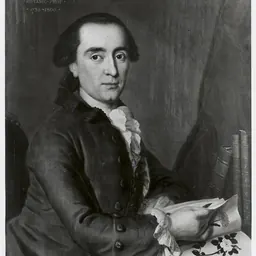
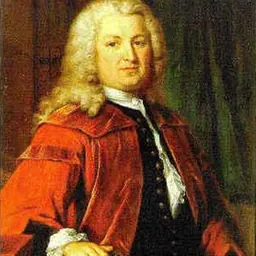
Related people
Same field, nearest in time



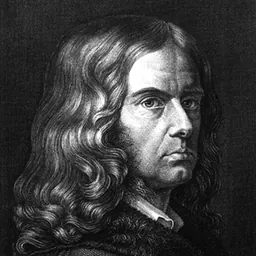

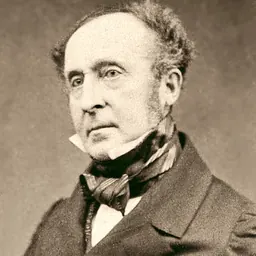
Contemporaries
People whose lives overlapped Karl Friedrich Hagenbach's




Frequently asked questions
Who was Karl Friedrich Hagenbach?
botanist (1771-1849)
When was Karl Friedrich Hagenbach born?
Karl Friedrich Hagenbach was born in 1771 in Basel.
When did Karl Friedrich Hagenbach die?
Karl Friedrich Hagenbach died in 1849 in Basel.
What was Karl Friedrich Hagenbach's occupation?
Karl Friedrich Hagenbach was a botanist and university teacher.
What nationality was Karl Friedrich Hagenbach?
Karl Friedrich Hagenbach was Swiss.
Sources & further reading
· Wikipedia: Karl Friedrich Hagenbach
· DBpedia: Carl Friedrich Hagenbach
Cite this page
APA: Biography.guide. (2026). Karl Friedrich Hagenbach. https://biography.guide/karl-friedrich-hagenbach/
MLA: "Karl Friedrich Hagenbach." Biography.guide, https://biography.guide/karl-friedrich-hagenbach/.
Chicago: "Karl Friedrich Hagenbach." Biography.guide. https://biography.guide/karl-friedrich-hagenbach/.
Data last updated: 2026-09-20 · Spot an error? Report a correction.
Page generated 2026-09-27 05:22 UTC