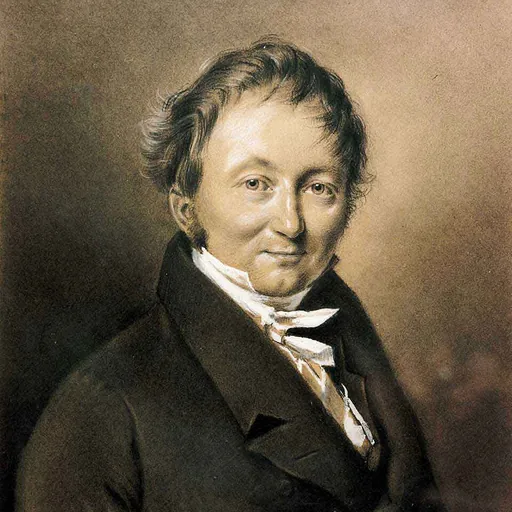
About Karl Drais
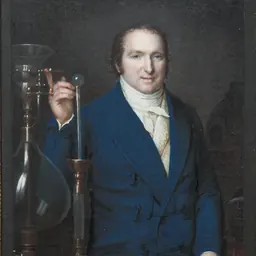
Lived 1785 – 1851 (aged 66). Karl Drais was an inventor, forester, designer, land surveyor and mechanic.
A Draisine from around 1820, built with cherry wood and softwood. Displayed at the Kurpfälzisches Museum in Heidelberg, Germany. Karl Freiherr von Drais (full name: Karl Friedrich Christian Ludwig Freiherr Drais von Sauerbronn; 29 April 1785 – 10 December 1851) was a noble German forest official and significant inventor in the Biedermeier period. He is regarded as "the father" and as the inventor of the bicycle.
Bicycle Drais was a prolific inventor, who invented the Laufmaschine ("running machine"), also later called the velocipede, draisine (English) or draisienne (French), also nicknamed the hobby horse or dandy horse. This was his most popular and widely recognized invention. It incorporated the two-wheeler principle that is basic to the bicycle and motorcycle and was the beginning of mechanized personal transport. This was the earliest form of a bicycle, without pedals.
His first reported ride from Mannheim to the "Schwetzinger Relaishaus" (a coaching inn, located in "Rheinau", today a district of Mannheim) took place on 12 June 1817 using Baden's best road. Karl rode his bike; it was a distance of about . The round trip took him a little more than an hour but may be seen as the big bang for horseless transport. However, after marketing the velocipede, it became apparent that roads were so rutted by carriages that it was hard to balance on the machine for long, so velocipede riders took to the pavements (sidewalks) and moved far too quickly, endangering pedestrians. Consequently, authorities in Germany, Great Britain, the United States, and even Calcutta banned its use, which ended its vogue for decades.
Other inventions Drais also invented the earliest typewriter with a keyboard (1821). He later developed an early stenograph machine which used 16 characters (1827), a device to record piano music on paper (1812), the first meat grinder (1840s), and a wood-saving cooker including the earliest hay chest. He also invented two four-wheeled human powered vehicles (1813/1814), the second of which he presented in Vienna to the congress carving up Europe after Napoleon's defeat. In 1842, he developed a foot-driven human powered railway vehicle whose name "draisine" is used even today for railway handcars. Grand Duke Karl also appointed Drais professor of mechanics. This was merely an honorary title, not related to any university or other institution. Drais retired from the civil service and was awarded a pension for his appointment to professor of mechanical science.
Death
Drais's undoing had been the fact that he had publicly renounced his noble title in 1848, and adopted the name "Citizen Karl Drais" as a tribute to the French Revolution.
Don’t just read it —
keep it.
Full-length biographies made to live with: read them, listen on the way to work, watch them tonight.
- E-book
- Audio
- Video
Instant download · yours to keep · every purchase keeps this site free
Important facts
People in Karl Drais's life
Named in this biography and alive at the same time
Related people
Same field, nearest in time

Contemporaries
People whose lives overlapped Karl Drais's



Frequently asked questions
Who was Karl Drais?
German inventor of early form of bicycle and typewriter (1785-1851)
When was Karl Drais born?
Karl Drais was born on 29 April 1785 in Karlsruhe.
When did Karl Drais die?
Karl Drais died on 10 December 1851 in Karlsruhe.
What was Karl Drais's occupation?
Karl Drais was an inventor, forester, designer, land surveyor and mechanic.
What nationality was Karl Drais?
Karl Drais's recorded nationality: Grand Duchy of Baden, German people.
Sources & further reading
Cite this page
APA: Biography.guide. (2026). Karl Drais. https://biography.guide/karl-drais/
MLA: "Karl Drais." Biography.guide, https://biography.guide/karl-drais/.
Chicago: "Karl Drais." Biography.guide. https://biography.guide/karl-drais/.
Data last updated: 2026-09-22 · Spot an error? Report a correction.
Page generated 2026-09-27 05:09 UTC