
About Karl Beth
Lived 1872 – 1959 (aged 86). Karl Beth was a theologian.
Karl Beth (1872–1959) was a German academic involved in the fields of the history of religion, the psychology of religion, and Christianity. He has been described as "one of the founding fathers of the psychology of religion".
Career
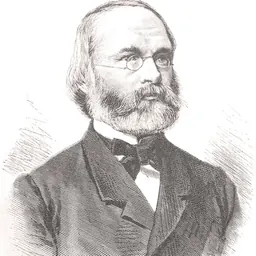
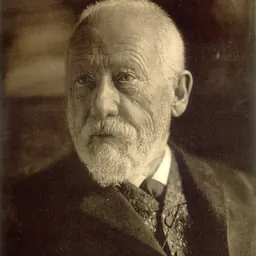
Adolf von Harnack, Otto Pfleiderer, and Wilhelm Dilthey supervised Beth's studies at the University of Berlin, where he earned a doctorate in 1898 for his dissertation Die Grundanschauungen Schleiermachers in seinem ersten Entwurf der philosophischen Sittenlehre. Beth became an instructor of systematic theology at the university in 1901. Shortly afterwards, he toured Christian communities in the Greek and Turkish parts of the Mediterranean, where he gathered material for his book Die orientalische Christenheit der Mittelmeerlander. Published in 1902, this book helped Western Protestants gain a better understanding of Eastern Orthodoxy. and in the same year married Marianne Weisl. He taught systematic theology and, partly influenced by Johannes Reinke and Carl Nägeli proposed a Neo-vitalist view. He partly accepted the idea of evolution as biological change, but at the same time, he criticized the idea of a driving process of natural selection for it suggested chance instead of "direct divine intervention." Recalling the limitis of science, Beth insisted that religious experience should not be interpreted out of context, and that science and religion should co-exist together.
In 1922, Beth was one of the parties involved in the foundation of the Research Institute for the Psychology of Religion in Vienna. He also served as the editor of Zeitschrift fur Religionspsychologie from 1927 to 1938. After the 1938 Anschluss in which Germany annexed Austria, Beth's wife Marianne (a lawyer from a Jewish family who had converted to Christianity on marrying) was unable to continue practicing law. The Beths emigrated to the United States; Karl Beth was on the faculty of the Meadville Lombard Theological School from 1941 to 1944, where he primarily taught in the field of the history of religions.
Works Die orientalische Christenheit der Mittelmeerländer, 1902. Das Wesen der Christentums und die moderne historische Denkweise, 1904. Die Wunder Jesu, 1905. Die Moderne und die Prizipien der Theologie, 1907. Das Wunder, 1908. Der Entwicklungsgedanke und das Christentum, 1909. Urmensch, Welt und Gott, 1909. Hat Jesus gelebt?, 1910. Die Entwicklung des Christentums zur Universal-Religion, 1910. Religion und Magie bei den Naturvölkern, 1914. Die Urreligion, 1917. Gesunddenken und Gesundbeten, 1918. Einführung in die vergleichende Religionsgeschichte, 1920. Religionspsychologie, 1926. Frömmigkeit der Mystik und des Glaubens, 1927. Die Krisis des Protestantismus, 1932.
Don’t just read it —
keep it.
Full-length biographies made to live with: read them, listen on the way to work, watch them tonight.
- E-book
- Audio
- Video
Instant download · yours to keep · every purchase keeps this site free
Important facts
People in Karl Beth's life
Named in this biography and alive at the same time



Related people
Same field, nearest in time

Contemporaries
People whose lives overlapped Karl Beth's


Frequently asked questions
Who was Karl Beth?
German psychologist
When was Karl Beth born?
Karl Beth was born on 1 December 1872 in Förderstedt.
When did Karl Beth die?
Karl Beth died on 9 September 1959 in Chicago.
What was Karl Beth's occupation?
Karl Beth was a theologian.
Sources & further reading
Cite this page
APA: Biography.guide. (2026). Karl Beth. https://biography.guide/karl-beth/
MLA: "Karl Beth." Biography.guide, https://biography.guide/karl-beth/.
Chicago: "Karl Beth." Biography.guide. https://biography.guide/karl-beth/.
Data last updated: 2026-09-20 · Spot an error? Report a correction.
Page generated 2026-09-27 05:01 UTC