
About Karl Alexander Müller
Lived 1927 – 2023 (aged 95). Karl Alexander Müller was a Swiss physicist and university teacher, known for High-temperature superconductivity.
Karl Alexander Müller (20 April 1927 – 9 January 2023) was a Swiss physicist. He received the Nobel Prize in Physics in 1987 with Georg Bednorz for their discovery of superconductivity in ceramic materials.
Early life and education Karl Alexander Müller was born on 20 April 1927 in Basel, Switzerland, the son of Paul Rudolf Müller and Irma Feigenbaum. His family immediately moved to Salzburg, Austria, where his father was studying music. Alex and his mother then moved to Dornach, the home of his maternal grandparents. Then they moved to Lugano, in the Italian-speaking part of Switzerland, where he learned to speak Italian fluently. His mother died when he was 11.
Müller was sent to school at the Evangelical College in Schiers, in the eastern part of Switzerland. Here he studied from 1938 to 1945, obtaining his baccalaureate (Matura). He then enrolled in the Physics and Mathematics Department of ETH Zurich. He took courses by Wolfgang Pauli, who made a deep impression on him. After receiving his Diplom in 1952,
Career After graduating in 1958, Müller joined the Battelle Memorial Institute as the manager of a magnetic resonance group. During this time, he became a lecturer at the University of Zürich. In 1963, he accepted an offer as a research staff member at the IBM Zurich Research Laboratory in Rüschlikon, where he remained until his retirement. In parallel, he maintained his affiliation with the University of Zurich, where he was appointed a professor in 1970. He became an IBM Fellow in 1982.
Müller died on 9 January 2023 in Zurich at the age of 95.
Nobel Prize-winning work
In the early 1980s, Müller began searching for substances that would become superconductive at higher temperatures. The highest critical temperature (Tc) attainable at that time was about 23 K. In 1983 Müller recruited Georg Bednorz to IBM, to help systematically test various oxides. A few recent studies had indicated these materials might superconduct, but experts who knew about Müller's idea thought it was “crazy”. In 1986 the two researchers succeeded in achieving superconductivity in lanthanum barium copper oxide (LBCO) at a temperature of 35 K. Over the previous 75 years the critical temperature had risen from 11 K in 1911 to 23 K in 1973 where it had remained for 13 years. Thus 35 K was incredibly high by the prevailing standards of superconductivity research. This discovery stimulated a great deal of additional research in high-temperature superconductivity, leading to the discovery of compounds such as BSCCO (Tc = 107 K) and YBCO (T'''c = 92 K).
They reported their discovery in the June 1986 issue of Zeitschrift für Physik B. Before the end of the year, Shoji Tanaka at the University of Tokyo and then Paul Chu at the University of Houston had each independently confirmed their result. A couple of months later Chu achieved superconductivity at 93 K in YBCO, triggering a stampede of scientific interest exemplified by the 1987 "Woodstock of physics", at which Müller was a featured presenter.
In 1987, Müller and Bednorz were jointly awarded the Nobel Prize in physics—the shortest time between the discovery and the prize award for any scientific Nobel.
Recognition Awards Year Organization Award Citation 1986 Marcel Benoist Foundation Marcel Benoist Prize — 1987 Royal Swedish Academy of Sciences Nobel Prize in Physics "For their important break-through in the discovery of superconductivity in ceramic materials." 1987 Duke University Fritz London Memorial Prize "For their pioneering work in the field of high T oxide superconductors. Their discovery of superconductivity in the barium lanthanum copper oxides has sparked a worldwide research effort which is making superconductivity a commercially important technology." 1987 Göttingen Academy of Sciences and Humanities Dannie Heineman Prize "For their research in physics." 1988 American Physical Society International Prize for New Materials "For discoveries of superconducting oxide materials with high transition temperatures." 1988 European Physical Society EPS Europhysics Prize "For the discovery of high-temperature superconductivity."
Honorary degrees Year University Degree 1988 KU Leuven — 1988 Boston University Doctor of Science 1988 Technische Universität Darmstadt — 1992 Norwegian Institute of Technology Doctor of Technology
Memberships Year Organization Type 1989 National Academy of Sciences International Member 1991 Swiss Physical Society Honorary Member
Don’t just read it —
keep it.
Full-length biographies made to live with: read them, listen on the way to work, watch them tonight.
- E-book
- Audio
- Video
Instant download · yours to keep · every purchase keeps this site free
Important facts
People in Karl Alexander Müller's life
Named in this biography and alive at the same time





Related people
Same field, nearest in time

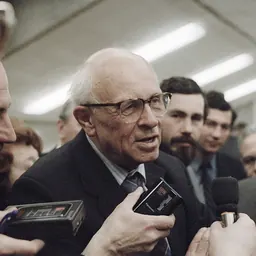

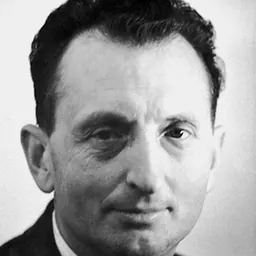
Contemporaries
People whose lives overlapped Karl Alexander Müller's
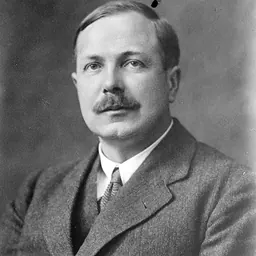
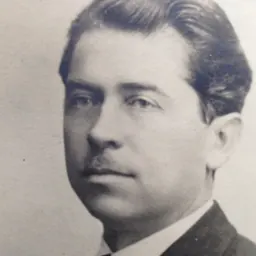


Frequently asked questions
Who was Karl Alexander Müller?
Swiss physicist (1927–2023)
When was Karl Alexander Müller born?
Karl Alexander Müller was born on 20 April 1927 in Basel.
When did Karl Alexander Müller die?
Karl Alexander Müller died on 9 January 2023 in Zurich.
What was Karl Alexander Müller's occupation?
Karl Alexander Müller was a physicist and university teacher.
What was Karl Alexander Müller known for?
Karl Alexander Müller was known for High-temperature superconductivity.
What nationality was Karl Alexander Müller?
Karl Alexander Müller was Swiss.
Sources & further reading
· Wikipedia: Karl Alexander Müller
Cite this page
APA: Biography.guide. (2026). Karl Alexander Müller. https://biography.guide/karl-alexander-muller/
MLA: "Karl Alexander Müller." Biography.guide, https://biography.guide/karl-alexander-muller/.
Chicago: "Karl Alexander Müller." Biography.guide. https://biography.guide/karl-alexander-muller/.
Data last updated: 2026-09-26 · Spot an error? Report a correction.
Page generated 2026-09-27 05:16 UTC