
About K. H. Ara
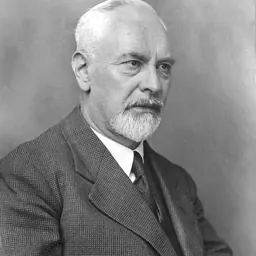
Lived 1914 – 1985 (aged 71). K. H. Ara was an Indian painter.
Krishnaji Howlaji Ara (16 April 1914 – 30 June 1985 ) was an Indian painter and is seen as the first contemporary Indian painter to meticulously use the female nude as a subject. He was a part of the Progressive Artists' Group in Bombay and was a founder of the Artists' Centre in Mumbai. Opinions about Ara's works remain divided with his critics accusing them of lacking perfection and not referenced from life. In 2017, curator Qaroon Thapar 22 works of Ara in an exhibition in Mumbai called "Privately Ara".
Early life Ara was born in Bolarum, Secunderabad in April 1914, the son of a chauffeur. His mother died when he was three and his father remarried. He ran away from home to Mumbai when he was seven. The city remained his home until his death in 1985.
Ara participated in the Salt Satyagraha during the Civil Disobedience Movement and was jailed for five months. He later found employment with a Japanese firm as a car cleaner.
Career as an artist Ara hosted his first solo show at the Chetana Restaurant in Bombay in 1942 which was a runaway success. He joined the Progressive Artists' Group which included M F Hussain, H A Gade, S H Raza, F N Souza and Sadanand Bakre in 1948. The group set up the Artists' Centre at Kala Ghoda, behind the Prince of Wales Museum. He held several shows with the group but with Souza, Raza, Gade and Bakre leaving India, the group became undone. From 1948 to 1955, Ara held several solo and group shows in Mumbai, Ahmedabad, Baroda and Calcutta and later had solo exhibitions across Eastern Europe, Japan, Germany and Russia. In 1963 he exhibited his "Black Nude" series in Mumbai and was part of the inaugural show at the Pundole Art Gallery.
Artistic style Ara began his career doing landscapes and paintings on socio-historical themes but he is best known for his still life and nude paintings. Ara work reflected a deep influence of French modern artists, specially Paul Cezanne.
Awards Ara won the Governor's Award for painting in 1944 and a Gold Medal from the Bombay Art Society for his canvas "Two Jugs" in 1952.
Criticism Some of his critics have accused his paintings of being poorly executed and not referenced from life. The wrongly depicted female genitalia in some of his nudes have also drawn criticism with some viewers claiming that his paintings of groups of vases have greater voluptuousness than his nude forms. He died in Mumbai in 1985.
Don’t just read it —
keep it.
Full-length biographies made to live with: read them, listen on the way to work, watch them tonight.
- E-book
- Audio
- Video
Instant download · yours to keep · every purchase keeps this site free
Important facts
People in K. H. Ara's life
Named in this biography and alive at the same time



Related people
Same field, nearest in time

Contemporaries
People whose lives overlapped K. H. Ara's



Frequently asked questions
Who was K. H. Ara?
Indian artist (1914-1985)
When was K. H. Ara born?
K. H. Ara was born on 16 April 1914 in Bolarum.
When did K. H. Ara die?
K. H. Ara died on 30 June 1985 in Maharashtra, Mumbai.
What was K. H. Ara's occupation?
K. H. Ara was a painter.
What nationality was K. H. Ara?
K. H. Ara was Indian.
Sources & further reading
Cite this page
APA: Biography.guide. (2026). K. H. Ara. https://biography.guide/k-h-ara/
MLA: "K. H. Ara." Biography.guide, https://biography.guide/k-h-ara/.
Chicago: "K. H. Ara." Biography.guide. https://biography.guide/k-h-ara/.
Data last updated: 2026-09-20 · Spot an error? Report a correction.
Page generated 2026-09-27 05:23 UTC