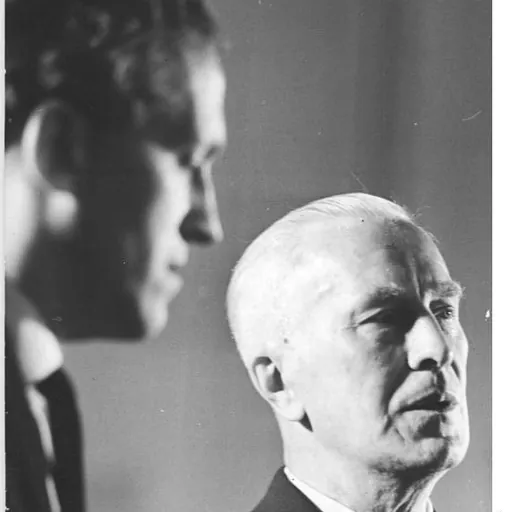
About Juozas Urbšys
Lived 1896 – 1991 (aged 95). Juozas Urbšys was a Russian and Lithuanian politician, diplomat, translator and translation.
Juozas Urbšys (29 February 1896 – 30 April 1991) was a prominent interwar Lithuanian diplomat, the last head of foreign affairs in independent interwar Lithuania, Urbšys died in 1991, having lived long enough to see Lithuania's independence restored, and was buried in Petrašiūnai Cemetery, Kaunas.
Biography Juozas Urbšys was born on 29 February 1896 in Šeteniai, a village north of Kėdainiai. In 1907, Urbšys attended a school in Panevėžys, graduating in 1914. Soon afterwards, he pursued his education in Riga, Latvia. The outbreak of World War I interrupted his studies, and he enlisted in the army in 1916. A few years later, Urbšys completed his education at Chuguyevo Military School (, now Chuhuiv in Ukraine), returning to Lithuania in 1918 after Lithuania re-established its independence. He continued to serve in the Lithuanian military until 1922.
After joining the foreign service, Urbšys worked in Berlin, Germany, from 1922 to 1927. Ribbentrop stated that the explosive situation in Memel could not continue "and suggested the Lithuanian Government send plenipotentiaries to Berlin in order to reach an agreement between the two countries on it." Urbšys said he "Would inform his government at once." Urbšys relayed the conversation to the Lithuanian government the following day. While a clear deadline was not given, Lithuania was told to reach a decision as soon as possible. Urbšys said "that minor clashes could occur at any time" and that he would like to have a definite time limit set. Ribbentrop replied that "matters in Lithuania were beyond our control" and that he could set no time limit but suggested that plenipotentiaries be sent to Germany as soon as possible.
At 9 p.m. that night, the Secretary of State in the German Foreign Office, Ernst von Weizsäcker, summarised the Ribbontrop-Urbšys conversation in a telegram to the German Legation at Kaunas and instructed the Minister there to "request toward noon tomorrow, Tuesday, you call on the Foreign Minister referring to this conversation, and ask him point blank when the plenopotentiaries will arrive in Berlin." The following day, he telephoned Minister Zechlin at Kaunas saying "there is absolutely no time to lose. Developments might otherwise take a serious turn. We expect the Lithuanian delegation to come here by special plane tomorrow during the day. This will be in everyone's best interests." On March 21, the Lithuanian Council of Ministers advised the parliament of its decision to settle the Memel problem by ceding the territory to Germany. That day, the Lithuanian delegation left Kaunas for Berlin at 2 p.m, led by Urbšys. On March 22, a false additional statement was added to the conversation communiqué by Urbšys, which had been read to the Lithuanian Council of Ministers, regarding the conversation of March 20.
That night, Weizsacker telephoned Minister Zechlin at Kaunas and said that "this very night the government must retract the statement it has just issued; it must disclaim it" and stick to the official version. Without any material international support, Lithuania had no choice but to cave in. On March 23, the Lithuanian delegation signed the Treaty returning the Memel Territory to German sovereignty.
Another major diplomatic development occurred in 1939. During the course of a visit to the Soviet Union, Urbšys met with Vyacheslav Molotov, Chairman of the Council of People's Commissars and the People's Commissar for Foreign Affairs. Joseph Stalin joined the group soon afterwards. During the discussion, a draft of a mutual assistance pact was presented, which resulted in the stationing of Red Army troops in Lithuania. The city of Vilnius and its surrounding region, which had been annexed by Poland in 1920, were returned to Lithuania. However, after about one year, the Soviet authorities presented an ultimatum that ended Lithuania's independence. Urbšys's career as foreign minister ended in 1940. Soviet authorities sent him initially to a prison in Tambov; he was later moved to prisons in Saratov, Ivanov, and elsewhere.
Close to his death, Urbšys was interviewed by a Swedish diplomat, who visited him on 9 September 1990 in his poor Soviet era flat that was located in the outskirts of the Kaunas city (soon after the declaration of the Act of the Re-Establishment of the State of Lithuania on 11 March 1990). When asked about the possible Lithuanian military resistance against the Soviet invasion in 1940, he said that it would have been impossible and that there was no reason to compare Lithuania's situation with Finland, which fought the Winter War because it had a much better geographical position, Karelia and the Mannerheim Line. He also noted that the resistance might have made the horrific occupation conditions of the state even worse.
Two schools have been named for Urbšys: Kaunas 29th Secondary School and a school in Tiskūnai.
Awards
Order of Vytautas the Great (Lithuania), Officer's Cross Order of the Lithuanian Grand Duke Gediminas (Lithuania), Commander's Grand Cross and Officer's Cross Royal Order of the Polar Star (Sweden), Commander 1st class (1935)
Works
Juozas Urbšys translated works by Georges Duhamel and Pierre Beaumarchais from French to Lithuanian, among others. His memoir, Lithuania During the Fatal Years, 1939-40, was published in 1988.
Don’t just read it —
keep it.
Full-length biographies made to live with: read them, listen on the way to work, watch them tonight.
- E-book
- Audio
- Video
Instant download · yours to keep · every purchase keeps this site free
Important facts
People in Juozas Urbšys's life
Named in this biography and alive at the same time



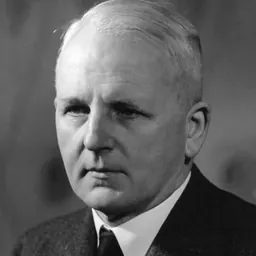
Related people
Same field, nearest in time





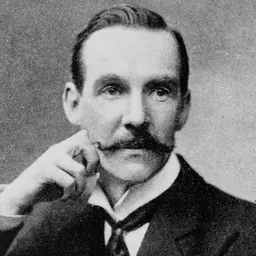
Contemporaries
People whose lives overlapped Juozas Urbšys's



Frequently asked questions
Who was Juozas Urbšys?
Lithuanian politician (1896–1991)
When was Juozas Urbšys born?
Juozas Urbšys was born on 29 February 1896 in Šeteniai.
When did Juozas Urbšys die?
Juozas Urbšys died on 30 April 1991 in Kaunas.
What was Juozas Urbšys's occupation?
Juozas Urbšys was a politician, diplomat, translator and translation.
What nationality was Juozas Urbšys?
Juozas Urbšys was Russian and Lithuanian.
Sources & further reading
Cite this page
APA: Biography.guide. (2026). Juozas Urbšys. https://biography.guide/juozas-urbsys/
MLA: "Juozas Urbšys." Biography.guide, https://biography.guide/juozas-urbsys/.
Chicago: "Juozas Urbšys." Biography.guide. https://biography.guide/juozas-urbsys/.
Data last updated: 2026-09-21 · Spot an error? Report a correction.
Portrait: Wikimedia Commons · author & licence
Page generated 2026-09-27 04:59 UTC