
About Julius Meimberg
Lived 1917 – 2012 (aged 95). Julius Meimberg was a German writer, textile and travel agency.
Julius Meimberg (11 January 1917 – 17 January 2012) was a German Luftwaffe military aviator during World War II, a fighter ace credited with 53 aerial victories—that is, 53 aerial combat encounters resulting in the destruction of the enemy aircraft—claimed in over 250 combat missions. In the 1960s, he invented an open-end spinning device and received patents in the US and Germany for it. In 1970, Meimberg founded the travel agency "Meimberg" and in 2001, he received the Rudolf-Diesel-Medaille for his achievements as an inventor.
Early life and career Meimberg was born on 11 January 1917 in Münster in the Province of Westphalia, a province of the Kingdom of Prussia. He was the sixth and youngest child of a textile merchant, owner of a company founded by his grandfather. Meimberg volunteered for military service in the Luftwaffe. Following acceptance, his military training began on 1 November 1937 at the Luftkriegsschule 2 (LKS 2—2nd air war school) in Berlin–Gatow.
World War II World War II in Europe had begun on Friday 1 September 1939 when German forces invaded Poland. On 6 December 1939, Meimberg was posted to Jagdgeschwader 2 "Richthofen" (JG 2—2nd Fighter Wing), named after World War I fighter ace Manfred von Richthofen, which at the time was based at Zerbst. At Zerbst, Hauptmann Wolfgang Schellmann was tasked with the creation of the new II. Gruppe (2nd group) of JG 2 on 15 December. The Gruppe was staffed by personnel from I. Gruppe of JG 2, I. Gruppe of Jagdgeschwader 3 (JG 3—3rd Fighter Wing), and newly trained fighter pilots from the fighter pilot schools. There, Meimberg was assigned to 4. Staffel (4th squadron), headed by Oberleutnant Hans Hahn.
Meimberg was appointed Staffelkapitän (squadron leader) of 3. Staffel of JG 2 on 15 April 1941. He replaced Oberleutnant Hermann Hollweg who was transferred. On 4 August 1942, Meimberg succeeded Oberleutnant Rudolf Pflanz as Staffelkapitän of 11. Staffel of JG 2. Pflanz had been killed in action on 31 July.
Mediterranean Theater On 4 November 1942, Meimberg and his 11. Staffel received orders to immediately transfer to Sicily. That same day, 30 men and their equipment were flown in three Junkers Ju 52 transport aircraft from the airfield Poix-Nord at Poix-de-Picardie in France to Coleman Army Airfield, refueling at Reims. On 8 November, the Staffel arrived in Trapani, located in the northwest of Sicily, and then moved to Comiso which is in southeastern part of Sicily. On 15 November, Meimberg received orders to move his Staffel to Tunisia in North Africa where they were based at the Bizerte Airfield where they fought in the Tunisian campaign. That day, the Oberbefehlshaber Süd (Commander in Chief South), Generalfeldmarschall Albert Kesselring, ordered 11. Staffel disbanded, and its pilots and equipment assigned to II. Gruppe of Jagdgeschwader 53 (JG 53—53rd Fighter Wing). Due to Meimberg's intervention, Oberstleutnant Günther Freiherr von Maltzahn, the Geschwaderkommodore (wing commander) of JG 53, decided to retain 11. Staffel as its own entity and subordinated the Staffel to the Geschwaderstab (headquarters unit) of JG 53 while for the higher Luftwaffe authorities the Staffel was merged with 6. Staffel of JG 53.
On 17 December, Meimberg was given home-leave. During this vacation on 29 December, he married his fiancée Margret in Münster. The two had known each other since school. The marriage produced a son, Gerrit, born 15 February 1946, and another son, Helmut, born 11 August 1948, and their daughter Dorothee, born 19 October 1950. Following a brief honeymoon which the couple spent in Würzburg, Meimberg returned to his unit on 20 January 1943, which at the time was based at El Aouina, a municipality of Tunis, Tunisia.
Flying the Messerschmitt Bf 109 G-4 trop (Werknummer 16025—factory number) on 1 February 1943, Meimberg was wounded in aerial combat with Boeing B-17 Flying Fortress bombers near Pont du Fahs. The severe burns he sustained necessitated a lengthy stay in a hospital in Munich. During his convalescence, Meimberg was promoted to Hauptmann (captain) on 1 March, and awarded the Wound Badge in Silver in May. He returned to JG 53 on 19 August and was assigned to the Geschwaderstab. By this date, 11. Staffel of JG 2 had officially been disbanded and its pilots distributed to various Staffeln of JG 53. The Geschwaderstab was based at the Hermitage of Camaldoli in Naples. Due to the Allied invasion of Italy, the location was abandoned on 9 September, moving to Littoria Airfield until September 16, and then to Centocelle Airfield near Rome. Shortly before Christmas, Meimberg left JG 53 again as his injuries sustained to his hands on 1 February required further treatment and skin grafting.
Defense of the Reich On 24 April 1944, Meimberg was appointed Gruppenkommandeur of II. Gruppe of JG 53. He succeeded Hauptmann Gerhard Michalski who was transferred. On 24 October, Meimberg was awarded the Knight's Cross of the Iron Cross for 45 aerial victories. The presentation was made by Oberst Karl Hentschel, commander of the 7. Jagddivision (7th Fighter Division), at the Malmsheim Airfield.
Meimberg flew his last combat mission on 17 April 1945, strafing US vehicles travelling on the Autobahn near Nürnberg. During this attack, his Bf 109 G-14/AS was hit in the engine by anti-aircraft artillery. He was forced to bail out and landed safely in a field where he was picked up by a SS-unit and taken back to his unit at Rißtissen, located approximately southwest of Ulm. On 22 April, Meimberg moved II. Gruppe to an makeshift airfield near Waal. Aerial operation had practically came to a stop as US forces had started crossing the Danube the following day. Meimberg dismissed his soldiers and disbanded II. Gruppe in the early morning on 27 April.
Later life Following World War II, Meimberg worked at the Nordhorn based textile company Rawe. There he gained knowledge of yarn production. In the summer of 1946, Meimberg and his wife bought two sheep. The sheep's wool was hand spun locally, inspiring Meimberg to think about automating the spinning process. Over the next months, he began experimenting and building a crude prototype for continuous yarn production, powered by a sewing machine motor, which he completed in 1948. Meimberg, presented his prototype to the German Patent and Trade Mark Office in Munich and the Deutsche Spinnereimaschinenbau AG Ingolstadt, the German spinning machine factory in Ingolstadt, owned by the Schubert & Salzer GmbH.
In 1970, Meimberg founded the travel agency "Meimberg" in Münster. For his achievements as an inventor, Meimberg was awarded the Rudolf-Diesel-Medaille in 2001. He died on 17 January 2012 in Münster.
Summary of career Aerial victory claims According to US historian David T. Zabecki, Meimberg was credited with 53 aerial victories. Obermaier also lists him with 53 victories claimed in over 250 combat missions, all of which over the Western Front. Mathews and Foreman, authors of Luftwaffe Aces — Biographies and Victory Claims, researched the German Federal Archives and found records for 45 aerial victory claims, plus further 14 unconfirmed claims. All of these claims were achieved over the Western Allies, including four four-engined bombers.
Victory claims were logged to a map-reference (PQ = Planquadrat), for example "PQ 15 West TR-9". The Luftwaffe grid map covered all of Europe, western Russia and North Africa and was composed of rectangles measuring 15 minutes of latitude by 30 minutes of longitude, an area of about . These sectors were then subdivided into 36 smaller units to give a location area in size.
Chronicle of aerial victories Claim Date Time Type Location Claim Date Time Type Location – 4. Staffel of Jagdgeschwader 2 "Richthofen" –Battle of France — 11 May – 25 June 1940 1 19 May 1940 12:20 Hurricane Tournai 2 3 June 1940 14:50 Curtiss ÉpernayParis – 4. Staffel of Jagdgeschwader 2 "Richthofen" –At the Channel and over England — 26 June 1940 – 21 June 1941 3 4 September 1940 14:05 Spitfire Ashford 7 7 November 1940 15:30 Hurricane south of the Isle of Wight 4 6 September 1940 10:00 Spitfire Ashfordvicinity of Ashford 8 28 November 1940 17:20 Spitfire southwest of the Isle of Wight 5 6 September 1940 10:15 Spitfire Ashford 9 29 November 1940 16:35 Blenheim English Channel 6 10 October 1940 13:50 Hurricane vicinity of Portland – 3. Staffel of Jagdgeschwader 2 "Richthofen" –On the Western Front — 22 June – 24 July 1941 10 3 July 1941 15:39 Spitfire 13 24 July 1941 14:45 Hampden Brest 11 17 July 1941 16:17 Spitfire north of Étaples 14 24 July 1941 15:00 Wellington Brest 12 24 July 1941 14:24 Hampden west-southwest of Plouguerneau – 3. Staffel of Jagdgeschwader 2 "Richthofen" –On the Western Front — 4 May – 1 August 1942 15 17 May 1942 10:27 Spitfire northwest of Dieppe 19 19 June 1942 21:01 Spitfire Selsey BillSidlesham 16 19 May 1942 15:22 Spitfire Calais-Ramsgate 20 11 July 1942 18:25 Spitfire Le Havre 17 31 May 1942 19:29 Spitfire Saint-Valery 21 28 July 1942 21:15 Spitfire southwest of Selsey Bill southwest of Brighton 18? 19 June 1942 20:58 Spitfire Selsey Bill – 11. Staffel of Jagdgeschwader 2 "Richthofen" –On the Western Front — 1 July – 4 November 1942 19 August 1942 Spitfire Dieppe 22 20 August 1942 13:59 Spitfire north-northwest of Dieppe 19 August 1942 Spitfire Dieppe 23? 5 September 1942 Spitfire – 11. Staffel of Jagdgeschwader 2 "Richthofen" –Mediterranean Theater — 4 November – 31 December 1942 25 November 1942 Spitfire southeast of Mateur 27 5 December 1942 09:08 Spitfire east of Mateur 3 December 1942 Spitfire 28 5 December 1942 09:12 Spitfire southeast of Mateur 24? 4 December 1942 15:50 Bisley (Blenheim) southeast of Mateur 29 5 December 1942 11:03 Spitfire south of Mateur 25? 4 December 1942 15:53 Bisley (Blenheim) east of Mateur 30 6 December 1942 10:15 Spitfire south of Tebourba 26? 4 December 1942 16:00 Bisley (Blenheim) southwest of Mateur – 6. Staffel of Jagdgeschwader 53 –Mediterranean Theater — 1 January – 1 February 1943 31 31 January 1943 13:14 P-38 east of Djedeida 32 1 February 1943 13:25 B-17 northwest of Pont du Fahs – Stab of Jagdgeschwader 53 –Mediterranean Theater — December 1943 33 9 December 1943 11:27 P-51 northwest of Valmontone – Stab II. Gruppe of Jagdgeschwader 53 –Defense of the Reich — 24 April – June 1944 34 8 May 1944 10:05 B-24 north of Braunschweig 35 29 May 1944 12:15 B-17 Wittenberge 27 May 1944 12:15 P-51 vicinity of Nancy 36? 30 May 1944 11:15 B-17 – Stab II. Gruppe of Jagdgeschwader 53 –Invasion Front in France — June – September 1944 37 17 June 1944 19:31 P-38 PQ 15 West TR-9La Haye-du-Puits 23 August 1944 12:15 P-51 Mantes-la-Jolie 38 5 July 1944 10:42 P-47 PQ 04 Ost N/BDRambouillet 40 25 August 1944 19:25 Typhoon PQ 05 Ost SC-8/7Barentin-Rouen 39 5 July 1944 10:53 P-47 PQ 04 Ost N/ACNonancourt – Stab II. Gruppe of Jagdgeschwader 53 –Defense of the Reich — September – December 1944 41? 24 September 1944 12:40 C-47 PQ 05 Ost SR-7Nackterhof 45? 17 November 1944 15:25? P-51 PQ 05 Ost UR-7Linkenheim 42? 29 September 1944 P-47 vicinity of Edenkoben 46 18 November 1944 12:35 P-51 Metz/LunevilleKarlsruhe 43 8 October 1944 10:42 P-47 PQ 04 Ost N/AOWorms 47 16 December 1944 11:39 P-47 PQ 05 Ost S/UR-5, Herxheim near Karlsruhe 44? 13 October 1944 P-47 48 26 December 1944 P-47 south of Stuttgart 45 20 October 1944 10:45? P-47 PQ 04 Ost N/CP-6southwest of Strasbourg 49 26 December 1944 P-47 south of Stuttgart 46 28 October 1944 11:05 P-47 Landau 50 26 December 1944 P-47 south of Stuttgart 29 October 1944 P-51 – Stab II. Gruppe of Jagdgeschwader 53 –Defense of the Reich — January – May 1945 51 16 March 1945 P-51 Hunsrück area 53 13 April 1945 18:06 Spitfire Biberach 52 10 April 1945 09:00 P-47 Crailsheim
Awards Iron Cross (1939) 2nd and 1st Class Honor Goblet of the Luftwaffe (30 July 1941) Wound Badge in Silver (May 1943) German Cross in Gold on 29 October 1942 as Oberleutnant in the 11./Jagdgeschwafer 2 Knight's Cross of the Iron Cross on 24 October 1944 as Hauptmann and Gruppenkommandeur of the II./Jagdgeschwader 53
Publications
Don’t just read it —
keep it.
Full-length biographies made to live with: read them, listen on the way to work, watch them tonight.
- E-book
- Audio
- Video
Instant download · yours to keep · every purchase keeps this site free
Important facts
People in Julius Meimberg's life
Named in this biography and alive at the same time


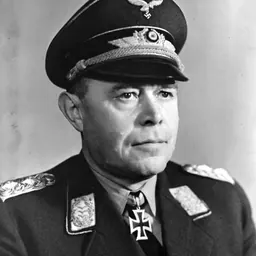
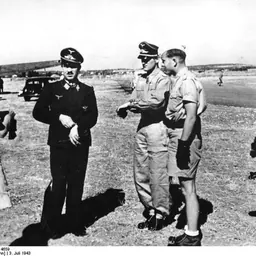



Related people
Same field, nearest in time




Contemporaries
People whose lives overlapped Julius Meimberg's

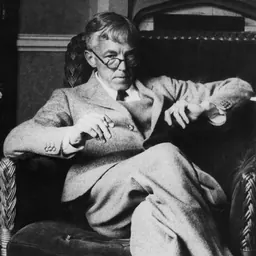
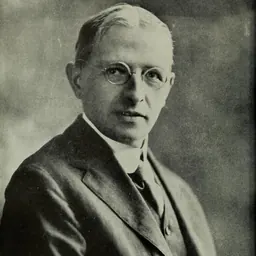
Frequently asked questions
Who was Julius Meimberg?
German flying ace
When was Julius Meimberg born?
Julius Meimberg was born on 11 January 1917 in Münster.
When did Julius Meimberg die?
Julius Meimberg died on 17 January 2012 in Münster.
What was Julius Meimberg's occupation?
Julius Meimberg was a writer, textile and travel agency.
What nationality was Julius Meimberg?
Julius Meimberg was German.
Sources & further reading
Cite this page
APA: Biography.guide. (2026). Julius Meimberg. https://biography.guide/julius-meimberg/
MLA: "Julius Meimberg." Biography.guide, https://biography.guide/julius-meimberg/.
Chicago: "Julius Meimberg." Biography.guide. https://biography.guide/julius-meimberg/.
Data last updated: 2026-09-20 · Spot an error? Report a correction.
Page generated 2026-09-27 05:24 UTC