
About Gerhard Michalski
Lived 1917 – 1946 (aged 28). Gerhard Michalski was a German aircraft pilot and military personnel.
Gerhard Michalski (25 June 1917 – 22 February 1946) was a German Luftwaffe military aviator and wing commander during World War II. As a fighter ace, he is credited with 73 aerial victories in 652 missions, of which 59 victories were achieved over the Western Front including 13 four-engine bombers, and 14 over the Eastern Front. He was awarded the Knight's Cross of the Iron Cross with Oak Leaves, the highest award in the military and paramilitary forces of Nazi Germany during World War II.
Early life and career Michalski was born on 25 June 1917 in Augsdorf in the Province of Saxony of the German Empire. In 1936, he volunteered for military service in the Luftwaffe and was promoted to Leutnant in 1938. Michalski received the Iron Cross 2nd Class on 28 September 1939.
World War II Michalski joined 6. Staffel (6th squadron) of Jagdgeschwader 53 (JG 53—53rd Fighter Wing) in 1940. He claimed his first victory on 31 March 1940 during the "Phoney War", when he downed a French Morane Saulnier MS 406 fighter over the French border near Püttlingen. Flying through the Battle of Britain, he claimed eight further aerial victories. In October 1940, Michalski was appointed Adjutant in II./JG 53.
JG 53 flew its last mission on the Channel Front on 4 June 1941. Four days later, II. Gruppe was ordered to Mannheim-Sandhofen Airfield.
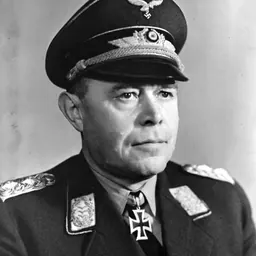
Operation Barbarossa In preparation of Operation Barbarossa, the German invasion of the Soviet Union, the aircraft were given a maintenance overhaul at Mannheim-Sandhofen Airfield. On 12 June, II. Gruppe relocated to Sobolewo. On 21 June, the commanding officers were ordered to Suwałki where they were briefed by Generalfeldmarschall Albert Kesselring.
With JG 53 participating in the invasion of Russia from June 1941 onward, Michalski claimed 13 further victories by the end of August 1941 for a total of 22.
On 5 October 1941, II. Gruppe of JG 53 was withdrawn from the Eastern Front and ordered to Insterburg, present-day Chernyakhovsk. The Gruppe was then sent to Leeuwarden Airfield in the Netherlands where they arrived on 12. October. Prior to the relocation, Michalski was appointed Staffelkapitän (squadron leader) of 4. Staffel of JG 53, replacing Oberleutnant Kurt Liedtke in this capacity.
Mediterranean theater In November 1941, II. Gruppe of JG 53 was relocated to Sicily for operations against Malta. Michalski was to become the most successful German fighter pilot in the Siege of Malta, claiming 26 victories against the island's defenders. Michalski was appointed Gruppenkommandeur (group commander) of II. Gruppe of JG 53 in August 1942. He succeeded Hauptmann Walter Spies who was transferred. Command of 4. Staffel was then passed to Oberleutnant Wilhelm Hobirk for two months before it was assigned to Leutnant Fritz Dinger in October. He was awarded the Knight's Cross of the Iron Cross for 41 victories in September. On 1 October, Michalski was promoted to Hauptmann (captain).
Bf 109s of JG 53 in southern Italy, similar to those flown by Michalski. On 15 October, Michalski was shot down in his Bf 109 G-2 (Werknummer 10484—factory number). He bailed out over sea, climbed into his life raft before he was picked up by a Dornier Do 24 flying boat of Seenotstaffel 6, the 6th Squadron of the German air-sea rescue service. His victors were No. 126 Squadron Supermarine Spitfire fighters, flown by F/L. Jones and F/Sgt Varey, who shot him down off Marsaxlokk Bay.
In November 1942, II./JG 53 were sent to Tunisia. On 27 November, Michalski claimed a Spitfire fighter shot down south of Majaz al Bab. That day, the RAF lost two Spitfires in aerial combat, one from No. 72 Squadron and another from No. 152 Squadron, plus another Spitfire damaged in combat. While Luftwaffe pilots claimed ten Spitfires shot down.
Following the fall of Tunisia, II./JG 53 relocated to bases in Sicily in May 1943. By June 1943, the Geschwaderkommodore (wing commander) of JG 53, Oberst Günther Freiherr von Maltzahn, had fallen ill and could no longer lead JG 53 during combat missions. In consequence, Michalski was tasked with leading the air elements of JG 53. On 13 June, Michalski claimed a Supermarine Spitfire fighter shot down near Syracuse. His opponent may have been Wing Commander John Ellis who bailed out and was taken prisoner of war.
On 18 June 1943, II. Gruppe engaged in combat with eight Spitfire fighters over southeast Sicily. In this encounter, Michalski was shot down in his Bf 109 G-6 (Werknummer 16362) near Donnafugata Castle. Forced to bail out, he was injured and taken to hospital in Ragusa. His victor was Flying Officer George Noel Keith Royal Canadian Air Force (RCAF), flying a Spitfire of No. 72 Squadron. He bailed out wounded in the leg and with a broken ankle, landing in the sea, from where he was rescued by the German air-sea rescue service. Hospitalised, he returned to JG 53 in August 1943.
On 1 October, Michalski was promoted to Major (major). In November 1943, II./JG 53 was relocated to airfields in Austria, operating on Reichsverteidigung (Defense of the Reich) duties. Michalski claimed his 60th victory on 2 November.
Wing commander On 24 April 1944, Michalski was made Geschwaderkommodore of the newly formed Jagdgeschwader z.b.V. (JG z.b.V.—fighter wing for special deployment), a special purpose unit which was tasked with defending the southern German airspace under control of 7. Jagd-Division (7th Fighter Division). Initially, the unit was based at Kassel and equipped with the Bf 109 G-6. On 29 April, the United States Army Air Forces (USAAF) Eighth Air Force headed for Berlin. Michalski led the Stab and II. Gruppe of Jagdgeschwader 27 (JG 27—27th Fighter Wing) on the intercept mission. Near Schandelah, present-day part of Cremlingen, he shot down a Boeing B-17 Flying Fortress bomber. On 1 May, the Eighth Air Force attacked German railroad infrastructure in southern Germany. Defending against this attack, Michalski was shot down by USAAF escorting fighters in his Bf 109 G-6 (Werknummer 440232) near Saarbrücken. Due to his injuries, he was taken off duty. The position of Geschwaderkommodore was left vacant until on 21 May Major Walther Dahl was given command of JG z.b.V.
Following his recovery, Michalski was transferred to the Verbandsführerschule of the General der Jagdflieger on 20 May 1944. On 21 July, he joined the Stabsstaffel, I./Jagdgeschwader 11.
On 15 June, JG z.b.V. had been renamed and became Jagdgeschwader 4 (JG 4—4th Fighter Wing) and Dahl was replaced by Major Gerhard Schöpfel as commander of JG 4. When on 6 August Schöpfel was wounded in combat, Michalski was transferred and became Geschwaderkommodore of JG 4. Following the Allied aerial landings in Operation Market Garden on 17 September, Michalski was instructed to immediately transfer the Geschwaderstab to Dortmund Airfield. Here, he came under control of 3. Jagd-Division (3rd Fighter Division). Michalski was then tasked with the formation of a , a detachment consisting of I. Gruppe of Jagdgeschwader 3, III. Gruppe of JG 4, III. Gruppe of JG 53, II. Gruppe of Jagdgeschwader 77 and III. Gruppe of Jagdgeschwader 300. From 18 to 25 September, Michalski led this detachment also dubbed . Michalski was awarded the Knight's Cross of the Iron Cross with Oak Leaves on 25 November for 72 victories. On 1 January 1945, Michalski was promoted to Oberstleutnant (lieutenant colonel).
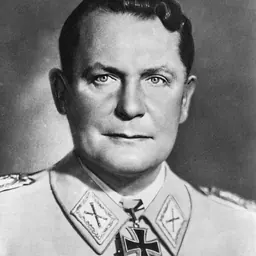
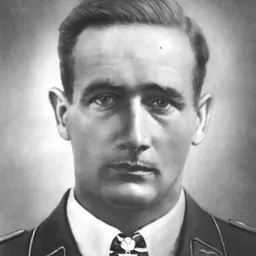
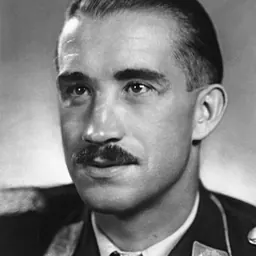
As Geschwaderkommodore, Michalski was ordered to Berlin on 22 January 1945 and attended the meeting with Reichsmarschall Hermann Göring which was later dubbed the Fighter Pilots' Mutiny. This was an attempt to reinstate Generalleutnant Adolf Galland as General der Jagdflieger who had been dismissed for outspokenness regarding the Oberkommando der Luftwaffe (Luftwaffe high command), and had been replaced by Oberst Gordon Gollob. The meeting was held at the Haus der Flieger in Berlin and was attended by a number of high-ranking fighter pilot leaders which included Michalski, Günther Lützow, Hannes Trautloft, Hermann Graf, Erich Leie, Helmut Bennemann, Kurt Bühligen and Herbert Ihlefeld, and their antagonist Göring supported by his staff Bernd von Brauchitsch and Karl Koller. The fighter pilots, with Lützow taking the lead as spokesman, criticized Göring and made him personally responsible for the decisions taken which effectively had led to the lost air war over Europe.
Later life Michalski was involved in a motor vehicle accident on 22 February 1946 and died in a hospital at the age of in Kaltenkirchen. His brother Werner was killed in action as a Leutnant on 10 April 1942 serving with Jagdgeschwader 26 "Schlageter".
Summary of career
Aerial victory claims According to US historian David T. Zabecki, Michalski was credited with 73 aerial victories. Spick also lists him with 73 aerial victories in 652 missions, of which 59 victories were achieved over the Western Front including 13 four-engine bombers and 29 Spitfire fighters. Mathews and Foreman, authors of Luftwaffe Aces — Biographies and Victory Claims, researched the German Federal Archives and found records for 68 aerial victory claims, plus three further unconfirmed claims. This number includes 14 on the Eastern Front and 54 on the Western Front, including 11 four-engined bombers.
Victory claims were logged to a map-reference (PQ = Planquadrat), for example "PQ 03 Ost 9848". The Luftwaffe grid map covered all of Europe, western Russia and North Africa and was composed of rectangles measuring 15 minutes of latitude by 30 minutes of longitude, an area of about . These sectors were then subdivided into 36 smaller units to give a location area in size.
Chronicle of aerial victories Claim! Claim# Date Time Type Location Claim! Claim# Date Time Type Location – Stab II. Gruppe of Jagdgeschwader 53 –"Phoney War" — 1 September 1939 – 9 May 1940 1 31 March 1940 16:00 M.S.406 southwest of Sarreguemines – 6. Staffel of Jagdgeschwader 53 –At the Channel and over England — 26 June – August 1940 2 1 15 August 1940 18:50 Hurricane southwest of Portland – Stab II. Gruppe of Jagdgeschwader 53 –At the Channel and over England — August 1940 – 8 June 1941 3 2 10 October 1940 11:40? Spitfire FolkestoneThames Estuary 7 24 November 1940 16:50 Hurricane Gravesend 4 3 11 October 1940 08:55 Spitfire 8 6 30 November 1940 15:26 Hurricane Ashford 5 4 28 October 1940 17:28 Hurricane south of London 9 7 25 April 1941 15:47 Spitfire 6 5 1 November 1940 15:40 Spitfire – Stab II. Gruppe of Jagdgeschwader 53 –Operation Barbarossa — 22 June – 8 October 1941 10 8 1 July 1941 13:52 I-153 17 15 29 August 1941 15:57 I-16? 11 9 4 July 1941 16:45 SB-2 18 16 11 September 1941 09:02 I-18 (MiG-1) 12 10 4 July 1941 16:49 SB-3 19 17 21 September 1941 16:05 I-18 (MiG-1) 13 11 5 July 1941 09:26 SB-3 southeast of Smitten 20 18 23 September 1941 17:05 I-18 (MiG-1) 14 12 14 July 1941 19:24 DB-3 21 19 28 September 1941 08:03 I-18 (MiG-1) 15 13 19 July 1941 17:25 R-5 22 20 4 October 1941 09:43? I-18 (MiG-1) 16 14 27 August 1941 17:10 R-5 – 4. Staffel of Jagdgeschwader 53 –Mediterranean Theater — 15 December 1941 – August 1942 23? 21 20 December 1941 16:40 Hurricane 35 30 29 June 1942 08:45 Spitfire 24 29 December 1941 10:40 Hurricane 36 31 2 July 1942 08:07 Spitfire northeast of Malta north of Ta' Vnezja 25 22 3 January 1942 09:18? Hurricane 37 32 2 July 1942 13:30 Spitfire east of La Valletta 26 23 20 January 1942 14:18 Hurricane 38 33 8 July 1942 06:48 Spitfire 27 24 January 1942 14:25 Hurricane 39 34 8 July 1942 11:35 Spitfire 28 24 17 March 1942 08:08 Spitfire Malta 40 35 30 July 1942 08:25 Spitfire 29 2 April 1942 10:42 Spitfire 41 36 31 July 1942 14:58 Spitfire 30 25 8 May 1942 09:40 P-40 Ta' Vnezja 42 37 31 July 1942 15:00 Spitfire 26 14 May 1942 11:43 Spitfire 38 2 August 1942 14:30 Spitfire west of Venezia 31 15 May 1942 11:31 Spitfire 43 39 2 August 1942 16:23 Spitfire 32 27 3 June 1942 11:13 Spitfire southeast of Pantelleria 44 40 10 August 1942 12:21 Spitfire 33 28 8 June 1942 11:25 Spitfire 45? 12 August 1942 Spitfire 34 29 15 June 1942 10:40 Beaufighter southeast of Pantelleria 46 41 14 August 1942 18:48 Spitfire – Stab II. Gruppe of Jagdgeschwader 53 –Mediterranean Theater — August – 31 December 1942 47 42 13 October 1942? 14:10? Spitfire north of La Valletta 49 44 27 November 1942 14:56 Spitfire south of Majaz al Bab 48 43 14 October 1942 08:20 Spitfire vicinity of Malta – Stab II. Gruppe of Jagdgeschwader 53 –Mediterranean Theater — 1 January – 15 October 1943 50? 1 January 1943 11:56 Spitfire 56 50 19 April 1943 16:08 Spitfire southeast of Menzel Temime southwest of Zembra 51 45 25 February 1943 12:16 P-38 west of Tebourba 57 51 2 May 1943 14:54 P-40 southwest of Béja 52? 2 March 1943 11:50 Spitfire southeast of Sfax 58 52 8 June 1943 08:52 Spitfire south-southwest of Pozzallo 46 2 March 1943 11:50 B-17* southeast of Béja 59 53 9 June 1943 14:00 P-38 south of Pantelleria 53? 47 22 March 1943 14:10 P-38 PQ 03 Ost 9848 60 54 13 June 1943 12:12 Spitfire Syracuse 54 48 18 April 1943 19:05 P-40 southeast of the Gulf of Tunis 61? 55 8 September 1943 17:00 P-38 southwest of Capri 55 49 19 April 1943 15:56 Spitfire southwest of Zembra – Stab II. Gruppe of Jagdgeschwader 53 –Defense of the Reich — 16 October – 31 December 1943 62 56 2 November 1943 12:40? B-24* Kaindorf – Stab II. Gruppe of Jagdgeschwader 53 –Defense of the Reich — 1 January – April 1944 63 57 7 January 1944 11:28 P-38 south of Kalsdorf 67 8 April 1944 B-24 64 58 24 February 1944 12:56 B-17 vicinity of Friedburg 68 11 April 1944 B-24 65 59 25 February 1944 11:56 B-24 Radlersberg-Fridau 69 61 13 April 1944 15:54 B-17 Königsdorf 66 60 23 March 1944 10:28 B-17 southwest of Braundes 70 62 19 April 1944 10:35 B-17 south of Hann. Münden, east of Kassel – Stab of Jagdgruppe z.b.V. –Defense of the Reich — April 1944 71 63 29 April 1944 11:03 B-17 Schandelah, east of Braunschweig – Stab of Jagdgeschwader 4 –Defense of the Reich — September 1944 – 8 May 1945 72 64 21 September 1944 15:25 Lancaster northwest of Nijmegen 75 67 2 November 1944 12:56? B-17 PQ 15 Ost JD-JE 73 65 27 September 1944 18:15 Typhoon southwest of Goch 76 68 8 March 1945 10:27 Yak-9 Eastern Front 74 66 2 November 1944 12:55 B-17 PQ 15 Ost JE-JD
Awards Iron Cross (1939) 2nd Class (28 September 1939) 1st Class (3 September 1940) Knight's Cross of the Iron Cross with Oak Leaves Knight's Cross on 4 September 1942 as Oberleutnant and Staffelkapitän of the 4./Jagdgeschwader 53 667th Oak Leaves on 25 November 1944 as Major and Geschwaderkommodore of Jagdgeschwader 4
Don’t just read it —
keep it.
Full-length biographies made to live with: read them, listen on the way to work, watch them tonight.
- E-book
- Audio
- Video
Instant download · yours to keep · every purchase keeps this site free
Important facts
People in Gerhard Michalski's life
Named in this biography and alive at the same time




Related people
Same field, nearest in time
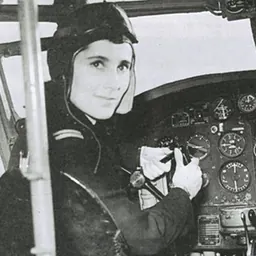


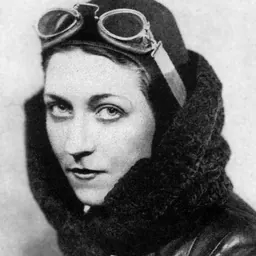

Contemporaries
People whose lives overlapped Gerhard Michalski's

Frequently asked questions
Who was Gerhard Michalski?
German flying ace (1917–1946)
When was Gerhard Michalski born?
Gerhard Michalski was born on 25 June 1917 in Augsdorf.
When did Gerhard Michalski die?
Gerhard Michalski died on 22 February 1946 in Kaltenkirchen.
What was Gerhard Michalski's occupation?
Gerhard Michalski was an aircraft pilot and military personnel.
What nationality was Gerhard Michalski?
Gerhard Michalski was German.
Sources & further reading
· Wikipedia: Gerhard Michalski
Cite this page
APA: Biography.guide. (2026). Gerhard Michalski. https://biography.guide/gerhard-michalski/
MLA: "Gerhard Michalski." Biography.guide, https://biography.guide/gerhard-michalski/.
Chicago: "Gerhard Michalski." Biography.guide. https://biography.guide/gerhard-michalski/.
Data last updated: 2026-09-20 · Spot an error? Report a correction.
Page generated 2026-09-27 05:00 UTC